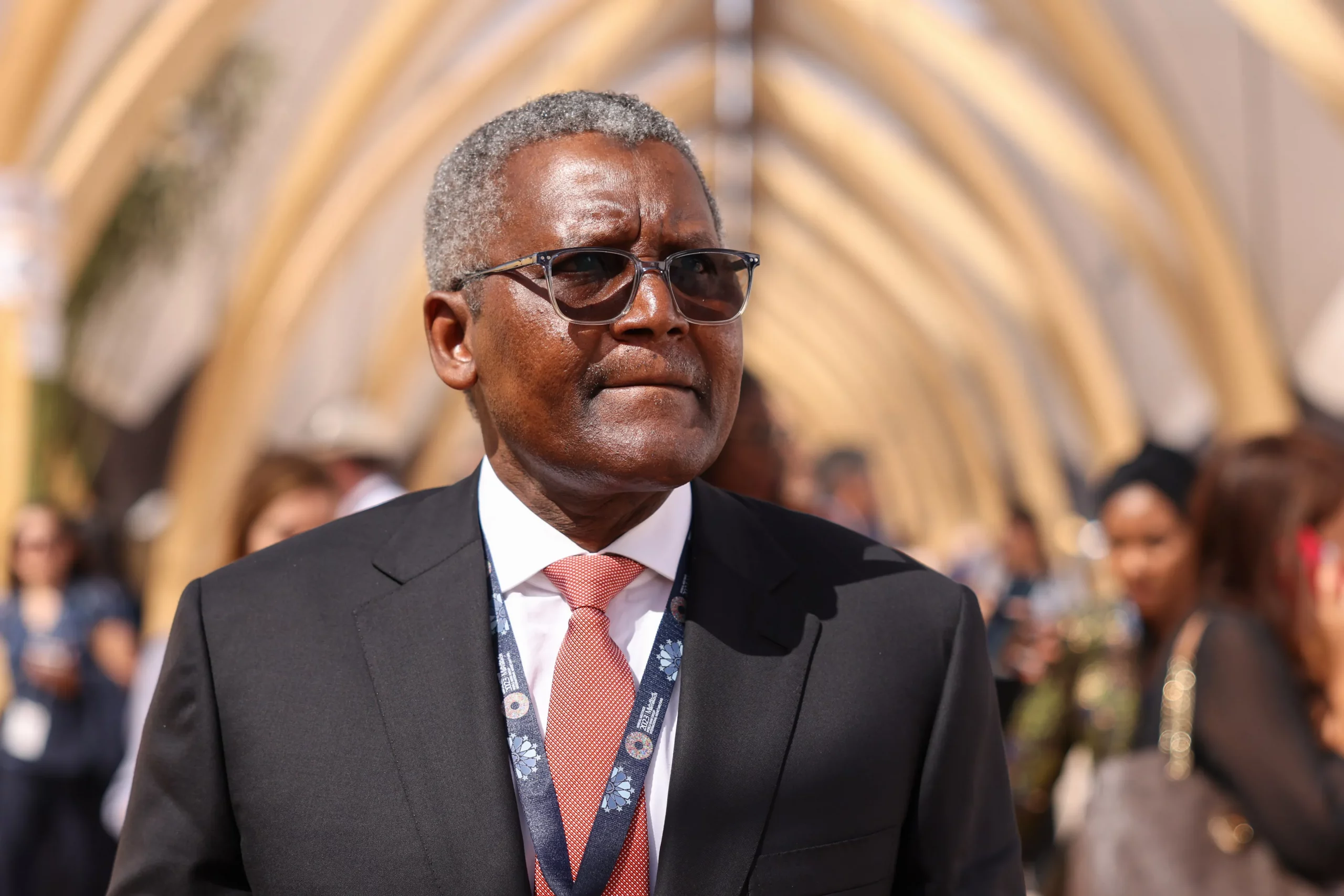
On February 17, 2026, Aliko Dangote, billionaire businessman appointed his daughters to major positions in the multi-billion-dollar global business group, citing a plan to build it into a $100 billion business within four years.
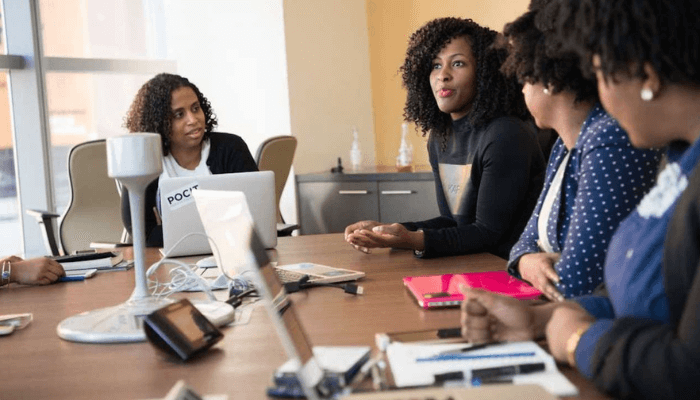
Dangote, 68, who last year retired as chairman of his cement business and appointed one of his daughters to its board, has expanded the roles of Halima, Fatima, and Mariya across his empire.
Fatima Aliko Dangote, his youngest child, was appointed Group Executive Director, Commercial Operations – Oil & Gas.
Fatima will provide commercial leadership across the group’s energy businesses, including the Dangote Petroleum Refinery & Petrochemicals (DPRP), Fertiliser, and the West African Exploration and Production Company Limited (WAEP) Upstream.

She will also continue to oversee her Group’s wide responsibilities covering Corporate Communications, Administration & Facilities, and Group Procurement.
Halima Aliko Dangote, was appointed Group Executive Director, Dangote Family Office & International Offices (Dubai & London).
Halima will continue to lead the establishment and maturation of the Dangote Family Office in Dubai, ensuring the full development of its governance framework, operating model, policies, and organisational structure.
In the same vein, her mandate includes strengthening, embedding world-class governance standards, and ensuring seamless coordination across all functions supporting the international activities of the group.
While Mariya Aliko Dangote, his eldest daughter, was appointed Group Executive Director, Commercial Operations, Cement & Foods Businesses.

Mariya will lead the commercial strategy for the cement and food operations across all markets. Her mandate includes deepening market reach, enhancing customer value, and driving operational excellence across both portfolios, fostering greater integration and growth across our consumer sectors.
The changes will “empower a new generation to take on expanded responsibilities in shaping our future.
This moves mark a pivotal step in Dangote’s succession plan, accelerating the transfer of operational authority to the next generation at one of Africa’s largest industrial groups.
Succession planning is a critical aspect of Dangote’s legacy. He understands that the success of his businesses depends not only on the current and past impact but on their ability to live on for generations to come. That is why Dangote’s approach to succession planning is holistic, encompassing not only the transfer of knowledge and skills but also the instillation of the values and principles that have guided his career.
Dangote is now worth $31.9 billion, according to the Bloomberg Billionaires Index. His wealth has risen by $1.89 billion this year, including a recent daily gain of $50.8 million. His biggest earner, Dangote Oil Refinery, Africa’s largest refinery, began operating in early 2024.
Dangote didn’t build his wealth from technology, entertainment, or banking, but from the very foundation of development in cement, sugar, fertilizer, and energy.
The rise in his fortunes offers a different blueprint for wealth creation. He started with basic trading and then moved into manufacturing.
Read also: Dangote Cement makes history with first-ever Commercial Paper listing on NGX
The Genesis of a Visionary: Early Foundations
Dangote was born on April 10, 1957, into a well-to-do trading family in Kano, Nigeria, and grew up there from a very young age. However, he stood out not because of his family’s wealth, but because of his intuition.
He learned early on that to succeed in business, you need to control essential resources to dominate the market. His father, Mohammed Dangote, was a prominent trader during the colonial era and a significant influence in shaping Dangote’s early exposure to commerce
After completing his early education in Nigeria, he went on to study business at Alhazat University in Cairo, Egypt. Upon returning to Nigeria in 1977, Dangote entered the business world with a startup loan of N500,000, around $30,000 at the time, from his uncle, Sanusi Damtata, and began importing rice, sugar, and cement. This was the period when Nigeria’s economy was expanding, fueled by oil wealth and rapid urbanisation,
Dangote registered ‘Dangote Group’ that same year. His timing was perfect. His goods met demand, his supply chains doubled, and his profits multiplied.
Then, he made a key decision: instead of importing goods, he began producing them. By the early 2000s, the Dangote group transformed from a trading company into an industrial powerhouse.
Dangote Cement, Dangote Sugar, and Dangote Flour Mills became well-known brands, boosting Nigeria’s economy and providing jobs for its people. Aliko Dangote made his debut on the Forbes billionaires list in 2008 with a net worth of $3.3 billion. He has since remained a consistent fixture on Forbes lists, topping the 40 richest people in Africa list in 2011 and continuing to hold the title of Africa’s richest person for 14 consecutive years as of April 2025.
Missed bets and costly lessons
Dangote realised that not every idea leads to success. In the early 2000s, when Nigeria’s mobile phone industry was growing quickly, Dangote saw a chance to enter the market.
He applied for a mobile telecoms license to compete with major companies like MTN, Glo, and Airtel. He paid a $20 million fee for the license, but before his company could launch, problems arose.
Internal disputes, delays in getting approvals, and the high cost of building the network made the project unworkable. Dangote decided to withdraw. Later, the telecom industry became one of the most profitable in Africa, making this one of his biggest missed opportunities.
However, this was just the beginning of the businessman’s numerous unsuccessful ventures, as not long after came Dangote Textiles, another failed business. The businessman tried to save Nigeria’s struggling textile industry. He invested millions in Dangote Textiles to build factories that make high-quality fabric for Nigeria and other countries.
Nigeria faced problems with power supply, smuggling, and poor infrastructure, which ruined its plans. Also, when cheaper fabrics from China and India took over the market, Dangote could not compete with their prices anymore, so he. quietly closed the business, and this marked one of his first major failures in business.
It was this costly failure of the business that he reportedly had to sell a different venture, Liberty Merchant Bank, to cover the debts. But then, another idea hit the entrepreneur. So, in 1999, he started Dangote Flour Mills, and it initially succeeded.
The company grew quickly and even listed on the Nigerian Stock Exchange in 2008. Flour seemed to be a great addition to his sugar and salt businesses. In 2010, the flour business started losing money. The market became crowded, and more efficient mills increased competition, which reduced profit margins. In 2012, Dangote gave in and sold the controlling interest to Tiger Brands from South Africa for nearly $200 million. This deal turned out poorly for Tiger Brands, which lost over $120 million due to poor management and market problems.
By 2015, they completely exited Nigeria. Dangote later bought the company back for much less than he sold it. Many people may not realise that agriculture is a sector that has deeply resonated with Dangote. This passion led him to establish the Dangote Tomato Processing Factory in Kano. In 2016, aiming to reduce Nigeria’s dependence on imported tomato paste, this plant, a $4 billion investment, approximately $12.74 million at the time, was designed to process 1,200 tons of fresh tomatoes daily. Soon enough, the factory ran into serious problems.
Local farmers couldn’t supply enough raw materials, sometimes only 20 percent of the required capacity, poor logistics, pest infestations, and inconsistent power haunt production. Within a few months, the plant shut down.
It reopened only after years of changes and heavy losses. It is also important to note that before the successful Dangote Fertilizer Plant was built, there were many failed attempts. In the early 2000s, early efforts struggled because of a lack of funding and unstable policies. Investors were not confident, and government subsidies messed up the fertilizer market. Dangote himself said that his first efforts in the sector didn’t work as planned. It took more than 10 years, a lot of money, and a complete change in the market for him to finally succeed.
At one point, the ambitious businessman thought he could start an airline. Dangote Airlines aimed to change domestic travel, but it did not succeed. It faced many regulatory challenges and issues with Nigeria’s infrastructure, making it impossible to operate. In simple terms, it was dead on arrival. Competing with established airlines, the situation even worse.
The airline never took off and had to be abandoned. One thing about Nigerians is that they love holidays, but they also need reliable infrastructure. This was the main issue with Dangote’s plans for tourism.
He wanted to build luxury resorts and bring tourists to Nigeria’s beautiful spots to make it like Dubai. However, without steady infrastructure, even the best resort would have a hard time. Next came the challenge of logistics. For someone involved in exporting goods across countries, starting his own logistics firm felt like a natural step. However, bureaucratic obstacles, poor infrastructure, and frequent delays in Dangote’s efforts showed that not even he can escape the difficulties presented by Nigeria’s roads.
However, each failure taught Dangote an important lesson about Nigeria’s unpredictable economy. Having money is not enough; one also needs time, influence, and persistence. For most people, failure is a dead end. For Aliko Dangote, it became a manual, one that taught him how not to lose a game. Each collapse hardened his instincts, reshaped his risk appetite, and exposed the brutal realities of doing business in Africa economy.
The Legacy, ‘Dangote Group’ powering the African economy

The Dangote Group is a Nigerian multinational industrial conglomerate, and the largest conglomerate in West Africa and one of the largest on the African continent.
The group now owns and operates over 18 subsidiaries, which include Dangote Fertiliser Limited, a $2.5 Billion complex sited on 500 hectares of land in Ibeju Lekki, Lagos State, Nigeria. It is the largest granulated urea fertiliser complex in Africa with an annual production capacity of 3 million metric tonnes. Dangote Cement is one of his subsidiaries and is currently the third most valuable company on the Nigerian exchange, with a market capitalisation of N13.5 trillion, representing about 11 percent of the entire Nigerian stock exchange. The company will produce over 90 million tons by 2030, which means 50 percent more than the entire production of Saudi Arabia. He owns 86 percent of the company, giving him strong control and direct exposure to its growth.
Nascon Allied Industries is a Nigerian food processing company established in 1973. It specializes in refining raw salt into edible and industrial grades, along with producing seasonings and spices (Dangote Salt, Dangote Classic Seasoning). Dangote Sugar Refinery, an integrated sugar company in Nigeria, engages in the refining and production of high-quality sugar products for both industrial and domestic consumption. Dangote Peugeot Automobiles Nigeria Limited (DPAN) is a joint venture that commenced vehicle assembly in Kaduna in February 2022. Located at the Greenfield Ultima Assembly Plant, it has a capacity of 120 vehicles per day.
Blue Star Shipping Company, a subsidiary of Dangote Industries Limited, specialising in integrated shipping, freight forwarding, and stevedoring services. Operating as part of the Dangote Ports Operations, it supports the group’s logistics needs by managing the handling of break-bulk, berthing, and sailing of vessels. Dangote Granite Mines operates large-scale granite quarrying, including significant operations in Ijebu Igbo, Ogun State, where it supports local development through scholarships and community initiatives.
Dangote Agro Sack, also known as Dangote Packaging Limited, is the leading provider of flexible woven polypropylene sacks in Nigeria, primarily serving the packaging needs of other Dangote Group subsidiaries and external commercial customers. Dansa Food Processing Limited (founded 1985) is a major Nigerian manufacturer based in Kano and Lagos, specializing in Gum Arabic, fruit juices, and agribusiness. Greenview Development Nigeria Limited (GDNL) is the maritime and terminal operations arm of the Dangote Group. Dangote Transport Limited, a subsidiary of the Dangote Group, is one of Nigeria’s largest logistics companies, operating a fleet of over 10,000 trucks to support the group’s manufacturing, cement, sugar, and agriculture businesses. Saipem Dangote E&C, a joint venture (JV) company established between the Italian engineering giant Saipem and Nigeria’s Dangote Group to execute turnkey projects—including oil, gas, and water pipelines, and industrial plants.
Dangote Coal Mines Limited, a subsidiary of Dangote Industries Limited, operates coal mines in Kogi and Benue states, Nigeria, primarily to supply over 50 percent of the energy needs for Dangote Cement plants. DIL Power Limited typically refers to the energy-related operations or specific power-holding subsidiaries of Dangote Industries Limited (DIL), a major African conglomerate
Dangote Industries Limited acquired Twister B.V. from Shell Technology Ventures Fund in 2016. Twister B.V., based in the Netherlands, develops gas processing solutions for the upstream and midstream oil and gas sectors. MHF Properties Limited, a Nigeria-based, luxury-focused real estate developer and manager affiliated with the Dangote Group, primarily operates in Lagos (Ikoyi, Victoria Island). Dangote Sinotruk West Africa, a joint venture between Dangote Industries Limited and Sinotruk (China), was established to assemble and manufacture heavy-duty trucks in Nigeria.
Dangote Integrated Steel Rolling Mill operates under the name Integrated Steel Plc and is located in Oshogbo, Osun State, Nigeria. The company was formerly the government-owned Oshogbo Steel Rolling Mill before its acquisition by the Dangote Group through the privatisation program, and Dangote Flour Mills PLC no longer exists as a publicly traded entity on the Nigerian Exchange (NGX). It was acquired by Crown Flour Mills Limited, a subsidiary of the Singaporean conglomerate Olam International, in a N120 billion deal that concluded in late 2019.
Recently, Dangote Group has signed a $400-million construction equipment agreement with XCMG Construction Machinery Co., Ltd., one of China’s leading manufacturers of construction machinery, in a move set to accelerate the expansion of the $20 billion Dangote Petroleum Refinery & Petrochemicals from 650,000 barrels per day to 1.4 million barrels per day, positioning it to become the largest refinery in the world.
The agreement will enable the group to acquire an additional wide range of advanced construction equipment to support ongoing and forthcoming projects across refining, petrochemicals, agriculture and large-scale infrastructure development.
Beyond refining, the expansion programme will see polypropylene production increase from 900,000 metric tonnes per annum (mtpa) to 2.4 million.
Urea capacity in Nigeria will be tripled from 3 million to 9 million mtpa, in addition to the 3 million mtpa capacity in Ethiopia, strengthening the group’s position as the largest urea producer globally.
The Dangote Group said production capacity for Linear Alkyl Benzene (LAB) will also be increased to 400,000 mtpa, positioning the Group as the largest producer in Africa and strengthening supply to the detergent and cleaning agents manufacturing industry.
The group maintained that additional base oil production capacity also forms part of the broader expansion programme.
Read also: Dangote Cement makes history with first-ever Commercial Paper listing on NGX
Philanthropy and the Aliko Dangote Foundation: Giving Back
Aliko Dangote’s belief in the power of education, healthcare, empowerment, and community development led to the creation of the Aliko Dangote Foundation (ADF), a private charitable foundation of Aliko Dangote. Incorporated in 1994 as Dangote Foundation, with the mission to enhance opportunities for social change through strategic investments that improve health and well-being, promote quality education, and broaden economic empowerment opportunities. 20 years later, the Foundation has become the largest private Foundation in sub-Saharan Africa, with the largest endowment by a single African donor.
For decades, Aliko Dangote’s name has been synonymous with Africa’s industrial awakening, a legacy forged from raw ambition, calculated risks, and a resilience born of costly failures. Yet, as he hands the operational reins to Halima, Fatima, and Mariya, it becomes clear that his most audacious venture is not the continent’s largest refinery or a ruthless pursuit of a $100 billion valuation. It is the deliberate, architectural transfer of power to a new generation, ensuring that the empire he built from the ground up will not merely survive its visionary founder, but continue to shape the economic destiny of Africa long after he steps out of the boardroom.