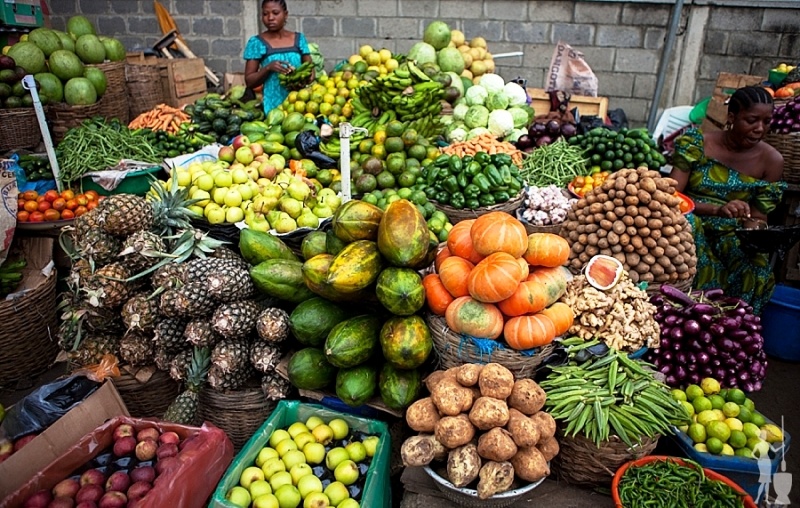
Nigeria’s food inflation may fall to single digits for the first time in more than a decade, underpinned by improved harvests, an import waiver policy on select foods, easing logistics bottlenecks and a steadier naira after years of sharp price increases that strained household budgets.
Food inflation in Africa’s most populous nation eased to 10.84 percent year-on-year in December 2025, a significant drop from nearly 40 percent in December 2024, driven by a revised methodology and lower prices for staples like vegetables and tubers.
The last time Nigeria recorded single-digit food inflation was in May 2015, when prices stood at 9.78 percent.
Read also: How Nigeria can curb food inflation and restore purchasing power – World Bank

Economists polled by BusinessDay see food prices cooling further in January 2026 ahead of the official data due on the 15th of February, effectively exiting the double-digit mark.
That will align the West African nation with its peers like Kenya and Ghana which recorded 7.8 percent and 3.9 percent food inflation, respectively in January 2026.
“Food inflation should have become single digits in December if not for the revision of the Consumer Price Index. The revision added about 3 percent to all the metrics. So, in the next reading, food inflation should be in single digits on a stronger exchange rate,” Ayo Teriba, chief executive officer of Economics Associates, told BusinessDay.
The easing in food prices comes as the naira posts its strongest outing in 13 years in 2025, gaining 7.5 percent after a turbulent period that drove up the cost of imported staples and farm inputs.
Lower exchange-rate volatility has helped temper price expectations, even as structural weaknesses, including poor storage, insecurity in farming communities and high logistics costs continue to limit the pace of disinflation.

If food prices hit the single-digit levels, policymakers are likely to welcome the slowdown, as food accounts for more than half of Nigeria’s consumer price basket and has been a major driver of broader inflation.
Read also: Food inflation falls for fifth straight month to 11.08% in November
A sustained decline could give the central bank enough room for another rate cut when it meets towards the end of this month, offering some relief to an economy grappling with weak consumer demand, according to Muda Yusuf, CEO Centre for Promotion of Private Enterprise (CPPE).
“Though the CBN has been very cautious concerning interest rates, based on the inflation trajectory, I expect that there should be at least some margin cut in interest rates in the next meeting,” Yusuf said.
Boon for consumers, pain for farmers
Nigerians admit to seeing respite in the cost of living as a result of crashes in food prices. A BusinessDay market survey in Lagos, Nigeria’s megacity, reveals consumers’ excitement in falling food prices across several value chains.
“I can attest that prices of food have fallen,” said Faith Ochonogu, a Lagos-based trader. “As at this time last year, I was buying food stuff in bits, but today, I can afford to buy in bulk.”
Ochonogu is like many Nigerians, who say the crash in food prices has brought immense relief to their households. “My family is happier. They can eat without thinking too much. I am even able to afford a bag of rice, something I couldn’t afford last year,” she told BusinessDay.
As of early 2025, a bag of foreign rice across different markets in Africa’s most populous nation costs an average of N88,000, depending on brand type. However, it costs an average of N57,00o today for the same foreign rice. This reflects a 54 percent fall in one year.
Read also: Kenya’s food inflation eases to 6-month low despite deepening drought
Similar trends trail other food commodities. Prices of a big basket of tomatoes have dropped by 65 percent to an average of N35,000 in Mile 12 Market, down from about N100,000 a year ago.
“It’s a blessing that I can now afford to buy foodstuffs without fear of getting broke,” Patience Emmanuel, a Lagos trader, told BusinessDay. “I bought tomatoes recently and the quantity was so much for the price. I’m happy.”
But while consumers see relief, farmers count losses. The import waiver policy that led to a crash in food prices stirred one of the largest post-harvest and financial losses in Nigeria’s agric sector.