Nigeria’s energy sector must shift towards locally-based financing to avoid repeating the capital flight that nearly crippled the industry during past divestment cycles, according to a senior executive at one of the country’s leading indigenous oil producers.
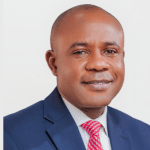
Bolaji Ogundare, group executive director at Pan Ocean Oil Corporation and Newcross Group of Companies, warned that the wholesale exodus of foreign currency following Shell’s 2014 asset sales demonstrated the fragility of dollar-dependent transaction structures in Africa’s largest oil producer.
Speaking at Nigeria’s International Energy Summit 2026 in Abuja, Ogundare revealed that more than $4bn left Nigeria within a month during the 2014 divestment round, when international lenders financed indigenous companies’ acquisitions of Shell’s joint venture assets. The capital outflow was swiftly followed by the 2014-2016 oil price crash, creating a liquidity crisis that exposed the vulnerability of Nigeria’s energy financing model.
Read also: Nigeria’s energy transition drive gains momentum on scaling clean cooking solutions

“All of those transactions were US dollar-based,” Ogundare said. “Literally all of that capital left Nigeria. This was followed by the oil crisis. The lesson this showed us as an organisation, really, as a country, is we should structure divestment a bit better.”

The executive praised subsequent transactions by companies, including Seplat and Renaissance, which adopted structures where divesting international oil companies helped fund the deals, keeping more capital circulating within Nigeria’s economy.
Pan Ocean’s journey illustrates the survival strategies indigenous producers have employed in navigating Nigeria’s challenging operating environment. Between 2006 and 2010, the company faced near-extinction when disruptions to the Forcados export terminal left its landlocked assets shut down for 60-80 per cent of the period.
That crisis forced a strategic pivot towards diversification that has since become Pan Ocean’s blueprint for resilience. The company expanded beyond crude oil production into gas processing, infrastructure development, and alternative financing mechanisms designed to reduce dependence on traditional dollar-denominated bank loans.

Read also: Okonjo-Iweala tasks Nigeria on local manufacturing of renewable energy technologies
“For you to be a sustainable energy company, you need to make sure that you have a bit in all of those sectors,” Ogundare explained, describing how Pan Ocean participated in Shell’s divestment programme, acquired production sharing contracts, and supported marginal field development to build a diversified asset base.
The company invested in critical evacuation infrastructure, including a 67-kilometre, 150,000 barrel-per-day pipeline to the Escravos terminal and, through partnerships, a trunk line to the Brass terminal. These investments addressed the evacuation bottlenecks that had previously threatened the company’s survival.
Gas monetisation has become central to Pan Ocean’s strategy, with the company developing the Ovade-Ogharefe gas plant, a 200m standard cubic feet facility that also produces liquefied petroleum gas, alongside LPG ventures with Platform Petroleum and significant gas opportunities on Oil Mining Lease 24.
To finance this expansion without over-reliance on foreign currency loans, Pan Ocean pioneered commodity-backed financing and risk-sharing partnerships with service contractors. Under these arrangements, contractors deploy services in exchange for upstream exposure, creating incentives for improved performance whilst sharing project risks.
“We’ve come to a scenario where we create mutually beneficial relationships, where they’re able to deploy services into our operations and give us the exact service that we need,” Ogundare said. “They tend to make a bit more money because they’re taking upstream risk with us, but we found that this drives them to produce a bit more for us.”
Read also: MAN laments recurring grid failures, rising spend on alternative energy
The executive’s warnings come as Nigeria accelerates energy transition plans whilst simultaneously seeking to maximise hydrocarbon revenues. The country is pursuing ambitious gas development programmes and encouraging indigenous participation in the sector following international oil companies’ continued divestment from onshore and shallow water assets.
However, Ogundare’s comments suggest that without thoughtful restructuring of financing mechanisms, the energy transition could exacerbate capital scarcity rather than alleviate it.
“To really do that transition, we need to find a way where capital is based locally, and we’re able to use it to develop the asset without truncating the rest of the development of the Nigerian economy,” he said.