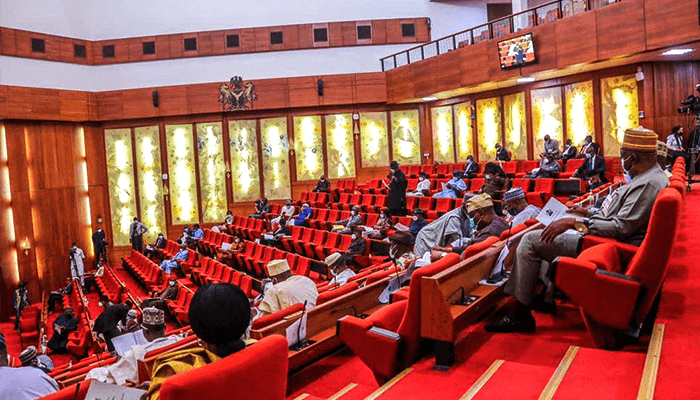
Major opposition parties in Nigeria have jointly condemned the Senate’s recent decision to reject the proposal for mandatory real-time electronic transmission of results from polling units, describing it as a threat to the country’s democratic progress.
In a joint press statement signed by the National Publicity Secretaries of the Peoples Democratic Party (PDP), African Democratic Congress (ADC), and New Nigeria Peoples Party (NNPP), the opposition accused the APC-led Senate of enacting an “anti-people and anti-democratic” measure that could set Nigeria’s democracy back by decades.
The parties expressed bewilderment that the ruling All Progressives Congress (APC), which is actively deploying technology to register its members nationwide, would oppose the use of technology to transmit election results.
They alleged that the rejection was motivated by political self-interest, claiming that a free and transparent election could pose a threat to the ruling party in future polls.

“They know Nigerians are fed up with them. They are aware of the rejection that awaits them at the forthcoming polls. A free and fair election has therefore become a threat to them.
“This is why they have to preserve and protect any loopholes that could aid the manipulation of the electoral process to their advantage,” the statement read.
The opposition highlighted that previous elections in Nigeria had faced legal challenges due to the lack of a legislative requirement for electronic transmission of results.
They argued that making such transmission mandatory would strengthen transparency, increase public trust, and deepen democracy.
While noting that the decision has returned Nigeria to “square one,” the parties called on the conference committee tasked with reconciling differences between the House of Representatives and the Senate to adopt the position of the House, which supported mandatory electronic transmission.

“We are trusting that they will act in the best interest of the people, to forestall the negative consequences that may result from foisting anti-democratic laws on the people,” the statement concluded.
Read also: Senate’s rejection of real-time result transmission assault on electoral transparency – Atiku
Civil Society Expert Warns of Threats to Electoral Credibility
Reacting to the Senate’s passage of the Electoral Act Amendment Bill, Clement Nwankwo, convener of the Civil Society Situation Room, urged Nigerians to continue speaking out against provisions of the law that could undermine the credibility of future elections.
Speaking on Arise Television’s Morning Show on Thursday, Nwankwo warned that the version passed by the Senate does not reflect the position of the majority of senators and could create serious challenges for the Independent National Electoral Commission (INEC).
“I think citizens have to raise their voices.
I know that the Situation Room organised a protest last week. I believe that this will continue,” he said.
He praised organised labour, the media, and civil society groups for sustaining public engagement on the bill:
“I think the labour unions, citizens, the media have been doing an excellent job.
“Even in your programme, your analysis and your comments on these issues are so very important, and it is important that this continues.”
Nwankwo alleged that the outcome of the Senate vote was determined more by procedural control than by genuine majority consensus, claiming that many senators were reportedly unhappy with how the decision was taken.
“What I see that has been passed is really the views of those who have the power to hit the gavel and decide whether a yes is a yes or a no is a no in terms of voting.
” I know that a lot of senators themselves are very aggrieved by the way the gavel has been hit on this matter,” he added.
The Senate had on Wednesday passed an amendment to the Electoral Act 2022, which included several changes, but specifically rejected the House of Representatives’ recommendation to make electronic transmission of results mandatory at polling units.
The move has sparked widespread criticism from civil society, election experts, and Nigeria’s major opposition parties.