…BPE leads push to close over 5m meter gap
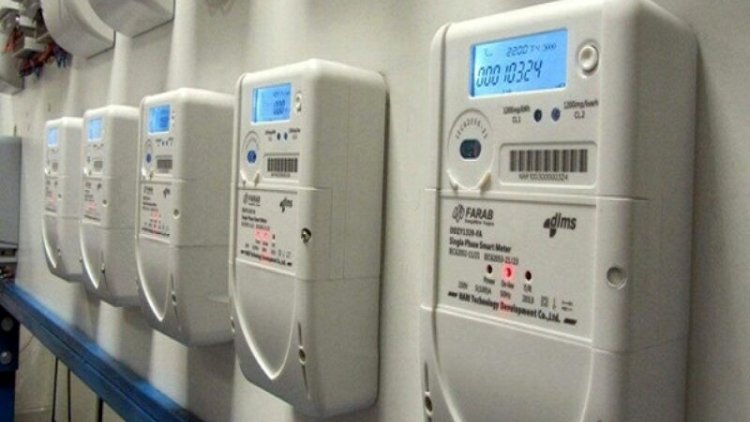
Only about 200,000 smart meters have been installed under the federal government’s $500 million World Bank-backed Distribution Sector Recovery Program (DISREP), officials said on Wednesday. They hold that the rate of installation is slow and not encouraging.
The program, designed to close Nigeria’s estimated 5.66 million metering gap, has delivered nearly 700,000 meters to the country, but the pace of installation by Distribution Companies (DisCos) remains slow, the Bureau of Public Enterprises (BPE) and other power sector officials acknowledged at a press briefing in Abuja.
Led by Ayodeji Gbeleyi, Director-General of BPE, the meeting brought together all key stakeholders, including the Nigerian Electricity Regulatory Commission (NERC), the ministry of power, the National Mass Metering Initiative, and the Managing Directors of the DisCos.

Read also: DisCos record N44.2bn revenue shortfall in October 2025
The event sought to clarify public concerns over meter deployment and funding arrangements, as well as to provide a status update on implementation.
“This is a landmark transaction for the country,” Gbeleyi said. “Under DISREP, we are importing meters at scale to bridge the metering gap and ensure consumers are billed accurately. The meters and installation are provided free of charge to customers, and the costs have been paid to the contractor. Revenue will be recovered through the Multi-Year Tariff Order (MYTO), regulated by NERC.”
The program aims to deliver 3.2 million free smart meters over four years through a combination of international and local competitive bidding. Phase one involved the importation of 1,437,500 meters, including single-phase and three-phase units, of which roughly 700,000 are already in-country. Local manufacturers are supplying an additional 217,000 meters under national competitive bidding. Phase two will see another 1,550,000 meters imported.
“The collaborative effort is ongoing, and all stakeholders, including NEMSA, TCN, and NEC, are verifying and testing meters before deployment,” Gbeleyi said. “Our goal is clear: reliable electricity supply, improved industry sustainability, and closing the metering gap as a matter of national priority.”

Adedayo Olowoniyi, Chief Technical Adviser to the minister of power, described the slow installation rate as “not an encouraging statistic,” noting that only 150,000 to 200,000 meters have been deployed so far. He emphasised that the program is central to the government’s broader efforts to strengthen the downstream segment of the electricity sector, which has long been seen as its weakest link.
Read also: MAP scheme leads meter rollout as DisCos distribute 228,614 in Q3 2025
“The meter gap must be closed during this administration, and the distribution segment must support the program,” Olowoniyi said. “These meters are not meant to be paid for by customers. Structures exist for cost recovery, just as there are structures for any grid assets. The focus is on closing the gap efficiently and with the lowest cost of capital available.”
During the briefing, Musiliu Olalekan Oseni, NERC Chairman, underscored the meters’ role in building confidence between consumers and utilities. “Meters serve as revenue assurance for utilities and confidence-building for consumers. They allow customers to see that they are being billed accurately for what they consume,” he said. “Unfortunately, misinformation has circulated in the media, and this briefing aims to correct that.”
The program is integrated with other government initiatives, including the Presidential Metering Initiative (PMI) and the Meter Acquisition Fund (MAF), both of which aim to accelerate meter deployment and close the national gap.
The World Bank’s concessional financing of $500 million for DISREP is split into two components: $250 million for Investment Project Financing, which covers meter procurement, Meter Data Management Systems, and technical assistance; and a Program-for-Results component to incentivize performance improvements and governance reforms.
Officials stressed that the program is designed not only to improve meter penetration but also to enhance service delivery, revenue collection, and the financial sustainability of DisCos. By combining infrastructure investment, performance-based financing, and governance reforms, DISREP seeks to make the electricity distribution sector more transparent, bankable, and responsive to consumer needs.
Read also: BPE, DisCos defer on free meter investment
Aisha Tukur, Director of the Energy Sector Department, BPE said the program represents a major step in reforming the Nigerian electricity sector. “DISREP is about creating operational efficiency, financial viability, and transparency across the electricity value chain,” she said. “It supports DisCos with technical assistance, training, and systems to strengthen operations while ensuring consumers are metered and billed accurately.”
Despite the progress, the slow take-up by DisCos remains a key concern. With nearly half a million meters still waiting for installation, government officials emphasised the need for faster deployment to achieve the program’s objectives and to close the metering gap for millions of Nigerian households and businesses.
But the CEOs of all DisCos present at the meeting outlined their efforts to accelerate meter rollout, while urging electricity consumers to avoid bypassing meters, warning that tampering significantly undermines revenue collection and strains the power sector.