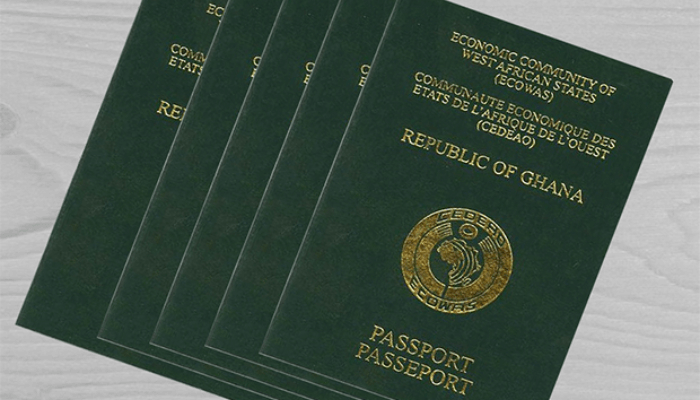
Ghana has suspended applications for citizenship by members of the African diaspora, citing the need to review and improve a process that applicants say has become costly, complex and difficult to navigate.
The programme, introduced in 2016, allows people of African descent who can prove ancestral ties to the continent to acquire Ghanaian nationality.
According to BBC report, it was primarily designed to reconnect descendants of Africans displaced during the transatlantic slave trade with their ancestral homeland.
“Since its launch, more than 1,000 people have successfully obtained Ghanaian citizenship under the initiative. Beneficiaries include prominent figures such as African American singer-songwriter Stevie Wonder, whose naturalisation attracted global attention and reinforced Ghana’s image as a welcoming destination for the African diaspora.

“However, despite its symbolic and practical appeal, the programme has faced growing criticism from applicants and diaspora advocacy groups over its administrative requirements and costs.
“Applicants have complained about what they describe as an excessive number of stages, tight submission deadlines and high fees”, the report said.
Erieka Bennet, ambassador of the Diaspora African Forum, an organisation that supports diaspora Africans seeking to relocate to Ghana, said many applicants struggled to meet the programme’s documentation demands.
According to Bennet, one of the most challenging requirements was the expectation that applicants submit DNA evidence within a week of filing their application.
She described the timeframe as “impossible” for most applicants, noting that DNA testing typically takes much longer and that some applicants also questioned the reliability and interpretation of such tests.

She added that the one-week deadline applied not only to DNA results but also to other supporting documents, making compliance difficult for applicants based outside Ghana.
Cost has also emerged as a major concern. While the initial application fee is set at $136 (£100), shortlisted applicants are required to pay an additional $2,280 (£1,700).
The report also noted that successful candidates are then subjected to vetting procedures and must attend a one-day citizenship orientation programme before receiving their nationality at a formal ceremony overseen by President John Mahama.
Despite the suspension, Bennet expressed optimism that the challenges would be addressed and that the application process would resume in a more streamlined and accessible form.
The Ghanaian government has acknowledged the suspension, stating that updated timelines and revised guidelines will be issued “in due course”, although no specific timeframe has been provided.
“The lack of clarity has created uncertainty and anxiety among prospective applicants, particularly those planning relocation, business investments or property purchases in the country.
Ghana’s outreach to Africans in the diaspora is deeply rooted in its post-independence Pan-African vision, championed by the country’s first president, Kwame Nkrumah.
That vision was revitalised in 2019 through the landmark “Year of Return” initiative, which marked 400 years since the first recorded arrival of enslaved Africans in North America and sought to encourage reconnection with the continent.
“Since then, members of the diaspora have increasingly invested in Ghana’s economy, particularly in real estate, agriculture, technology and small-scale enterprises. For many, acquiring citizenship offers practical benefits, including the right to own land, vote, and access public services.
“Ghana is not alone in offering citizenship pathways to people of African descent, as West African countries, including Benin and Sierra Leone, have also introduced similar initiatives based on verified ancestral links, as part of broader efforts to strengthen ties with the global African diaspora”, the report said.