….What this means for farmers in 2026
The unusually prolonged rainfall recorded in January and February 2026, well outside the typical 2025 rainy season cycle, has raised concerns among farmers, who fear it could disrupt the fruiting cycle of key economic trees such as oil palm and cashew, ultimately reducing yields.
According to the 2025 Annual Seasonal Climate Prediction (SCP) report released by the Nigerian Meteorological Agency (NiMet), the end of the 2025 rainy season was forecasted to occur between October 6 and December 17 across the country.
Northern states such as Sokoto, Kano and Kaduna were expected to experience an early cessation of rainfall, while coastal states including Lagos, Rivers, Akwa Ibom and Delta were projected to record a later cessation, between November 23 and December 17.

However, the weather pattern unfolded differently as observed by this reporter.
BusinessDay gathered that rainfall was recorded on January 1 in several states, including Lagos, Kogi, Anambra, Ekiti and Abia, as well as parts of northern Nigeria.
In addition, heavy rains were reported in Kogi and some northern states on February 2, while Lagos, Ogun and some Southern states experienced rainfall, signalling a shift from the country’s usual seasonal climate pattern.
Climate experts attribute the anomaly to the growing impact of climate change, warning that the prolonged rainfall could disrupt the fruiting season of major economic crops and heighten public health risks.
“This prolonged rainfall may reduce oil palm yields this year, as the crop depends on the Harmattan season for proper fruiting,” said Jeremiah John, chief executive of Jeffy Ochy Farms.

A cashew farmer in Kogi State also expressed concern over the potential impact on output. “Cashew may not produce as expected this year because of the prolonged rains,” he said.
Why the rains persist
Experts attribute the prolonged wet season and delayed onset of Harmattan to climate change, rising global temperatures, and shifts in the boundaries separating Nigeria’s wet and dry seasons.
Muhammed Akilu, principal meteorological technician at the Nigerian Meteorological Agency (NiMet), identified climate change as the primary driver of the anomaly.
“The northward persistence of the Intertropical Discontinuity (ITD) remained farther north for longer than usual, allowing moist south-west winds from the Atlantic Ocean to dominate,” he said.
“Warmer temperatures over the Sahara and the Gulf of Guinea also weakened the pressure and temperature gradient required to drive strong Harmattan winds, resulting in a delayed onset of the season,” Akilu added.
Daniel Akor, a geospatial and climate analyst, also shared similar views as recent NiMet forecasts further reinforce the shifting weather patterns, predicting hazy conditions, cloudy skies and light rainfall in parts of the country between January 7 and 9, 2026, and February 1 and 2, with increased cloudiness expected between February 3 and 5, 2026.
What this means for farmers
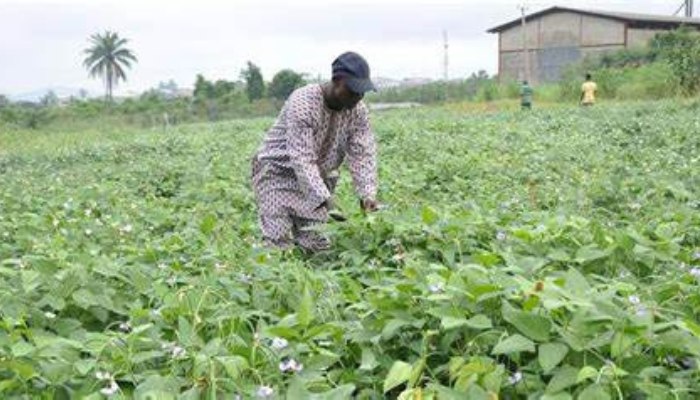
While dry-season farmers have welcomed the extended rainfall, cashew and oil palm plantation owners fear potential losses due to increasingly unpredictable weather patterns.
The prolonged wet season and delayed onset of Harmattan could delay planting schedules, increase uncertainty around production output for agribusinesses, shift the onset of the 2026 wet season, and heighten the incidence of pests and diseases, particularly among dry-season farmers and vegetable growers.
“Farmers should expect a delayed onset of the 2026 wet season cycle and an increased pest and disease burden for dry-season farmers, particularly those engaged in vegetable farming,” Akilu noted.
Akor, earlier quoted, also identified an unpredictable planting season for farmers and heightened uncertainty in production output for agribusinesses as key consequences of the delayed onset of Harmattan and the prolonged wet season.
Experts advise farmers
Experts advise farmers to closely follow NiMet weather reports, watch for early warning signs, adopt smart irrigation practices, adjust planting schedules, and cultivate early-maturing and drought-resistant crop varieties to reduce climate-related risks.
“It is important to closely monitor NiMet’s weather forecasts and plant early-maturing as well as drought-resistant crops to reduce the effects of climate change,” Akilu noted.
Akor also emphasised the need for climate-smart investments, including monitoring soil moisture, aligning planting decisions with weather patterns, and adopting more resilient crop varieties.