… to begin budget scrutiny next week
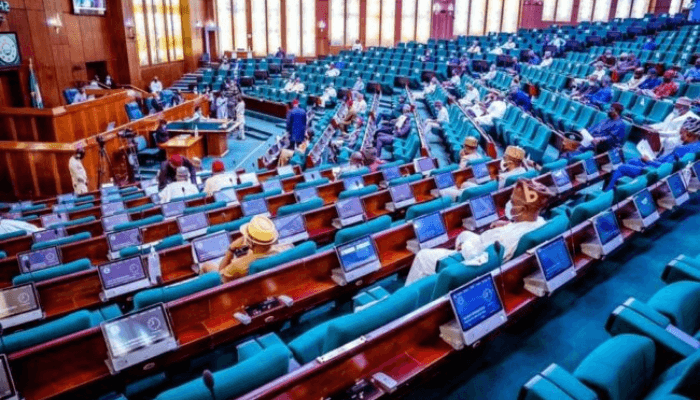
The House of Representatives on Thursday passed for second reading President Bola Tinubu’s proposed N58.47 trillion appropriation bill for the 2026 fiscal year.
The bill, christened the “Budget of Consolidation, Renewed Resilience and Shared Prosperity”, was approved without debate during plenary on Thursday.
Tinubu formally presented the 2026 budget to a joint session of the National Assembly in December 2025 which he noted is aimed at consolidating macroeconomic stability, strengthening national security and expanding capital investment.

Read also: PwC, BusinessDay to host CEO roundtable on Nigeria’s 2026 budget, outlook
Under the proposal, total expenditure is put at about N58.18 trillion to N58.47 trillion. Of this amount, N4.09 trillion is allocated to statutory transfers, N15.91 trillion to debt servicing, and N15.25 trillion to recurrent (non-debt) expenditure. Capital expenditure is estimated at between N23.21 trillion and N26.08 trillion, largely to be channelled through the Development Fund.
The budget projects total revenue of N34.33 trillion, leaving a fiscal deficit of N23.85 trillion.
Julius Ihonvbere, the House leader, who read the general principles of the bill described the proposal as a defining moment in Nigeria’s pursuit of peace, economic growth, stability and sustainable development.
To justify legislative support for the proposal, the House leader cited what he described as key macroeconomic improvements. According to him, economic growth stood at 3.98 percent heading into the 2026 fiscal year, while inflation had declined to 14.45 per cent from about 25 percent. He also pointed to improved revenue performance, rising exports and increased foreign direct investment.

Ihonvbere said the naira had stabilised at around N1,400 to the dollar, from levels above N1,800, while external reserves had risen to a seven-year high of roughly $47 billion, enough to cover more than 10 months of imports.
“We have not printed a single naira since this government came into office. That fiscal discipline has helped stabilise the economy,” he said.
He further noted that, unlike in previous budgets where recurrent expenditure outweighed capital spending, the 2026 proposal places greater emphasis on capital investment.
“This is a departure from the past where recurrent spending dominated. Here, capital expenditure is higher, which is what drives real development,” he said.
In terms of sectoral priorities, security and defence receive N5.41 trillion, which the House leader said is aimed at tackling insecurity and addressing food challenges. Infrastructure is allocated N3.56 trillion, education N3.54 trillion, and health N2.48 trillion.
Read also: Budget, tax, Electoral Act take centre stage as NAssembly resumes
He further said the budget reflects executive commitments to stronger fiscal discipline, improved revenue mobilisation through tax reforms, blockage of leakages, macroeconomic stability, human capital development and prudent debt management.
Tajudeen Abbas, Speaker of trh House subsequently referred the appropriation bill to the House Committee on Appropriations for further legislative work.
The House thereafter adjourned plenary for two weeks to allow ministries, departments and agencies to commence budget defence sessions before the relevant committees.