Unlike some of its African peers that have moved aggressively to loosen policy, South Africa has opted for caution, holding its benchmark rate steady as inflation risks ease but global uncertainty persists.
The South African Reserve Bank paused its easing cycle as widely expected, keeping its benchmark interest rate at 6.75 percent — the first hold since September 2025 — amid a slightly improved inflation outlook and a firmer currency.
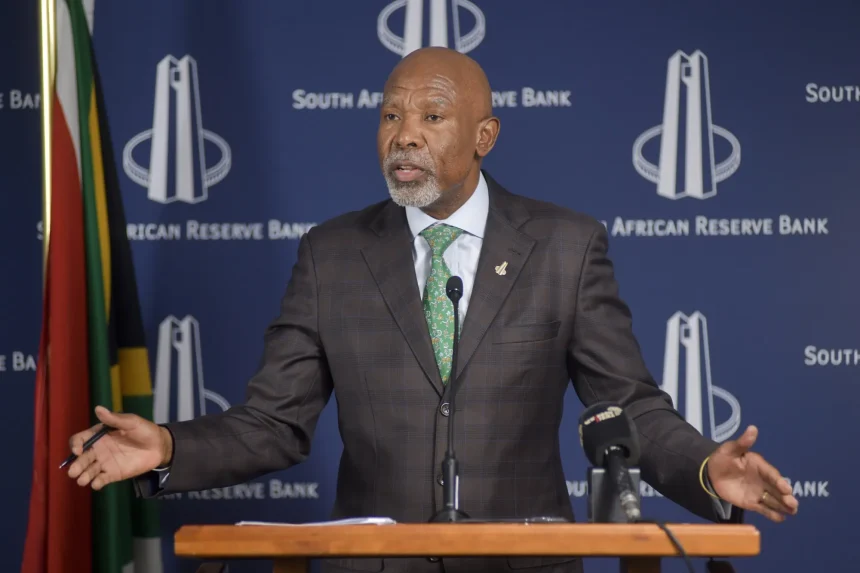
The six-member Monetary Policy Committee (MPC) voted four-to-two in favour of holding rates, with two members preferring a 25 basis point cut, SARB’s governor Lesetja Kganyago said at a briefing in Pretoria on Thursday.
The decision marks a shift to a more cautious stance after cumulative cuts of 100 basis points over the past year, which brought the policy rate down from 7.75 percent.

“Our near-term inflation forecast has fallen, with the rand stronger and a lower oil price assumption,” Kganyago said, adding that December’s 3.6 percent inflation print is now expected to mark the peak. Still, he warned that food and electricity prices remain upside risks, alongside elevated geopolitical tensions.
“Last year was marked by extreme global uncertainty, and 2026 has begun with a new round of shocks,” the governor noted.
The central bank also trimmed its 2026 inflation forecast to 3.3 percent from 3.5 percent, bringing it closer to its newly emphasised three percent target anchor within the 3–6 percent band. The rand has strengthened by about 10 percent against the dollar since the MPC’s last meeting, reinforcing disinflation momentum through cheaper imports and fuel.
Global volatility remains a key variable. Policy signals and geopolitical rhetoric from US President Donald Trump have unsettled markets, while tensions around Iran and oil price swings continue to cloud the outlook. The Federal Reserve also held rates steady at its latest meeting, underscoring a broader trend of policy caution among major central banks.
Elsewhere, the policy path has diverged. Angola cut its benchmark rate by 100 basis points to 17.5 percent in January — its lowest since October 2023 — citing easing inflation and more stable domestic conditions. On Wednesday, Ghana delivered a larger-than-expected 250-basis-point cut to 15.5 percent, the lowest level since February 2022, as price pressures moderated. By contrast, Tanzania held its rate at 5.75 percent to support growth.

In Nigeria, analysts expect a shift toward easing at the next MPC meeting in February, with growing support for a gradual policy pivot as inflation expectations soften. Africa’s most populous nation, previously trimmed its policy rate by 50 basis points to 27 percent last September — its first cut in five years — but has since maintained a cautious hold.