I have often said that Nigeria does not really have a problem with laws; it has a problem with time. We pass laws in moments of urgency and then behave as if history has no right to move on. The NLNG v. NIMASA case, recently decided by the Supreme Court on the 16th day of January 2026, is one of those moments where time finally caught up with us. Predictably, the verdict has been framed as a triumph of contractual sanctity and a rebuke of regulatory overreach. Less predictably and far less honestly, it has also been used to paint the Nigerian Maritime Administration and Safety Agency (NIMASA) as an antagonist in a story where the real villain is our inability to evolve.
The background is familiar. In 1989, Nigeria wanted to build a liquefied natural gas plant of global scale. It needed foreign capital, technical expertise, and, above all, trust. The country did not have much of that to spare. Investors were wary, gas was being flared wastefully, and Nigeria’s reputation for policy inconsistency was already forming. So, government chose the most powerful reassurance it had at its disposal: legislation. The Nigeria LNG (Fiscal Incentives, Guarantees and Assurances) Act was not a routine investment law; it was a deliberate attempt to lock in credibility. Beyond tax reliefs, it offered stability itself. The guarantees in the Second Schedule were meant to endure, immune from future policy mood swings unless all parties agreed otherwise. It was a vow made under pressure, and it worked.
The Nigeria LNG Limited (NLNG) became one of Nigeria’s rare economic success stories. The trains were built. The cargoes shipped. The revenues flowed. Dividends went to shareholders, including the Nigerian state. For years, there was little controversy. The arrangement seemed mutually beneficial, and in a country accustomed to failed projects, NLNG stood out as proof that Nigeria could get something right if it tried hard enough.
But success has consequences, especially when institutions grow around it. In 2007, NIMASA was established to consolidate Nigeria’s maritime regulatory functions. It inherited a sector plagued by safety issues, weak enforcement, and funding gaps. Unlike NLNG, NIMASA was not designed to be commercially successful; it was designed to prevent failure. Its tools were regulation, oversight, and enforcement. Its fuel was revenue from industry levies, including the gross freight levy and the cabotage surcharge. These were not creative inventions; they were standard mechanisms for sustaining maritime governance worldwide.
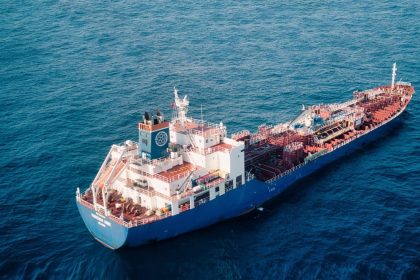
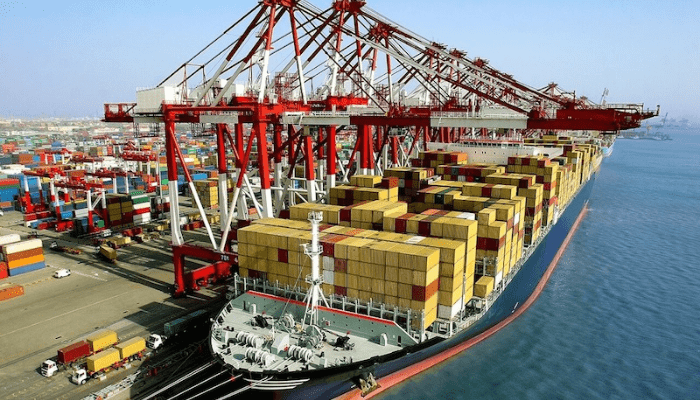
From this perspective, NLNG presented a puzzle that gradually became a problem. Its vessels traversed Nigerian waters regularly, benefiting from port state control, maritime security, and regulatory oversight. Yet, unlike other operators, it contributed nothing to the system funding those services. Smaller shipping companies paid. Indigenous operators paid. Even struggling firms complied. The largest gas exporter did not—not because it was defiant, but because it was legally insulated by a law passed decades earlier.

To NIMASA, this was not simply unfair; it was structurally destabilising. Regulators cannot effectively discharge their mandate when their biggest stakeholders are permanently exempt from contribution. Incentives that were once justified by risk had become entrenched privileges sustained by legal inertia. NIMASA’s demand that NLNG pay the levies was therefore not an impulsive grab for revenue. It was an attempt, however clumsy, to reconcile a modern regulatory framework with an old legislative bargain.
NLNG’s resistance was predictable and legally sound. The company pointed to its Act, which shielded it from new imposts not generally applicable to Nigerian companies. On the black letter of the law, the argument was compelling. But law does not operate in a vacuum. Policy environments evolve, risks change, and institutions must adapt. The real tension in this case was not between legality and illegality, but between historical certainty and present-day functionality.
That tension eventually spilled into confrontation. In 2013, NIMASA escalated the dispute by deploying security contractors to blockade the Bonny Channel, effectively preventing NLNG vessels from moving. It was an extraordinary step, and a damaging one. The optics were disastrous: a government agency obstructing a government-backed company, costing the nation millions in lost revenue and eroding investor confidence. It fed neatly into the familiar narrative of a heavy-handed regulator flexing muscle where dialogue should have prevailed.
Yet even this episode deserves a more nuanced reading. Regulators rarely resort to extreme enforcement in the first instance. Such actions usually signal prolonged stalemate, ignored correspondence, and institutional frustration. That does not excuse the blockade, which the courts rightly condemned, but it does explain it. It was the act of an agency trapped between a statutory mandate it could not abandon and a legal barrier it could not overcome.
When the matter reached the courts, the outcome was almost inevitable. The Federal High Court affirmed the supremacy of the specific NLNG Act over the general NIMASA Act. The Court of Appeal briefly reopened the case on procedural grounds, but by January 2026, the Supreme Court delivered finality. The guarantees in the NLNG Act were upheld. The levies were declared inapplicable. The blockade was ruled unlawful. In legal terms, NIMASA lost comprehensively.

But this is where the celebration should stop and the reflection should begin. The judgment resolved the legal dispute, but it exposed a deeper institutional weakness. Nigeria had effectively frozen part of its regulatory space in 1989 and never designed an exit strategy. The country knew how to attract investors, but not how to recalibrate incentives once the project matured and the risk dissipated.
Seen this way, NIMASA’s defeat is less an indictment of regulatory excess and more a warning about legislative rigidity. The agency was punished for attempting to modernise a system constrained by historical promises. It asked an uncomfortable but legitimate question: how long can exemptions last before they undermine the institutions meant to govern an industry?
The broader lesson of NLNG v. NIMASA is not that regulators should be timid. It is that Nigeria must learn how to balance the sanctity of contracts with the sustainability of its institutions. Protecting investors is essential, but so is ensuring that regulators are not permanently starved of the resources they need to function.
Until Nigeria confronts this dilemma honestly, similar disputes will recur under different names. We will continue to praise court judgments for upholding the law while quietly ignoring the policy gaps they reveal. And regulators like NIMASA will keep being cast as villains, not because they are wrong to ask hard questions, but because the system has never taught us how to answer them.
Muntasir Adamu Kanam can be contacted via mistamuntasir@yahoo.com