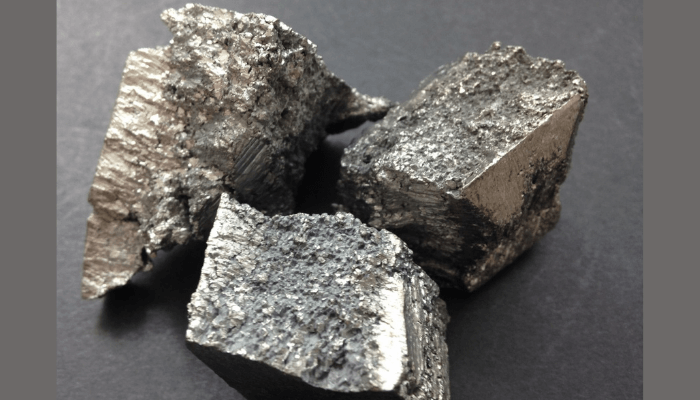
Nigeria is emerging as an unlikely producer of rare earth minerals despite having no officially recorded reserves, highlighting inconsistencies in global mineral accounting as well as both the untapped potential and risks within Africa’s critical minerals supply chain.
Data compiled by Visual Capitalist using figures from the United States Geological Survey (USGS) shows Nigeria recorded 13,000 metric tons of rare earth mine production in 2024, placing it alongside Australia and Thailand in annual output. Yet Nigeria is listed with zero confirmed rare earth reserves, a contrast that highlights gaps in geological surveying, reporting, and formal mine development.
Globally, rare earth reserves are estimated at over 90 million metric tons, with China dominating at about 44 million metric tons. Brazil follows with 21 million metric tons, while India holds 6.9 million metric tons and Australia holds 5.7 million metric tons. Russia accounts for 3.8 million metric tons, Vietnam 3.5 million metric tons, and the United States 1.9 million metric tons. Greenland, despite having an estimated 15 million metric tons of reserves, records no commercial production. African countries with identified reserves include Tanzania with about 890,000 metric tons and South Africa with 860,000 metric tons, while Canada holds roughly 830,000 metric tons.
Read also: Nigeria takes giant leap in defence manufacturing with Turkish deal

On the production side, China remains overwhelmingly dominant, mining about 270,000 metric tons of rare earths annually, more than two-thirds of global output. The United States produces around 45,000 metric tons, followed by Myanmar with 31,000 metric tons. Australia, Thailand, and Nigeria each contribute approximately 13,000 metric tons. India produces 2,900 metric tons, Russia 2,500 metric tons, Madagascar 2,000 metric tons, and Vietnam 300 metric tons. Global mine production totals about 390,000 metric tons.
Nigeria’s appearance among producing countries despite the absence of certified reserves suggests much of its output may come from informal or under-documented mining, a common feature of the country’s solid minerals sector. Analysts say this exposes regulatory, environmental, and revenue risks, even as demand for rare earths, used in electric vehicles, wind turbines, defense systems, and electronics, continues to rise.
For Africa’s largest economy, the data highlights both an opportunity and a warning. While Nigeria is already participating in the rare earth supply chain, the lack of detailed reserve mapping, formal mine development, and value-chain integration limits its ability to attract long-term investment and capture higher economic value from critical minerals.
As countries seek alternatives to China-dominated supply chains, Nigeria’s challenge will be to convert opaque production into verifiable reserves, regulated mining, and downstream processing, or risk remaining a marginal and informal supplier in a rapidly strategic global market.