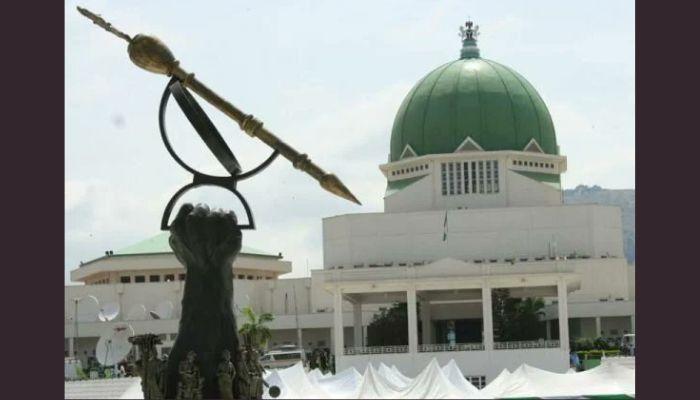
As the National Assembly resumes plenary for 2026, attention is firmly fixed on an ambitious and politically sensitive agenda that cuts across fiscal policy, electoral reforms and constitutional amendments, with Nigerians eagerly awaiting outcomes that will shape governance and the 2027 general elections.
Top of the agenda is the 2026 Appropriation Bill, alongside unresolved controversies surrounding the recently passed tax reform laws, stalled Electoral Act amendments, and the delayed constitutional review process.
President Bola Tinubu presented the ₦2026 Appropriation Bill to a joint sitting of the National Assembly in December 2025, setting the stage for months of intense legislative engagement.
As lawmakers return, committees in both chambers are expected to commence budget defence sessions with ministries, departments, and agencies (MDAs).

The process will involve line-by-line scrutiny of expenditure proposals, revenue assumptions, and deficit financing plans, culminating in committee reports, harmonisation between both chambers and final passage.
With inflationary pressures, subsidy reforms, and debt servicing costs still weighing heavily on the economy, Nigerians are particularly keen to see whether the legislature will push for a more realistic, pro-growth and accountable budget framework before eventual passage.
Also expected to dominate proceedings is the unresolved controversy surrounding the four tax reform laws passed late last year and already being implemented by the federal government since 1 January 2026.
Read also: How the National Assembly keeps breaking Nigeria’s budget cycle
Concerns were first raised in December by Abdulsamad Dasuki, a member of the House of Representatives, who alleged that copies of the tax laws in public circulation differed from versions passed by the National Assembly. In response, the House constituted a seven-member committee to investigate the matter, with a one-week mandate.

However, the committee has exceeded its timeline and is yet to submit its findings.
Complicating matters further, the House Minority Caucus set up its own ad-hoc committee, which released an interim report alleging that the laws were altered after passage.
The House leadership swiftly disowned the report, describing the committee as illegal and unconstitutional, and insisting it lacked the authority to conduct such a probe.
As plenary resumes, lawmakers are expected to revisit the matter, with the official committee’s report anticipated amid calls for clarity to restore legislative credibility and public confidence.
Also, with the country inching closer to the 2027 general elections, electoral reforms are expected to attract heightened attention.
Atiku Abubakar, a Former Vice-President, has openly accused the Senate of frustrating efforts to amend the Electoral Act 2022, warning that continued delays could fatally undermine the credibility of the next polls.
Describing the 2023 general election as a “major setback,” Atiku blamed loopholes in the current law for enabling electoral malpractice and weakening the prosecution of election petitions.
“It is imperative that if the mistakes of the 2023 election are to be corrected, the legal instrument for the conduct of the 2027 and subsequent elections needs to be reviewed,” he said.
Atiku further warned that failure to conclude amendments before 2027 would amount to “a deliberate attempt to rig the election long before the ballots are cast.”
Civil society organisations have echoed similar concerns. The Nigeria Civil Society Situation Room criticised the National Assembly, particularly the Senate for failing to conclude work on the Electoral Act (Amendment) Bill in 2025, despite its passage by the House of Representatives on 23 December 2025.
The group noted that although the bill passed second reading in the Senate in October, it was stepped down over procedural issues and never returned for final consideration before adjournment.
“Electoral reform is not routine legislation. It is a time-sensitive national obligation,” the Situation Room said, urging immediate passage and transmission to the President upon resumption.
Another unresolved issue is the constitutional review process, which missed its self-imposed December 2025 deadline.
The Constitution Review Committees, chaired by Jibrin Barau, the Deputy Senate President, and Deputy Speaker Benjamin Kalu in the House of Representatives, are considering 87 amendment proposals spanning local government autonomy, state policing, women’s representation, judicial reforms, fiscal federalism, and the creation of new states and local governments.
Although plans had been made to conclude voting before the end of last year, repeated postponements stalled progress. Voting is now expected to resume, with amendments requiring a two-thirds majority in both chambers before transmission to state houses of assembly and eventual presidential assent.
Beyond legislation, political realignments are also expected to continue. Defections, mostly into the ruling All Progressives Congress (APC) have become a recurring feature at resumption, often announced during plenary by the Speaker of the House.
With preparations for the 2027 elections already underway, recent defections have further strengthened the APC’s dominance in the House, where it now holds more than a two-thirds majority, reshaping internal power dynamics and legislative calculations.
As both chambers reconvene, lawmakers face mounting public pressure to deliver on reforms that will define Nigeria’s fiscal direction, electoral integrity and constitutional order.