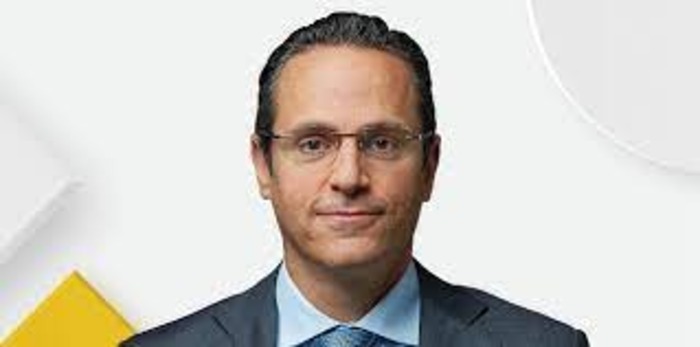
Wael Sawan, Shell PLC’s Chief Executive, has credited President Bola Tinubu’s administration with creating the stable investment climate that enabled the energy giant’s $20 billion commitment to Nigeria’s Bonga field, the largest foreign direct investment in African energy in a generation.
“We have really been in a space where we are very keen to invest in Nigeria. But I would say this has not always been the case,” Wael Sawan told Tinubu during a meeting at the Presidential Villa. “Your leadership and your vision have created an investment climate over the last few years that, I will be very honest with you, propelled us to invest.”
The Lebanese-born CEO, Shell’s first leader from outside traditional Dutch or British backgrounds, praised the quality of Nigeria’s current energy team as exceptional by global standards. The president’s appointments include former Shell executives in critical positions, individuals who understand the company’s decision-making processes.
“Your team are amongst the best that we are dealing with anywhere in the world, and that professionalism allows us to be able to have the confidence,” Sawan said, noting that this enabled Shell and its partners to commit to long-term investments.

The endorsement represents a remarkable turnaround for a country whose regulatory environment previously drove international operators toward exits rather than expansions. Tinubu inherited what industry insiders describe as a graveyard of stalled mega-projects and bureaucratic approval processes that frustrated global energy companies.
The president established direct communication channels with Sawan and implemented executive orders providing additional investment incentives. Those policy adjustments proved critical in a competitive global landscape where energy capital flows to the most welcoming jurisdictions.
“Stability in today’s environment will honestly have a premium for corporates because we are investing not for one administration or five or 10 years, we want to invest for 20, 30, 40 years,” Sawan emphasised, underscoring the long-term nature of major energy commitments.
Bayo Ojulari, Group Chief Executive of Nigerian National Petroleum Company Limited, acknowledged the intense global competition for investment. Energy companies continuously evaluate options across competing jurisdictions, he noted, including Guyana and parts of the Far East.
The breakthrough required more than policy pronouncements. Shell’s Bonga decision came after prolonged uncertainty over the Renaissance deal, its proposed exit from Nigerian onshore operations. Sources familiar with the matter indicated Shell executives privately made clear that regulatory approval of the Renaissance transaction was essential before committing Bonga billions.

Some within Shell had advocated redirecting Bonga-earmarked capital to more stable jurisdictions like Brazil or Guyana during the delays. The resolution of regulatory obstacles coincided with intensified efforts by Tinubu’s team to demonstrate Nigeria’s new investment readiness.
Shell has deepened its commitment beyond the Bonga revival, purchasing Total Energies’ stake in Block OML 118. “We bought it because we want to deepen further,” Sawan said. “But that, we think, is not enough. We think there is more to invest here.”
The Bonga project’s success could unlock a pipeline of stranded deepwater assets. Five major developments, Chevron’s Zabazaba and Nsiko projects, ExxonMobil’s Bosi development, and the Satellite and Ude fields, represent a potential combined output of 580,000 barrels per day. Each requires the same regulatory clarity Shell secured.
“This is about more than Bonga,” a senior energy executive in Lagos said. “Shell is essentially saying that Nigeria is open for serious business again. That message resonates across every boardroom from Houston to London.”
Ojulari highlighted broader economic benefits beyond hydrocarbon production. Such developments typically generate employment across fabrication, construction, and supply chain operations over the productive lifespan of fields.
“For many years, fabrication yards have been idle because there were no projects,” Ojulari stated. “Those yards will come back to life.”
The test now is whether Nigeria’s reforms represent systemic change or relationship-driven exceptions, as the country seeks to reclaim its position as Africa’s leading oil producer.