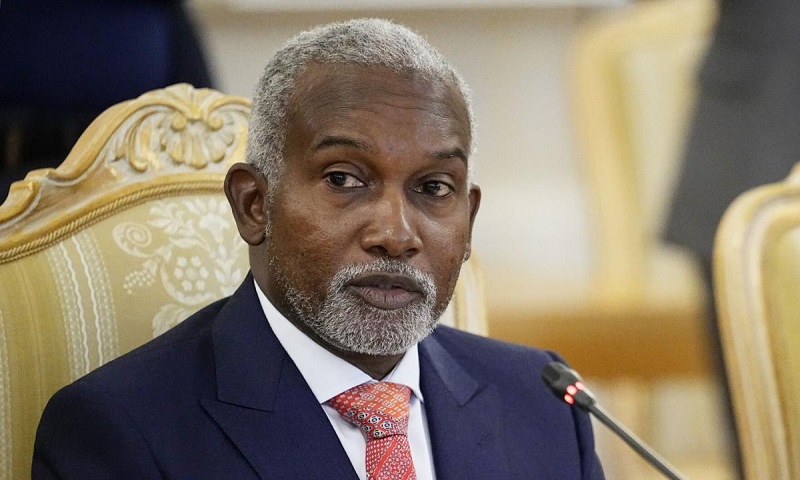
Yusuf Tuggar, Nigeria’s Minister of Foreign Affairs, has called on Europe and Africa to resist isolationist impulses and instead strengthen cooperation anchored on history, geography and shared responsibility.
He warned that policies driven by fear rather than realism risk deepening instability on both continents.
Tuggar made the call while delivering a keynote address at the 2026 Annual Conference of Spanish Ambassadors in Madrid, attended by 182 Spanish envoys from across the world, according to a statement by Alkasim Abdulkadir, Special Assistant on Media to the Minister of Foreign Affairs on Thursday.
Read also: UK moves to return over $9.5m in corruption proceeds to Nigeria

Speaking on the theme, “Good Neighbourliness: Building Bridges or Building Walls,” the Nigerian foreign minister urged diplomats to see Europe and Africa not as distant or disconnected regions, but as part of a single geopolitical space separated largely by perception.
He argued that the Mediterranean Sea, often portrayed as a dividing line, has historically served as a bridge linking peoples, economies and cultures.
According to him, long-standing connections through trade, labour and shared economic systems predate the modern international order and should continue to inform contemporary diplomacy.
Drawing on history, Tuggar highlighted Africa’s central role in shaping the modern world, recalling the trans-Saharan gold trade of the 14th century and Africa’s place in early Atlantic commerce involving commodities such as sugar and palm oil.
He said present-day relations between Africa and Europe cannot be meaningfully understood or reshaped without acknowledging this shared past.

On that basis, he proposed that Africa be recognised alongside Europe and Ibero-America as a constitutive part of Spain’s broader historical identity.
On migration, the minister acknowledged the political sensitivity of the issue but cautioned against responses shaped by fear and short-term security considerations.
While reaffirming Nigeria’s opposition to irregular migration, he warned that the weaponisation of anti-migrant sentiment and the heavy securitisation of labour mobility had produced destabilising effects, particularly in the Sahel.
He cited Spain’s circular migration arrangements with African countries as a practical and humane alternative, noting that such frameworks align with centuries-old seasonal labour patterns common across West Africa.
In contrast, he said externally driven policies that criminalised migration in transit countries had dismantled local economies, strengthened trafficking networks and contributed to political breakdowns and insecurity.
“These approaches neither reduce migration nor enhance stability,” he noted, adding that they often deepen the very problems they are meant to solve.
Tuggar also highlighted growing Nigeria–Spain cooperation, pointing to joint efforts in migration management, police training, and the fight against human trafficking and migrant smuggling.
He described Spain as offering a constructive model for broader European engagement with Africa through dialogue-based partnerships and development-focused strategies rather than coercion.
On economic relations, the foreign minister warned that Africa’s marginal share of global trade remains inconsistent with its population size and development potential.
He argued that a pattern in which African countries export raw materials and import finished goods entrenches underdevelopment and fuels economic pressures that eventually spill across borders.
“Development finance, industrialisation and value addition, he stressed, should be viewed not as charity but as investments in shared global stability”, he added.
Tuggar also spoke about the shrinking space for diplomacy amid rising militarisation and increasingly polarised domestic politics worldwide.
He urged diplomats to show greater courage in challenging simplistic security narratives and to defend dialogue, compromise and long-term thinking as essential tools of statecraft.
Addressing democratic backsliding and unconstitutional changes of government in parts of West Africa, he outlined Nigeria’s role in launching a Regional Partnership for Democracy in collaboration with the United Nations Development Programme (UNDP).
He explained that the initiative is built on the understanding that democratic systems must reflect local histories, cultures and stages of development if they are to be resilient and sustainable.
The foreign minister appealed to Spain’s diplomatic corps to serve as advocates and interpreters of good neighbourliness, not only within Europe, but globally.
In a world increasingly tempted by walls and withdrawal, he said, true statesmanship lies in building bridges that history, geography and common interest already demand.