Tolani Olaoye stares at the bundle of cash in her hand, the notes still warm from the payroll office at Gbagada General Hospital. It is N30,000. She flips it over again, as if intense scrutiny can make the money grow. But it won’t.
For a moment, the 34-year-old single mother of two holds still, her expression a blend of exhaustion and despair. She has become accustomed to that feeling every month since joining the hospital’s cleaning unit eight months ago.
“This is what will take me and my boys for another month. Before the month even starts, it has already finished,” she mutters to our correspondent.
Rent, food, school levies, transport, and the small loan she took from a local moneylender have already swallowed a larger portion of her salary before she even touches it.

Read also:Nigerian workers and the looming retirement crisis
But tomorrow, she will return to the same hospital, where she has just completed another 12-hour shift, to mop blood from emergency room floors, disinfect contaminated wards, and clear medical waste that can expose her to infections.
“This is my battle every month. I work like every other staff member in this hospital. Sometimes, I don’t even sit down until it’s midnight. But what I get cannot sustain a person,” she tells BusinessDay at a recent visit to the hospital.
Speaking on how she got the job, Olaoye reveals the job came through what she describes as ‘connection.’
According to her, a relative who knew someone in the hospital helped her. There was no interview, no documentation, and no employment letter.

She reveals that the hospital has none of her information, not even her bank account details. Instead, she collects it physically from a small office within the hospital’s premises.
She explains, “They give us a paper called the ‘casual clearance form.’ You sign, they tick your name, and they give you the money in cash. Nothing more.”
Inside the hospital, Olaoye’s duties remain the same as those of better-paid health assistants, except she earns less than half their salary, and without any form of job security or benefits.
Some days, she works through intense fatigue, and on other days, she pushes through dizziness from skipping meals.
But as long as the hospital calls her a ‘casual worker,’ there is no complaint to file.
“We don’t have anybody to speak for us. If you complain too much, they will replace you. People are always looking for work,” she says.
For Olaoye, survival means creatively stitching together income from anywhere she can find it.
She adds that she often washes up to four or five bags of clothes for neighbours, sometimes continuing late into the night after returning from the hospital.
“Every weekend, I wash clothes for people. That one helps me buy foodstuff for the house. If not for that laundry work, my children and I cannot survive. The N30,000 is too small. It is too small for the kind of work we do,” she laments.
Tolani’s experience reflects a pattern that runs across several Lagos State-owned hospitals, where workers in the same risky roles earn far below the state’s declared minimum wage and operate without any form of employment security.
Many have remained in these positions for years, hoping their status will change, only to watch the system absorb their labour while offering nothing in return.
Read also: Exhausted, underpaid Nigerian health workers near breaking point
Eight years of waiting
For the past eight years, Bimpe Ogunlana has swept, scrubbed, disinfected and cleaned some of the most sensitive corners of Ifako-Ijaye General Hospital, all as casual workers.
Every month, she hopes that her name will finally be included among those selected for conversion to permanent staff. Every month, the disappointment meets her again.
For her, it has been eight years of hoping, waiting, and witnessing other colleagues with shorter service years get letters she can only dream about.
What Ogunlana gets instead is a monthly income that has never gone beyond N40,000.
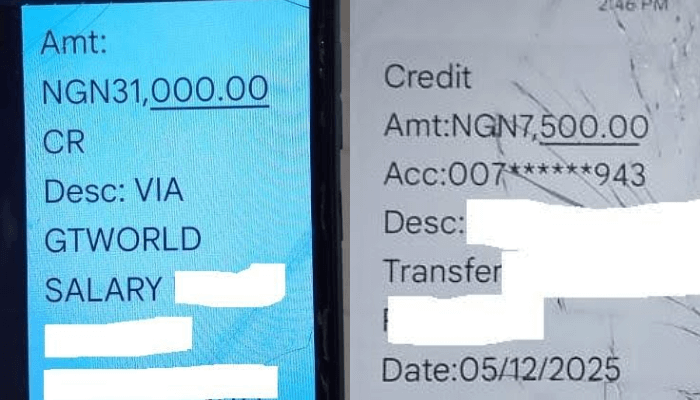
Her basic salary, paid through a subcontracting firm known as Ecoserve, stands at N31,000, supplemented by a meagre allowance of N7,500, which she says barely stretches beyond food and transportation.
Speaking with BusinessDay, she recalls “When I started, I was collecting N25,000.
“It’s the little increase that made it N31,000 today. But with the way things are now, it is still like getting nothing.”
Despite working inside a government hospital, Ogunlana is not a government worker. She is not even considered a staff member of the hospital.
Instead, she belongs to Ecoserve, a private firm subcontracted by the Lagos State government to provide support staff, even though she works under the same roof, breathes the same disinfectant-laced air and handles the same biohazards as those on the official payroll of the state.
Eight years in the same building, carrying out the same duties, and she still signs a casual worker’s attendance sheet.
On some weeks, Ogunlana says she works 24-hour shifts, sometimes staying back when the unit is short-staffed.
According to her, there is no overtime pay, no hazard allowance, no health insurance and no pension.
“Sometimes I come home after 24 hours, and my body will be shaking. But what will I do? I am the only one my children have,” she says.
She laments that feeding her children, paying school costs, and keeping the house running on less than N40,000 monthly have turned her life into a constant cycle of not being able to afford basic needs.
“There are days I just sit down and think, ‘How will I survive this month?’
Read also: Tackling Africa’s public health workforce crisis
“The children are growing. Their needs are growing. But my salary is not growing,” she says.
She expresses her frustration that the promise of conversion into the state’s formal workforce has become a rotating rumour, something that only happens to ‘those who know somebody.’
“I have begged, I have asked questions, I have done everything. But they always tell me the same thing, ‘I should keep hoping,’
“When they call us ‘casual,’ it pains me. Is eight years casual? Is it not enough to show that I want this work?” she adds.
The invisible backbone
Olaoye and Ogunlana’s stories reveal a contradiction in Lagos’ health system, where those who handle the dirtiest and riskiest tasks are stuck in the lowest-paid and most insecure jobs.
These workers are, in fact, the quiet backbone of the state’s general hospitals. Despite the risks they face daily, their wages are barely enough to sustain their respective families.
Across Lagos State-owned hospitals, support staff such as cleaners, ward attendants, and porters are trapped in similar cycles of low wages, informal employment and high-risk duties.
During the investigation, BusinessDay visited more than six general hospitals across Lagos State, where it was discovered that the situation facing casual workers was consistent across facilities.
The hospitals visited are Gbagada, Ifako-Ijaye, Orile-Agege, Surulere, Ikorodu, and Mushin General Hospitals.
Salary alert from Ecoserve FMC Limited Allowance alert from Ecoserve FMC Limited
At many of these hospitals, our correspondent observed that a significant portion of cleaners, attendants, and porters were employed as casual staff, paid a meagre N30,000 to N40,000 monthly in cash.
In each of the hospitals visited, at least 30 casual workers were performing these essential duties, alongside a few formally employed staff.
To the casual workers, the uniform they wear and the work they perform may appear the same as that of permanent staff, but there is a wide disparity in pay, work conditions and employment benefits.
While a fully employed cleaner under the Lagos State Government earns between N100,000 and N120,000 monthly, their casual counterparts, doing the same work, are paid between N30,000 to N40,000.
When high-ranking government officials visit many of the hospitals, casual workers are often concealed, and staff sometimes claim that no casual employees exist, BusinessDay can report.
Read also: LAWMA addresses wage concerns after viral video sparks outrage
Employed for exploitation
Casual labour in Nigeria was originally designed as a short-term engagement to help organisations meet urgent manpower needs for a few weeks or months.
While commonly understood as employment lasting for a brief, non-permanent period, typically not exceeding three months, the Labour Act does not provide an explicit statutory definition of ‘casual worker.’
Section 3 of the Act requires that after three months of continuous employment, an employer must issue a written contract or ‘statement of terms.’
Across the six hospitals visited, BusinessDay found that casual workers were the operational glue holding critical units together. But legally and administratively, they remain invisible. Without employment letters, payroll numbers, defined roles, or formal contracts.
It was observed that these workers exist outside the architecture of public service even though they perform functions central to it.
Disposable futures
Many of the casual workers say the insecurity they live with is often more frightening than the hazards of the job itself.
Unlike fully employed hospital staff, they have no letter of appointment, no documented terms of engagement, and no binding contract that spells out their rights as employees.
They add that most of them are simply told to resume work after verbal approvals from supervisors, leaving them with nothing to fall back on if disputes arise.
A cleaner, who is simply identified as Kazeem, says, “We are working, but officially we don’t exist.
“Because there is no documentation, dismissal can happen at any moment and for any reason.”
More than 15 casual staff across multiple hospitals say that they can be sent home without notice, compensation or explanation.
A worker at Ifako-Ijaiye General Hospital recalls a case earlier in the year when about five casual cleaners and attendants were abruptly told their services were no longer needed.
According to her, the medical director simply announced that he did not want them on the roster anymore.
“By the following day, they were locked out of the premises, and their names were replaced without any formal process. The affected workers received no severance, no warning, and no opportunity to appeal the decision,” the cleaner laments.
Read also: Outsourced and underpaid: The silent pain of Nigeria’s contract workers
No insurance
Also, the undocumented government workers do not benefit from health insurance despite Lagos State’s recent announcement making health insurance coverage compulsory for its workers.
The policy, widely publicised as a landmark step toward improving staff welfare, is seen within the hospitals as a major achievement.
But the cleaners, porters and attendants working as casual staff say the opportunity does not extend to them.
According to the workers, they have never been enrolled in any insurance scheme, nor are they enrolled in the state’s own health insurance or the National Health Insurance Authority programme.
Despite working in a high-risk environment filled with biohazards, they have no medical coverage, no accident insurance, and no worker-protection plan.
“We are the ones handling the dirtiest work, but when Lagos talks about improving welfare, they are not talking about us. We are not counted,” a cleaner in Mushin General Hospital says.
Critical jobs, zero verification
Further findings by this newspaper also show that there is a near-total absence of proper documentation for casual workers.
Because they are not formally employed, the hospitals do not conduct standard background checks or verification processes on the cleaners, attendants and porters they recruit.
Several senior staff members quietly admit that “anybody can be taken in,” including individuals whose histories the system never scrutinised.
In a high-risk environment like a hospital, where workers handle patients, medications, sharp objects, biohazards and confidential information, the absence of proper vetting not only endangers staff, but it also exposes patients and the facility to significant security and health risks.
Still, the very workers, whose roles demand the highest level of trust, are the ones brought in without files, without records and without any traceable employment history.
Casual staffing, meant to fill shortages quickly, has instead created gaps that leave both the workers and the hospital system vulnerable.
Big numbers, small pay
Lagos State has consistently budgeted billions of naira for health in recent years, while the frontline cleaners, ward attendants, and porters who perform the dirtiest, highest-risk work in state hospitals continue to earn barely enough to survive.

Official documents show that the Ministry of Health, between 2021 and 2024, recorded a steady expansion of financial commitments. Over the past four years, the ministry recorded a combined total expenditure of N544.8 billion and a personnel expenditure of N206.1 billion.
The documents also reveal that the ministry’s budget grew from N105.9 billion in 2021 to N162.1 billion in 2024, an increase of more than 53 percent in four years.
Read also: Medical workers are at higher risk of burnout, depression- Experts warn
Personnel expenditure also rose significantly, more than doubling from N32.1 billion in 2021 to N69 billion in 2024, indicating expanding staffing needs, wage adjustments, or the onboarding of additional medical professionals across the state.
Despite these vast sums, casual workers in the state’s hospitals are left out of formal payrolls and protections.
Minimum wage not for everyone
Lagos has long prided itself on paying some of the highest public-sector wages in Nigeria.
When the federal government approved the new national minimum wage of N70,000 in July 2024, Lagos immediately announced that it would go beyond the national benchmark.

Governor Babajide Sanwo-Olu publicly declared that the state would pay a minimum of N85,000 to its workers, describing the policy as proof that Lagos was committed to protecting its workforce from the rising cost of living.
The announcement was widely celebrated as evidence that Lagos was setting the pace for other states, reinforcing its reputation as the country’s economic centre.
Under Nigeria’s labour laws, the minimum wage is intended to serve as the baseline, the lowest amount any employer, public or private, is required to pay.
In the public sector, the expectation is even higher because government workers are expected to enjoy stable employment, predictable pay, and access to allowances, pension and insurance.
On paper, Lagos State reflects this ideal. In several of its public statements, the government has repeatedly emphasised that no worker within its service earns below the official threshold, but this does not extend to critical workers like Ogunlana and Olaoye.
Experts say the widespread casualisation in public health institutions is an exploitative use of legal loopholes.
Tiamiyi Taiwo, a labour rights activist and past public relations officer of the Joint Health Sector Union, says that the casualisation of hospital staff is both deliberate and exploitative.
Drawing from years of experience advocating for health-sector workers, Taiwo explains that the reliance on casual staff allows public institutions to run essential services cheaply, while systematically denying workers their statutory rights and benefits.
“These workers form the backbone of healthcare delivery, yet they remain invisible and unprotected. Their classification as casual staff is not a reflection of their contribution but a loophole exploited to bypass labour law, he says.
According to him, the legal loophole violates Section 3 of the Labour Act, which obligates employers to provide a written contract after three months of continuous service.
Taiwo, who is also a member of the Committee for Defence for Human Rights, argues that the practice not only exploits the workforce but also undermines the quality and continuity of healthcare delivery, as workers remain insecure and unmotivated.
Read also: The silent struggle of underemployment
Pathways for change
To address the exploitation of casual workers in Lagos State hospitals, Taiwo recommends a multi-pronged approach combining administrative reforms, legislative action, and strict enforcement of labour rights.
He urges Lagos State and other public institutions to immediately audit all casual workers and issue formal contracts that reflect their years of continuous service.
He states, “Long-serving casual staff should not remain invisible to the system. Issuing proper contracts is the first step in recognising their contributions and protecting their rights.”
Taiwo also calls for retroactive regularisation, converting long-serving casual employees into permanent or formally contracted staff.
This process, he explains, should ensure that workers receive their due entitlements, including pensions, leave, social security, and other statutory benefits.
“Without retroactive regularisation, years of service and labour go unacknowledged, and employees remain vulnerable to exploitation,” he stresses.
The union leader also advocates for stronger legislative measures.
He recommends that the Labour Act explicitly defines ‘casual worker,’ while limiting casual employment strictly to short-term, genuine engagements.
“Government agencies cannot continue to treat casualisation as a cost-saving strategy at the expense of workers’ rights and dignity,” he says.
Speaking on the importance of fair wages, Taiwo stresses that all casual staff should be paid at least the national minimum wage, arguing that underpayment is both illegal and unethical.
He proposes the establishment of independent oversight committees composed of union representatives and human rights observers to monitor compliance and prevent exploitation.
He stresses, “Institutionalising casualisation undermines morale, erodes human capital, and threatens the sustainability of public health services.
“Addressing this issue is not just about compliance with the law; it is about recognising the dignity of workers, improving efficiency, and securing the future of healthcare delivery.”
Read also: The domestic worker’s dilemma
Not our employees – Lagos State Govt
Reacting, the Lagos State Ministry of Health maintains that there is nothing irregular in the manner casual workers were engaged across government hospitals.
Olatunbosun Ogunbanwo, director of Public Affairs, tells BusinessDay that the casual-labour arrangements are local, and not violations of state wage standards.
He insists that Lagos already pays above the federal minimum wage to its formally employed workforce.
He explains that if a worker is formally hired by the state, they will be automatically absorbed into a structure that guarantees payment above the national minimum wage, alongside standard benefits and documentation.
But those referenced in the investigation, he notes, do not fall under this category.
“These casual workers are engaged by the hospitals to support basic non-clinical functions such as cleaning and attendants’ duties.
“Their engagement is not through the state government’s formal employment structure, so they are not part of the minimum-wage salary framework of the government,” he says.
Ogunbanwo adds that many of these workers came from the immediate communities surrounding the hospitals, often introduced by local leaders such as the monarchs, chiefs or community heads.
He argues that some volunteer their services as a way of contributing to their local hospitals, while others work to gain experience or simply to avoid staying unemployed at home.
He claims, “When opportunities open up for formal employment, these casual workers are usually the first set considered by the hospital management.
“A lot of them have been employed formally into the hospital system.”
When confronted with facts that many of these workers have spent several years performing the same duties as regular staff, yet earning between N30,000 and N40,000, without letters of employment, insurance, or benefits, Ogunbanwo maintains that the situation remains a private arrangement between the individuals and the respective hospitals.
“It is an agreement between them and the hospital. It is not that they are official government staff. They are just supporting the system,” he stresses.
When asked about Ecoserve FMC Limited paying below the minimum wage despite being a subcontractor for the government, Ogunbanwo says he is aware that some hospitals contract janitorial services to firms but insists these outsourced workers are still not state employees.
He adds, “If they are cleaners or attendants, some are employed as janitors. Any organisation can have janitors.
“Some of them are given wages at the end of the month just for transportation or for any other thing.”
He stresses that the state continues to review its policies to ensure fairness and the smooth functioning of health facilities while safeguarding worker welfare.
This is the first part of the first of a two-part series on the casualisation of support staff in Lagos State general hospitals.
Editor’s Note: Names of some persons in this report have been changed to protect them from victimisation.