The federal government has raised alarm over Nigeria’s worsening soil crisis and the urgent reforms needed to protect food production and urban systems.
Aliyu Sabi Abdullahi, minister of state for Agriculture and Food Security, on Thursday in Abuja described soil health as the frontline of food survival.
“Soil produces 95 percent of the food Nigerians consume, while 33 percent of national soils are already degraded. Restoring just 2 to 3 centimeters of soil can take 1000 years”
Read also: FG unveils soil health scheme to drive productivity, attract agribusiness investment

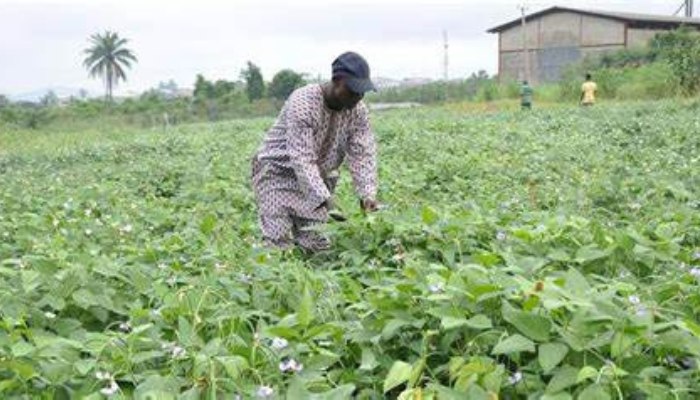
He said the ministry is expanding sustainable practices across farms. These include crop rotation, agroforestry, conservation agriculture, organic amendments and reduced tillage.
“The Nigerian Farmers Soil Health Scheme, launched one month ago with 600 farmers and partners, now provides crop and location specific fertilizer guides designed to cut waste and reduce production costs.
“The plan includes 774 soil laboratories nationwide to be operated by youth and women. Equipment is already in place in 12 states across all geopolitical zones.” he said
The minister added that Nigeria is implementing the 2024 NAIROBI Declaration on African Fertilizer and Soil Health supported by partners such as GIZ, Soil Values, AGRA, IITA, the World Bank ACReSAL Project and Sasakawa Africa.
Key milestones include the Soil Health Card, the Nigerian Soil Information System, nationwide workshops, a study tour to Ethiopia and alignment with ECOWAS fertilizer programmes. The Bill & Melinda Gates Foundation has also joined as a partner.

He revealed that pilot soil tests are ongoing in 12 states. The scheme has been captured in the federal budget and is now supported by a growing coalition of national and international partners.
Sabi urged urgent action to protect soils to avert worsening food insecurity.
At the event, Olumuyiwa James Jayeoba, vice president Nigerian Institute of Soil Science (NISS), stressed that cities cannot thrive with sick soils.
Soil supports clean water, vegetation, infrastructure stability and urban climate control.
Rapid urban growth is intensifying soil damage through erosion, pollution and shrinking green cover.
He said the NISS is strengthening soil regulation and expanding nationwide quality testing. The institute is also supporting urban farms, parks, gardens and restoration projects, while guiding city planners on climate smart land use.
Jayeoba noted that national soil health reforms are gaining momentum, driven by the Farmers Soil Health Scheme, state readiness assessments and new partnerships.
He called on policymakers, urban managers and citizens to adopt soil friendly habits, saying cities become cleaner, safer and more resilient when soil is treated as a living foundation.