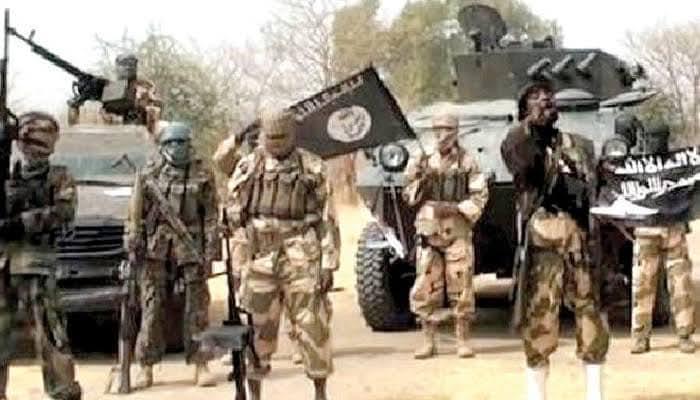
Ahmed Wase, leader of the North Central Caucus in the House of Representatives has revealed that names of Boko Haram members and other criminal elements were once found on the Nigerian Army and Police recruitment list.
The lawmaker representing Wase federal constituency of Plateau state, made this revelation on Wednesday while speaking at a special plenary session of the House on national security.
Wase, who was also a former deputy speaker, warned that such infiltration undermines the security architecture of the country, said his claims can be confirmed by the former Chairman of the House Committee on Defence, Muktar Betara.
He said the development reflects the deep flaws in Nigeria’s recruitment processes, which have allowed individuals with criminal backgrounds to enter sensitive security institutions.

“My brother, former chairman of defence, and my very good friend, will bear me witness. There were moments in time when, in the process of recruitment, Boko Haram were found in the list. Other criminals, armed robbers, gangs, were found in the list of Nigerian army and police.
Read also: Again, bandits abduct 11 in fresh attack on Kwara community
“There has to be a thorough way of ensuring that when we are recruiting, those of us who are politicians should recommend people of good character and integrity. That’s the only way we can solve this problem.
“You find a criminal in the system, and before you know it, whatever you do, you cannot have the problem resolved. So we must change the system and way of our recruitment.
“Yes, as politicians, it’s good to recommend. This is what we are here for. But when you are recommending, please recommend people of integrity, people that will meet standards and ensure that they give the best access to our country,” Wase said.

He added that 52% of the insecurity and insurgency in the country is taking place in North Central geopolitical zone.
The lawmaker disclosed that he lost both a brother and a cousin to terrorists, saying the infiltration of the system helps explain why criminal groups continue to operate freely in many parts of the country.
Wase stated that insecurity has become so overwhelming that his surviving younger brother begged him to help secure a transfer out of their community.
“Mr. Speaker, respected colleagues, as I am speaking to you, within the armed forces, I once spoke here, I lost one of the most gallant Nigerian soldiers, my cousin, in the course of this.
“I lost my younger brother, same mother, in Borno and today I will say without mincing words that even as we try to solve the issues… I lost my nephew,”he said.
Wase also called for the review of the presidential order to withdraw police from guarding VIPs, saying that has to be categorised in order not to create more security issues, especially for public office holders.
“I want to appeal that there is a need to review that order. It’s a good order, but the categorisation has to be spelled out. Because before you know it, this House will again come back, faced with the same problem of the kidnapping and whatever will happen,”he said.
Speaking for the North West Caucus, Sada Soli (APC, Katsina) said the zone faces a very complex multidimensional security landscape.
According to him, the challenges are not just criminal but structural, rooted in environmental stress with governance and economic marginalisation.
“Tackling this threat demands a holistic strategy that combines security operations with social, economic and environmental interventions. Mr. Speaker, a purely military or kinetic response won’t be sufficient in order to address this issue in the Northwest.
“The long-term stability will require building trust in state institutions. We must build trust in our institutions. We must make efforts to reform land and livestock governance, addressing climate response and pressure and ensuring that affected communities are meaningfully taken part in providing solution to our security threats,” Soli added.
Muktar Betara, who spoke for the North East Caucus, said the zone remained the epic centre of insurgency, terrorism, kidnapping and communal violence.
“Allow me to briefly highlight the example from each six states. In Borno, the heart of the conflict, we witnessed the Baga massacre in 2015, where hundreds of our citizens were killed in the 2016 attack, which claimed over 100 lives of suicide bombers in 2024.
“In January 2025, where we lost our military officers and the insurgencies from the reoccurring improvised explosive devices explosion and killing civilians.
“Mr Speaker, Nigerian security challenges may be vast, but they cannot be there with strategic planning, coordinated action and awareness, political commitment. We can restore public confidence, stop spread of violence,” he said.
Speaking on behalf of South South lawmakers, Solomon Bob said government has not shown courage over the years towards tackling security and other challenges bedeviling the nation.
“What has happened in this country is an abject lack of courage. Every president since 1999 to today has demonstrated an embarrassing lack of courage to deal with an issue that has persisted,” he said.