...seal new deals on mining, digital innovation, infrastructure
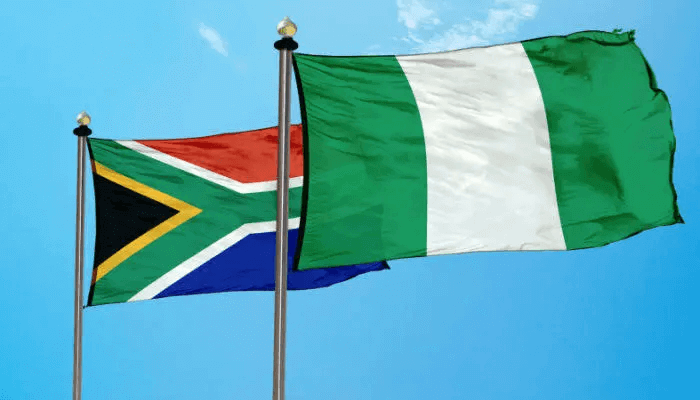
South Africa has assured Nigeria of the safety and protection of its citizens residing within its borders, following renewed concerns over xenophobic attacks.
The assurance came during the maiden Nigeria–South Africa Political Consultation held in Abuja, where Thandi Moraka, deputy minister, Department of International Relations and Cooperation, Republic of South Africa, reaffirmed that such hostilities do not represent her government’s policy or the country’s values.
Moraka, who led the South African delegation, said her government was taking concrete steps to safeguard Nigerians and other foreign nationals, emphasising that South Africa “remains a warm and welcoming nation” committed to strengthening people-to-people relations with Nigeria.

Responding to Nigeria’s concerns about the ill-treatment of its citizens in South Africa, Moraka assured that such actions do not reflect the official position of her government.
She stressed that South Africa remains a welcoming and inclusive country, adding that measures were being taken under President Ramaphosa’s leadership to ensure the safety and dignity of Nigerians and other foreign nationals residing legally in the country.
“I want to assure Your Excellency and the people of Nigeria that these issues are receiving the necessary attention. We are a warm and hospitable nation, and we encourage all who come to South Africa to do so through legal means,” she said.
Both countries also renewed their commitment to strengthening political, economic, and social ties following the inaugural session of their Political Consultation held in Abuja.
The meeting was co-chaired by Bianca Odumegwu-Ojukwu, Nigeria’s minister of State for Foreign Affairs and Thandi Moraka, South Africa’s deputy minister of International Relations and Cooperation.

The consultation was convened in line with the Memorandum of Understanding on Political Consultations signed during the 10th Nigeria–South Africa Bi-National Commission (BNC) in Abuja in 2021 and reaffirmed at the 11th BNC in Cape Town in 2024.
It forms part of ongoing efforts by both countries to deepen cooperation and strengthen the historic bonds of friendship and solidarity that have defined their relations for decades.
They reaffirmed their shared commitment to promoting peace, security, and sustainable development on the continent, consistent with the African Union’s Agenda 2063.
Read also: UNICEF, FG train journalists on ethical reporting, child rights
The ministers also emphasised the importance of multilateral cooperation, pledging to uphold the principles of the United Nations (UN) and the African Union (AU) while continuing to support each other’s candidacies in international organizations and to coordinate on issues of common interest.
The consultation provided an opportunity for both sides to review progress on the implementation of agreements reached during the 11th BNC and to identify areas that require renewed attention.
They reaffirmed their determination to expand cooperation in trade, investment, defence, energy, and cultural exchange, while addressing persistent challenges that hinder greater economic integration.
Among the key developments highlighted during the meeting was the April 2025 visit of South Africa’s minister of Mineral and Petroleum Resources, Gwede Mantashe, who signed a partnership agreement with Dele Alake, Nigeria’s minister of Solid Minerals, aimed at boosting investment and technology transfer between the two countries’ mineral sectors.
The two sides also noted progress in the liberalisation of visa restrictions, with both governments working to simplify visa procedures for business travellers to facilitate smoother economic exchanges.
In the cultural sector, both countries commended the growing collaboration within the film industry, which continues to thrive under the 2021 Audio-Visual Cooperation Agreement.
“This framework promotes co-production, skills transfer, and joint promotion of creative content between Nigerian and South African filmmakers”, the ministers noted.
They also expressed satisfaction with the implementation of the Memorandum of Understanding on Air Traffic and Navigation Services (ATNS) between the Nigerian Airspace Management Agency (NAMA) and its South African counterpart, signed in Johannesburg in January 2025.
Discussions also touched on the long-awaited MoU on Standards and Standardisation between the Standards Organisation of Nigeria (SON) and the South African Bureau of Standards (SABS).
Odumegwu-Ojukwu explained that the agreement is undergoing a legal review by the Ministry of Justice, prompting a delay in its signing.
On her part, Moraka expressed concern about the delay but reaffirmed its commitment to finalising the MoU once internal processes are completed.
On trade and industry, both countries reviewed the efforts of the Trade, Investment and Industry Working Group, which is working to resolve market access challenges.
They agreed that the Joint Ministerial Advisory Council on Industry, Trade and Investment (JMACITI) should be convened before the end of 2025 to finalise its terms of reference and ensure more effective economic collaboration.
The ministers welcomed the finalisation of the MoU on the Early Warning Mechanism, describing it as a major step toward improving the management of consular and migration issues.
They agreed that effective implementation would enhance coordination, streamline the movement of people and goods, and support growth in tourism, science, culture, and the private sector.
Both sides further called for the 3rd Consular and Migration Forum (CMF) to be convened in Pretoria during the first quarter of 2026 to review issues related to migration and consular cooperation.
The meeting commended the work of the Defence and Security Working Group, which held the 6th Session of the Defence Committee (DEFCOM) in Abuja in September 2025 to assess progress on previous BNC commitments.
The co-chairs encouraged other working groups to intensify efforts toward implementing agreed decisions in a timely manner.
To enhance monitoring and evaluation of all bilateral commitments, the two countries formally established a Joint Implementation Committee (JIC), co-chaired by the leaders of the working groups.
“The committee will serve as a mechanism to track the implementation of outcomes from the 2021 and 2024 BNCs and the 2025 Political Consultation”, they said.
Both countries expressed their shared commitment to maintaining regular political consultations as a framework for continued engagement and cooperation.
They also acknowledged ongoing preparations for the G20 Africa Outreach Meeting on Industrialisation and Agriculture, scheduled to hold in Abuja on November 3, 2025, which will provide a platform to project Africa’s perspectives on industrialisation, sustainable agriculture, and value-chain development.
Odumegwu-Ojukwu expressed appreciation to Moraka and her delegation for their commitment and the constructive dialogue that contributed to the success of the consultation.