…Says Africa can achieve energy self-sufficiency in 25 years
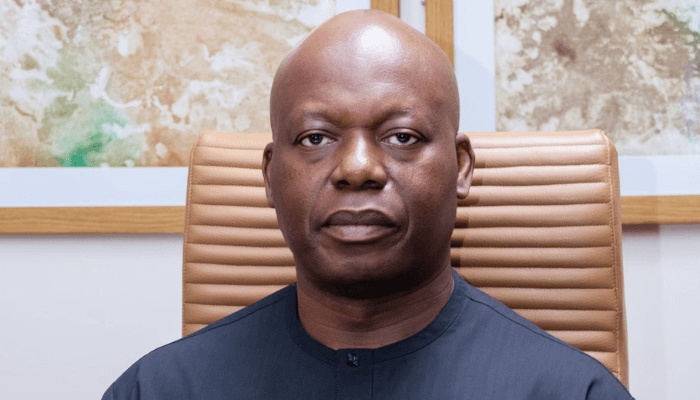
The real challenges Africa faces are typically regulatory, with shifting government policies, reversed decisions, and abrupt assumptions disrupting the pace of progress, according to Wale Tinubu, Group Chief Executive of Oando PLC, Africa’s leading indigenous energy solutions provider.
Tinubu made this known during a fireside chat at the ongoing 4th Intra-African Trade Fair in Algiers, Algeria, organised by Afreximbank in collaboration with the African Union Commission and AfCFTA.
Read also: Africa must shift from aid to investment to unlock $229bn economic growth

Reflecting on Oando’s journey, he pointed to how inconsistent regulatory environments often stall execution, citing a significant delay during the company’s acquisition of ConocoPhillips’ assets.
“For example, when we did the ConocoPhillips deal, we lost over 12 months just waiting for regulatory approval. That delay alone cost us an additional $140 million,” he said.
Tinubu recounted how the exit of ConocoPhillips from developing countries, including Nigeria and Algeria, provided Oando a strategic opportunity. As the US shifted focus to shale oil, Conoco divested around $3.5 to $4 billion from four countries, reinvesting in domestic projects. Oando seized this moment as a stepping stone to becoming a significant player in the sector.
“We knew we could convince the Italians ENI to divest as well, allowing us to become the operator. It took 10 years of working with them to achieve that,” he said.
Despite a clear vision, execution remained far from straightforward. Tinubu highlighted the challenges of persuading partners to align with Oando’s independent approach, stressing the importance of efficiency and precision due to limited capital. Eventually, in a landmark achievement last year, Oando acquired ENI for $800 million, making it the operator of the asset.

“Now, we’re in charge of the resources, the reserves, the company, and the operations. We control our destiny and we no longer have any excuses. That’s the next phase: we have achieved the foundation, now it’s about building on it,” he said.
Speaking on the role of institutions like Afreximbank in Africa’s energy future, Tinubu underscored their importance in mobilising capital for transformative projects. He noted that Africa is resource-rich, not just in hydrocarbons and minerals, but also in agriculture, an often overlooked sector where the continent fails to capture sufficient value due to limited processing.
He described Afreximbank as a “critical success factor” in Africa’s journey to self-sufficiency, explaining how its model of pooling capital from 52 African nations helped scale its capital base from $500 million to nearly $7 billion, enabling access to international markets.
“They have the systems, the governance, and the local knowledge to identify the right opportunities and support the right entrepreneurs. We need to build African champions like Dangote,” Tinubu said.
Read also: Africa’s GDP to rise to $15trn on investment in agriculture, industry, service
Highlighting Oando’s transition from a distributor to one of Nigeria’s largest crude oil and gas producers, Tinubu emphasised the need to expand further into clean energy. With roughly 45 per cent of Africa still lacking access to energy, he stressed that energy sovereignty is vital to ending poverty.
“With institutions like Afreximbank and now the African Energy Bank, we can indigenise production, build refineries, gas processing facilities, petrochemicals, methanol plants, all the value-added industries,” he said.
Tinubu said with an ambitious but optimistic outlook: if Africa can double its energy capacity every five years, energy self-sufficiency can be achieved within 25 years.
“That’s just a third of a lifetime. We can do it.”