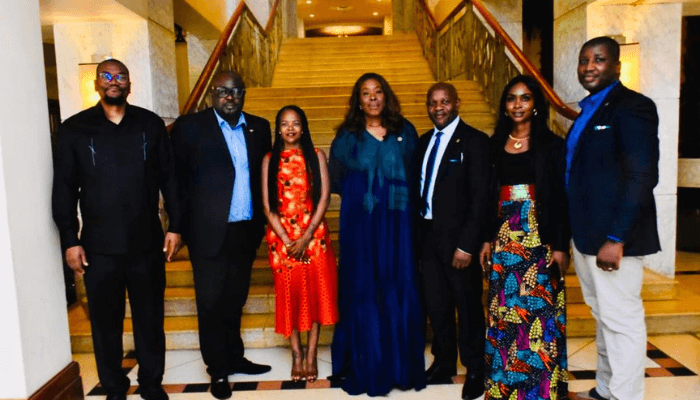
Amid growing momentum to deepen bilateral trade, tourism, and investment relations, South Africa and Nigeria took center stage at the recently concluded WESGRO Business Networking Seminar, held from July 14 to 17 at the Federal Palace Hotel in Lagos.
The four-day event, organised by WESGRO—the official trade and investment promotion agency for South Africa’s Western and Eastern Cape—brought together top officials, business leaders, entrepreneurs, legal practitioners, and diplomats from both countries.
The seminar provided a strategic platform to explore cross-border opportunities in agribusiness, renewable energy, ICT, food and beverages, tourism, and the creative economy.
In her keynote address on July 15, Folashade Kaosarat Bada Ambrose, Lagos State Commissioner for Commerce, Cooperatives, Trade and Investment; described Lagos as Nigeria’s economic powerhouse. She called the state “a living market ecosystem,” contributing over 60 percent of Nigeria’s non-oil manufacturing and around 30 percent of its GDP.

“Lagos is not merely a city; it is a dynamic market ecosystem,” she said, highlighting the Lagos State Development Plan (LSDP) 2052 and Lagos State Industrial Plan (LSIP) 2025–2030. Ambrose encouraged investors from both countries to seize opportunities in fashion, tourism, smart manufacturing, infrastructure, and creative sectors.
“Let today’s conversations lead to tomorrow’s investments. Lagos is open for bold, cross-continental partnerships that drive inclusive prosperity,” she said.
She noted that 250 micro, small, and medium enterprises (MSMEs) are receiving support under the Export Readiness Programme and pointed to a digitized one-stop investment shop aimed at reducing bureaucratic hurdles.
Ambrose also promoted triangular investment models involving Lagos, South Africa, and other African hubs, especially in logistics, pharmaceuticals, renewable energy, and infrastructure. “To our South African colleagues—Lagos welcomes you. To Nigerian entrepreneurs—Lagos challenges you to scale across the continent. Let’s build, trade, and grow together,” she concluded.
Sebo Lenyai, Chargé d’Affaires at the South African High Commission in Nigeria, commended the engagement between businesses from both countries. “It is truly inspiring to witness South African and Nigerian businesses coming together—not just to network, but to build meaningful partnerships that drive tangible transactions and shared growth,” she said.

She noted the rise in Nigerian tourism to South Africa and described tourism as a connector of cultures and economies. “At the South African High Commission, we remain fully committed to supporting this momentum—by facilitating visa processes, deepening trade relations, and working closely with agencies like WESGRO and our partners in Nigeria to promote long-term collaboration,” she said.
Michael Gamwo, WESGRO’s Head of Africa International Trade, emphasized the importance of African Continental Free Trade Area (AfCFTA) implementation in driving regional integration. “Africans must explore and do business with each other to unlock AfCFTA’s potential,” he said. “This is not just about trade—it’s about building long-term cooperation. South Africa and Nigeria must lead by example.”
Gamwo noted increased South African SME activity in Nigeria in sectors such as ICT, food, and engineering. He praised Nigeria’s new e-visa system, which enabled South African delegates to secure visas in under 48 hours. “That’s a big improvement. A few years ago, this process was expensive and slow. Nigeria has made a huge leap,” he said.
He emphasized the value of South African investment in Nigeria’s job-creating sectors. “Oil may generate revenue, but it doesn’t create jobs. When South African companies invest in Nigeria’s ICT, construction, and hospitality sectors, they stimulate the economy in more sustainable ways.” Over 60,000 Nigerians traveled to South Africa in 2024, reflecting a 20 percent increase. “We may not showcase all during trade missions. But if Nigerian businesses visit South Africa, they’ll see more. WESGRO is ready to support those engagements,” he added.
Gamwo called for investment in Nigeria’s creative industries, medical tourism, and MICE (Meetings, Incentives, Conferences, and Exhibitions) infrastructure. While big firms like MTN and Shoprite are visible, he stressed that SMEs are the real drivers of innovation. “SMEs don’t always make headlines, but they’re quietly building solutions in IT, engineering, and supply chain logistics. That’s where long-term impact lies.”
David Nkire, legal expert at Fola Sowemimo & Co Stirling Partners, addressed legal frameworks critical to cross-border success. He emphasized compliance with tax laws, intellectual property protections, and sound contract drafting. “Legal professionals play a crucial role in shaping solid agreements, managing risk, and ensuring the success of international ventures,” he said.
Nkire acknowledged Nigeria’s progress in enabling foreign investors to repatriate funds—an area once riddled with bottlenecks. “These changes boost investor confidence and signal a stronger commitment to creating a stable investment climate,” he said. However, challenges remain in land titling, exchange rate stability, and infrastructure.
Iyke Ejimofor, Executive Secretary of the Nigeria–South Africa Chamber of Commerce, said the seminar confirmed the private sector’s readiness to lead Africa’s integration. “Today’s engagement proves that our private sectors are ready to lead. Joint ventures in manufacturing, creative industries, and digital innovation can redefine intra-African trade,” he said.
Margaret ChiChi Nkire, WESGRO Nigeria Trade Events Facilitator and founder of McKire Africa, described the seminar as transformative. “This is more than a one-off event—it’s a deliberate move to empower export-ready businesses and connect value chains across borders,” she said.
Nkire emphasised long-standing trade missions supported by the South African Embassy, the South Africa-Nigeria Chamber of Commerce, and South African Tourism. “We aim to connect businesses, foster joint ventures, and drive long-term investment,” she said. With market entry and regulatory support, SMEs from both countries are better positioned to grow in key sectors—tourism, agribusiness, manufacturing, ICT, food and beverage, and the creative industries—represented here today.
“Opening access to markets and partnerships for young and female entrepreneurs is essential for sustainable development,” she said. “These engagements fuel job creation, digital innovation, and trade inclusivity—especially for women and youth. They unlock scalable value for both nations.”
The event was attended by Lefentse Matlhaga, Vice Consul Political, South African Consulate General Lagos; Muiz Momodu, Trade Officer, South Africa High Commission Abuja; Mohammed Tanko, South African Tourism; Emmanuel Dangana, Lagos Chamber of Commerce; Yeye Nwidaa, Jackson Etti & Edu; and Kemi Lekebamtega, South African Airways.
As Ambrose remarked, “Our Pan-African ideals must go beyond politics—they must translate into real economic inclusion and shared growth.”
With initiatives like the WESGRO seminar, that vision is steadily evolving into practical outcomes for businesses across both nations.