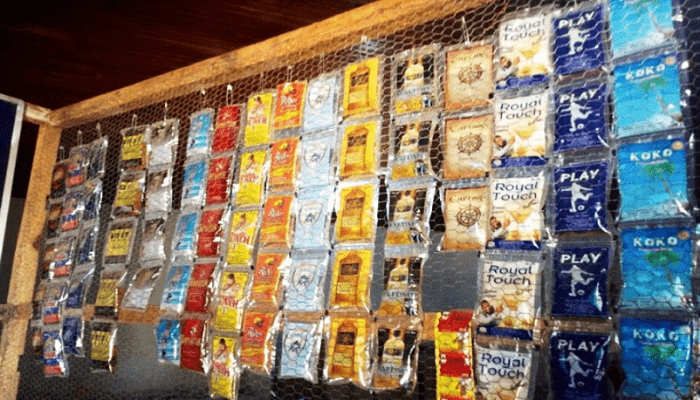
More than half of Nigerian minors and underaged children buy alcohol for themselves, often in small sachets and bottles, according to details of a national survey released on Tuesday by the National Agency for Food and Drug Administration and Control (NAFDAC).
The Agency said the survey conducted in collaboration with the Distillers and Blenders Association of Nigeria (DIBAN) shows that 54% percent of minors buy alcohol for themselves in packaging that can be easily concealed, adding that it reinforces its controversial ban on small-pack alcoholic beverages.
The decision by NAFDAC to phase out alcohol in sachets and bottles smaller than 200 millilitres have been opposed by manufacturers, distributors and petty traders who argue it threatens livelihoods and disrupts supply chains.
“Access to alcohol by children can be limited if pack sizes that can be easily concealed are not available. A ban on small pack sizes (sachets and less than 200ml bottles) can reduce the menace of underage drinking,” Adeyeye stated.
The survey, conducted between June and August 2021 by Research and Data Solutions Ltd and sponsored by DIBAN, covered 1,788 respondents across six states representing Nigeria’s six geopolitical zones, alongside focus group discussions and key informant interviews with minors, underaged persons and alcohol retailers. Respondents who were less than 13 years of age were referred to as minors, while those who were 13 to 17 years of age were referred to as underaged.
The survey found that of 54.3% of minors and underaged respondents who obtained alcohol by themselves from various sources, nearly half reported purchasing from retailers selling drinks in sachets and small plastic bottles. Others accessed alcohol from friends and relatives, at social gatherings, and in some cases directly from their parents’ homes.
Among those who procured alcohol personally, 47.2% of minors and 48.8% of underaged respondents bought sachet-packaged drinks, while more than 40% purchased alcohol in small plastic bottles.
It further showed that procurement of sachet and PET-bottled alcohol was highest in Rivers, Lagos and Kaduna states.
The study also highlighted worrying patterns of consumption, as one in four underaged respondents reported drinking alcohol daily, and more than 9% of minors said they consume alcohol every day.
“Alcohol is one of the most widely used substances of abuse among youths and it is a growing public health concern in Nigeria,” the report noted, adding that rising production, importation and availability over the past two decades have coincided with increased consumption across all age groups.
NAFDAC’s renewed insistence on enforcing the small-pack ban comes against the backdrop of sustained pushback from industry players. In recent months, manufacturers and trade associations have staged protests and petitioned the federal government, warning that the policy could wipe out thousands of jobs, encourage smuggling, and hurt low-income consumers who rely on sachet products because of their affordability.
Some industry executives have also argued that underage drinking is primarily a problem of weak enforcement of age restrictions, not packaging format, and have called for stronger retailer education and sanctions rather than outright bans.
NAFDAC has rejected those arguments, saying the survey demonstrates that packaging plays a critical role in accessibility for children and adolescents.
“Several studies on alcohol indicate that within the last few decades, there has been a rapid increase in alcohol availability, production, importation, and consumption across all age groups in Nigeria. The availability and easy access to alcohol have been identified as a contributory factor to the increasing alcohol consumption among minors,” Adeyeye insisted.
The agency has also sought to frame the policy as part of a broader child protection and public health agenda, rather than an attack on legitimate business.
“Consumption of alcohol by children should raise alarm for parents, teachers, religious leaders and the community at large,” she added.