The Niger Delta Development Commission (NDDC) has revealed reasons why it is pumping $30m in addition to the $60m from other partners to groom 38,250 agrobusiness operators.
The silent revolution is said to be to groom a new army of economic operators to build an economy after oil.
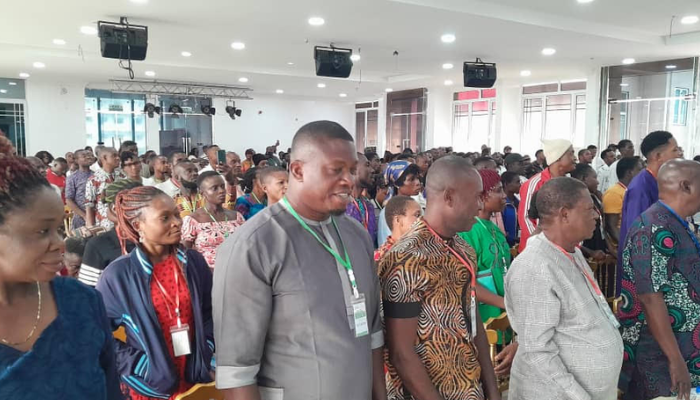
This strategy was revealed in Port Harcourt on Monday, July 21, 2025, at the kickoff of the second batch of orientation camp for incubators and incubatees by the FG/NDDC/International Fund for Agricultural Development (IFAD), and the Live Livelihood Improvement Family Enterprises Project in the Niger Delta (LIFE-ND).
Speaking for the NDDC, Stella Manureh, who represented Winifred Madame, the NDDC Director of Agriculture and Fisheries, said the overall objective was to groom the foot-soldiers of a new economy after oil.

For that reason, she stated, the selection exercise was very rigorous and congratulated those that scaled through.
“The first batch of incubatees has already completed their apprenticeship phase and are currently undergoing mentorship under the LIFE-ND Project. We are confident that you too will make the most of this opportunity and follow in their successful footsteps.
“At the NDDC, we are proud to be part of this transformative initiative. Our role, as a key partner in the FGN/NDDC/IFAD partnership is not just about providing resources; it is about ensuring that we equip the youth, women headed households and people living with disability with the necessary skills, tools, and networks to succeed.”
She reiterated the responsibilities on both the incubators and incubatees and urged the incubators to be proud of grooming the next generation of agripreneurs in the oil region. “To the incubatees, this is your moment. The resources, knowledge, and support made available through the LIFE-ND Project are designed to propel you toward success.
Read also: Initial 350 ‘food soldiers’ conclude technical training in Rivers through NDDC-backed LIFE-ND agric project

“It is your hard work, passion, and determination, however, that will ultimately shape the outcome of your journey. The incubation centres are more than just training facilities-they are platforms for practical, hands-on experience that will equip you to thrive in the agribusiness sector.
She reaffirmed the steadfastness of the NDDC to the Life-ND Project due to the possibilities that lie ahead.
Abiodun Sanni, an engineer and national coordinator of LIFE-ND, said the FG through its partners has ingested $40m into the project to create 38,250 direct jobs.
Sanni said the project aims at grooming the new rural economy beyond oil, saying the project began in six states of the Niger Delta until three new states joined after the NDDC began to release its own funds.
“The NDDC now is to compliment with the additional 12,750 and we’ve started the journey. What we’re trying to do is to scale up our operations and see that largely, we bring more youths onboard and address the issue of our beneficiaries having the feeling that largely, what we’re doing is not real.
In his welcome address, Loveday Itatat, Rivers State coordinator of LIFE-ND, at the Orientation Camp, said the camp comprised 47 Incubators and 520 Incubatees that emerged from 5000 applicants. He explained the funding structure of the project and said the goal of the project is to transform the rural economy, ensuring increased income, food security, and job creation for youth, women-headed households, and persons with disabilities through agri-enterprise development using the incubation model.
Atatat said about 70 percent of the first batch of Incubatees have been empowered and have commenced their individual businesses.
The remaining 30%, he said, are mostly long term incubatees that just finished their apprenticeship but that their supplies were underway for the required inputs for the commencement of their businesses in progress.
In his remarks, Maurice Ogolo, Permanent Secretary, Rivers State Ministry of Agriculture, represented by Nkem Odoya, said LIFE-ND Project is for the good of Rivers State, and is out to improve livelihoods and promote economic development in the Niger Delta region.
He said the Rivers State Government is committed to supporting initiatives that promote economic growth and development and gave huge applause to Gov Sim Fubara (suspended) for prompt directive to pay the state’s counterpart fund.
Randy Minimah, programe manager, Rivers State Agric Development Programme (ADP), said: “We have strong conviction that the project beneficiaries will be given the necessary motivation towards improving Agro-business in the state, thereby making food sufficiency available at affordable prices and also accelerate economic activities for the livelihood and well-being of people in the state.”
An incubator, Ibim Daminabo, said he is teaching his incubatees how to fend for themselves in future. “I’m a poultry farmer, so I train them in broiler production, on egg marketing and egg production.”
One of the trainees, Nwile Stella Kiakah, confirmed the effectiveness of the scheme saying it has exposed her to a lot of things especially on how to grow her own birds.
Officials say the LIFE-ND project targets a reach of 900 matured enterprises called “incubators” and 38,250 apprentices. It works through the incubators to mentor the 38,250 apprentices, comprising 25,000 in the 6 IFAD states and 12,750 in 3 NDDC states, to engage in agribusiness. It is expected that the apprentices (incubatees) will mature to become incubators. “In this manner, the innovative LIFE-ND project is a sustainable instrument to create gainful jobs for women and youth.”
They also added that overall, the project targets 50% male and 50% female participation. “It works on seven priority commodities including Rice, Cassava, Plantain, Oil Palm, Cocoa, Poultry, and fishery (aquaculture and artisanal) all implemented along the value chains of production, processing and marketing. The project is aimed at realizing a transformed rural economy in the Niger Delta from which every population can derive prosperity and equal benefits.
“The project is domiciled in the rural communities, 10 LGAs and 10 Communities in each LGA”