For over 30 years, Yanfiki, a small rural settlement in Kano State, functioned without access to safe drinking water. Residents depended on untreated sources and often paid up to N100 for a jerrican of water that was neither clean nor reliable.
“Sometimes we hid the water from visitors because it was too dirty to offer them,” said Mallam Abdullahi Garuba, a resident.
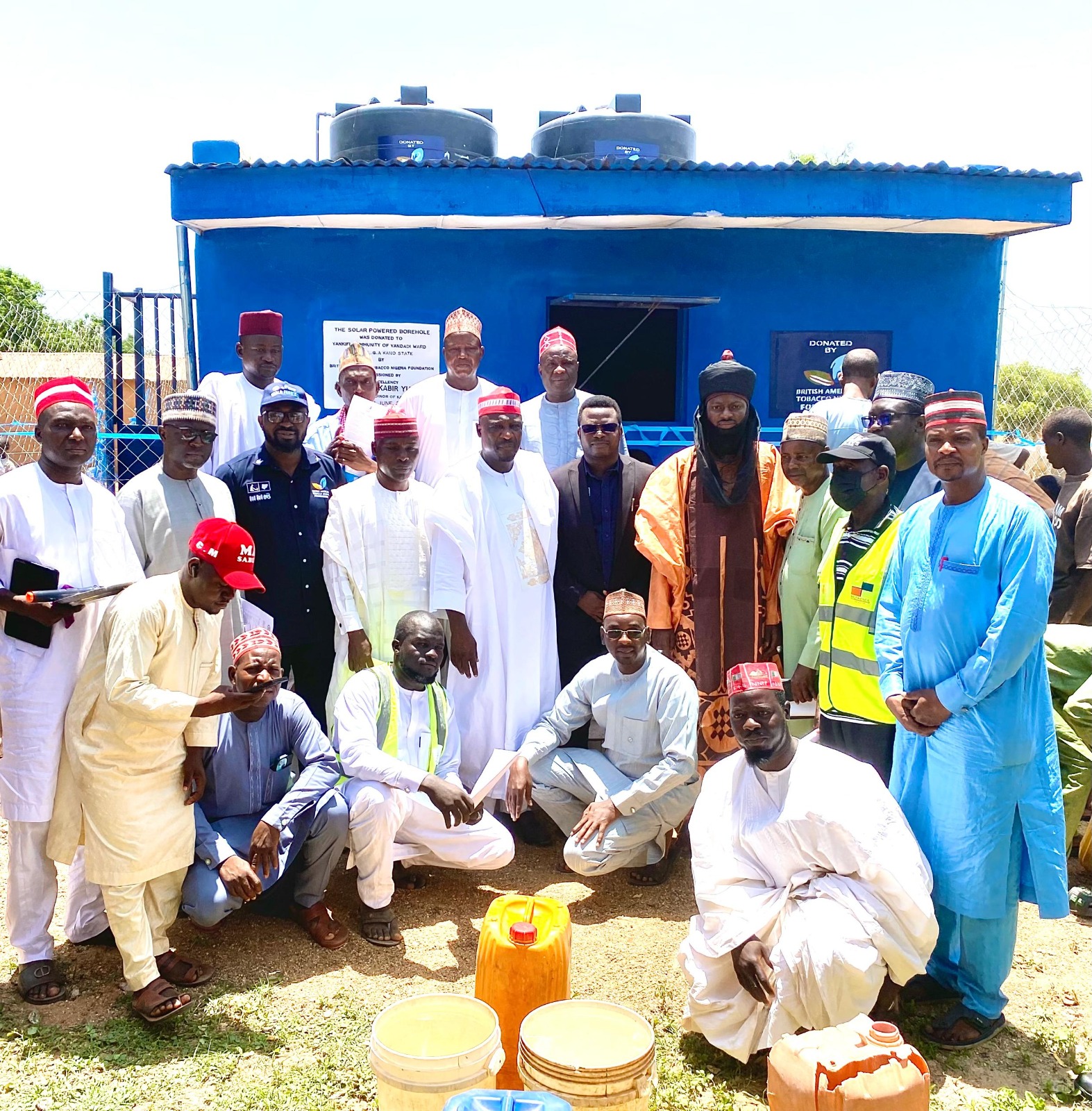
That changed on June 24, 2025, when a solar-powered water facility was commissioned in the village. Funded by the BATN Foundation, the 20,000-litre system now supplies water through five public taps. It is the first time in decades that clean water is flowing directly into the community.
The event drew a large turnout of residents. For many, it was the culmination of years of waiting for what they considered a basic necessity.

Read also: Four die in Sabon-Gari, Kano building collapse
Among the government officials at the event were Kano State’s Commissioner of Water Resources, Alhaji Umar Haruna Doguwa, and Engineer Yusif M. Inuwa, Director of Water. Local leaders and representatives of traditional institutions were also present, alongside staff from BATN Foundation and other partner agencies.
The installed system includes four 400W solar panels, a submersible pump, a hand pump for backup use, a water management kiosk, and a fence enclosure. Officials say the solar design is intended to ensure sustainability and reduce environmental impact.
Beyond the infrastructure, the facility’s success will depend on how the community manages and maintains it. A local water committee was formed at the event to oversee daily operations and long-term upkeep.
Read also: Kano governor wins top infrastructure award at London’s 15th African Achievers event

“This is your project,” said a BATN Foundation representative during the handover. “It will work only if the community takes responsibility for it.”
The commissioning marks a rare instance of infrastructure investment reaching a rural community that had long been overlooked. For residents like Abdullahi, the water project is less about ceremony and more about long-awaited change.
“We never thought this would happen in our lifetime,” he said.