“Health is wealth,” a saying deeply ingrained in Nigerian communities, encapsulates the fundamental importance of well-being.
Yet as our cities expand and consumption increases, the waste we generate threatens both public health and environmental sustainability.
Today, waste is no longer just a sanitation issue — it is a public health concern, an economic challenge, and an environmental crisis that demands urgent, integrated solutions.
Nigeria generates at least 32 million tonnes of solid waste annually, with projections rising to 107 million tonnes by 2050, according to data from the World Bank.

Yet only 30 percent of this waste is properly collected and managed.
Similarly, a recent report ranked Nigeria as one of the top three countries exposed to the most unsafe levels of pollution and environmental hazards.
While plastic waste often dominates headlines, other types of waste present equally serious, yet less visible, threats.
Read also: FREEE Recycle turns used-tyres into handbag, laptop bags to tackle waste
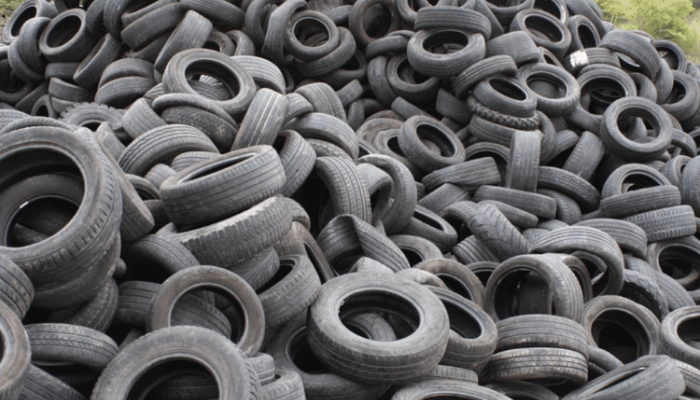
Among these, used tyres stand out as a growing and frequently overlooked hazard.

Each year, over 280 million tyres reach the end of their useful life worldwide, yet only a fraction of these – around 30 million – are retreaded or reused.
This underscores the important question: how can we develop scalable, sustainable solutions for tyre waste in Nigeria and beyond?
Individual consumer choices matter more than ever. From how tyre waste is discarded to engagement with circular economy solutions, every action counts.
This is where organisations like FREEE Recycle are leading Nigeria’s green transformation by turning discarded waste into opportunity and demonstrating that sustainability is a shared journey requiring innovative business models and community participation alike.
How FREEE Recycle is reengineering tyre waste
FREEE Recycle Limited is addressing Nigeria’s escalating tyre waste crisis with practical, scalable, and innovative solutions.
Specialising in end-of-life tyre recycling, the company has processed over 350,000 discarded tyres, converting them into durable, eco-friendly products such as interlocking tiles, pavers, footwear, and playground installations.
Ifedolapo Runsewe, managing director, FREEE Recycle, at the 2024 World Trade Organisation’s Trade and Environment Week, advocated for stronger Extended Producer Responsibility (EPR) policies and the reinvestment of EPR funds to close Nigeria’s technological gaps in waste management.
Read also: World Environment Day: Chevron Nigeria champions cleaner future, cuts 97% of gas flaring
Their work was showcased to Ngozi Okonjo-Iweala, WTO’s director-general, who expressed strong support for their innovation and impact.
The company leads ECR partnerships that champion inclusive participation in the circular economy by engaging consumers from the very start of the waste life cycle.
As part of its ECR-driven efforts, the organisation has collaborated with key partners to turn waste into impact.
As of 2025, through its partnership with Access Bank’s non-profit arm under the FREEE Impact Foundation, the company has produced and distributed over 8,500 recycled tyre school sandals and developed eco-friendly playgrounds across Ibadan, contributing to improvements in children’s health, safety, and educational experiences.
Additional innovations include the launch of sustainable tote and laptop bags, manure scrapers for Arla Farm, and perforated rubber drainage rolls.
All these further demonstrate the company’s commitment to circular solutions and sectoral diversification.
FREEE’s environmental leadership earned a N25 million grant through the NNPC Limited/FIRST E&P Joint Venture’s ‘Impact FIRST’ Awards, funding 2,000 pairs of eco-friendly sandals for public school students in South-West Nigeria, demonstrating a powerful nexus between environmental action and social development.
Most notably, FREEE Recycle was recently honoured with the Spirit of Tyre Recycling Award at the 2025 Recircle Awards in Bologna, Italy—an internationally prestigious event recognising excellence in sustainability and circular economy innovation within the tyre industry.
Read also:Lagos to fine environmental offenders with N250,000 from July
This accolade affirms the organisation’s pioneering role in transforming Nigeria’s tyre waste challenge into a model of environmental stewardship and green innovation. It also positions Nigeria and Africa as emerging leaders on the global sustainability stage.
As we mark World Environment Day, it’s a timely reminder that environmental sustainability requires collective action from governments, businesses, and communities alike.
Tyre waste, often overlooked, poses serious environmental and health risks across the continent. Yet, it also presents a powerful opportunity for innovation and transformation.
FREEE’s recognition is a testament that local ingenuity can deliver scalable, impactful solutions to global environmental challenges.