|
Getting your Trinity Audio player ready...
|
The US corporate governance system has lost sight of its purpose. Companies have become more responsive to the immediate desires of the stock market but are failing to move quickly toward sustainable business practices, adequately invest in human capital and, most importantly, fairly share gains from corporate profits with the workers who create them.
The disjunction comes at a time when many American workers have become forced, capitalists. Tax rules demand that employees saving for retirement or education put their money into equity and bond mutual funds in 401(k) and 529 plans.
These long-term savings objectives should align well with running sustainable, responsible businesses. Diversified worker-investors do not benefit when some companies offload the costs of their activities, such as pollution and carbon emissions, on to everyone else. As human beings who consume products, and depend on good jobs, they suffer when companies harm the environment, defraud or injure consumers and move production overseas.
Critically, 99 per cent of Americans owe most of their wealth to their jobs. As a result, the vast majority of investors need companies to do business in a way that provides Americans with access to good jobs, sustainable wage growth and a fair share of the profits that businesses generate. Yet our corporate governance system has increasingly failed to deliver. From the late 1940s to the early 1970s, workers and investors did share in the wealth generated by a strong, growing economy. But since then that social compact has frayed: worker productivity has risen by about 70 per cent, but hourly pay has grown by only 12 per cent. Meanwhile, corporate profits have hit record highs. US workers are more educated, more skilled and do more to create corporate profits, but they share far less in the fruits of that labour.

Read Also: Stock market to still wander within negative territory
The Business Roundtable, made up of top chief executives and institutional investors such as Vanguard and Blackrock now acknowledge that we need to make our capitalist system work better for the many. But scepticism rightly exists over whether this woke talk will be backed up by real action. Here are some concrete steps that could make a difference.
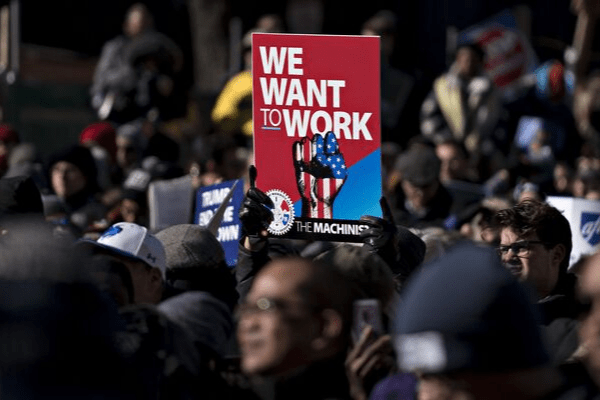
Workers must be given far more priority by companies. We should appoint board committees focused on fair treatment of company employees and those who work for its subcontractors. Business leaders must also support sensible labour law reforms giving unions a fairer opportunity to represent and bargain for their workers. We must make it easier to hold companies accountable by requiring better disclosure of how they treat workers and whether they operate in an ethical, sustainable, environmentally responsible manner.
But companies cannot act more responsibly without the support of the institutional investors who control worker-investors’ capital and thus more than 75 per cent of corporate shares. Some big money managers are starting to consider environmental, social, and governance factors. That is not enough. Institutional investors should be focused on EESG, adding an “E” for the interests of company employees. They should align their voting policies with the interests of worker-investors who need not just sustainable corporate profits but also good jobs, clean air and safe products. It makes no sense to require companies to disclose their EESG performance unless institutional investors also have to do so.