|
Getting your Trinity Audio player ready...
|
Africa’s small businesses are being choked by a trade finance gap so large it threatens to stall the continent’s economic growth.
With payment delays, weak legal frameworks, and limited access to credit holding back millions of SMEs, Woodhall Capital has stepped in to drive a coordinated response.
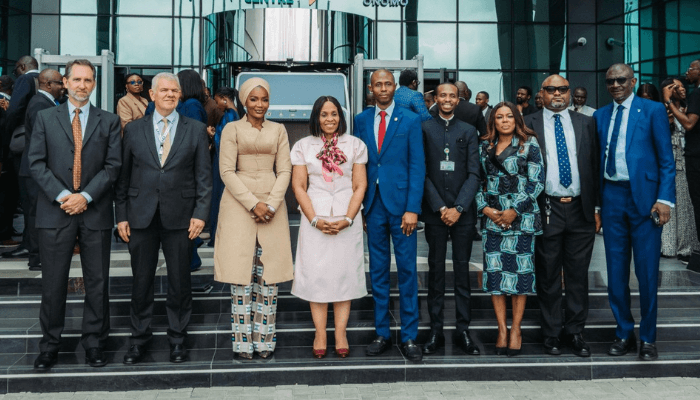
At a high-level conference in Abuja, the investment firm brought together policymakers, banks, and development financiers to chart a path toward closing the $81 billion trade finance shortfall, positioning factoring as a game-changing solution.
The event focused on unlocking liquidity for small and medium-sized enterprises (SMEs), which contribute up to 40 percent of Africa’s GDP but face persistent credit constraints. On average, SMEs wait 72 days for payments, one of the longest cycles globally, compounded by fragmented regulatory systems.

“This conference is a launchpad, not a conclusion,” said Mojisola Hunponu-Wusu, president of Woodhall Capital. “By bridging legal gaps, scaling digital infrastructure, and fostering pan-African collaboration, we’re building a future where SMEs and economies thrive in a unified, self-reliant market.”
The conference spotlighted factoring as a strategic solution to ease these pressures. Factoring enables businesses to convert receivables into immediate cash, improving cash flow.
Read also: Business enterprise gets boost as Woodhall Capital bridges mentorship gap
Despite its promise, Africa currently accounts for less than 2 percent of the global €2.7 trillion factoring market. Stakeholders set an ambitious target to raise this to €100 billion by 2030 through legal reforms, policy harmonization, and digital infrastructure.
A key highlight was the push for Nigeria’s Draft Factoring Bill, seen as a potential model for regional legal harmonization under the African Continental Free Trade Area (AfCFTA).

Participants also explored the role of digital solutions such as blockchain validation, real-time payments, and the use of Afreximbank’s MANSA platform for trade due diligence.
Woodhall Capital showcased its 24–48-hour invoice liquidity model, which has already structured over $6 billion in transactions. The firm is working with Afreximbank, NEXIM Bank, and Elevate Africa to support the Pan-African Payment and Settlement System (PAPSS) and promote Afreximbank’s Model Law on Factoring.
Looking ahead, Woodhall announced a regional task force and sector-specific strategies, including the launch of the Creative Bank—a $1 billion fund aimed at empowering Africa’s creative industries by 2026 using receivables finance.
The conference closed with renewed momentum for factoring as a de-risked asset class, paving the way for greater private capital inflows into Africa’s high-growth SME markets.