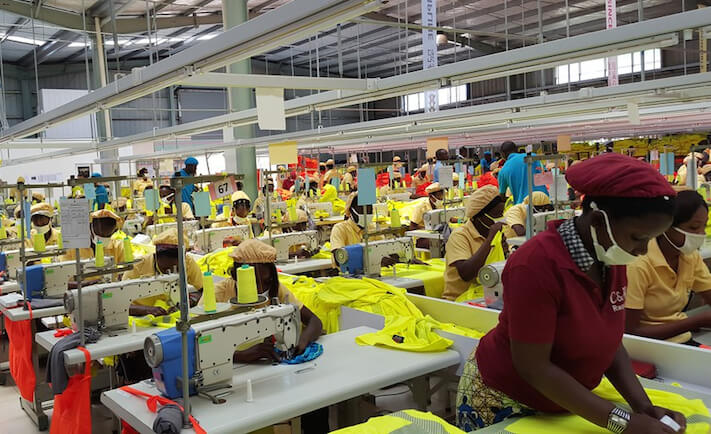
President Bola Ahmed Tinubu’s “Nigeria First” industrial policy has been hailed as a bold step towards reviving the country’s manufacturing sector and driving economic growth. The vision is clear: ban imports of goods that can be produced locally, prioritise Nigerian-made products in government procurement, and create jobs by building up domestic industry. But as anyone who has run a factory or tried to move goods across Nigeria’s vast landscape knows, the real test lies not in the ambition, but in overcoming the long-standing obstacles that have tripped up similar efforts before.
1. Structural and infrastructure barriers
Ask any manufacturer in Aba or Ikeja what keeps them up at night, and the answer is almost always the same: power. In 2024 alone, the national grid collapsed an alarming 12 times, plunging nearly the entire country into darkness each time. According to the Minister of Power, over 60 percent of manufacturers have been forced off the grid, relying on expensive diesel generators to keep their machines running.
Manufacturers currently spend approximately 40 percent of their production costs on energy, primarily through expensive diesel generators. This unsustainable situation significantly undermines competitiveness and scalability. Factory owners spend more on diesel than on raw materials or wages. The constant struggle with power drives up costs; it also makes Nigerian goods uncompetitive at home and abroad.

The roads tell a similar story. Hauling goods from Kano to Port Harcourt is a logistics nightmare, with pothole-riddled highways, endless checkpoints, and the ever-present threat of breakdowns or bandit attacks. Frank Jacobs, former president of the Manufacturers Association of Nigeria, once said that “whatever is produced in this country is produced at a higher cost when compared to other parts of the world.”
2. Economic and financial constraints
Even the most determined entrepreneur faces a financial brick wall. Commercial bank lending rates regularly top 30 percent, and they are notoriously wary of lending to manufacturers without hefty collateral. Many who tried to expand their business, despite a solid business plan and steady demand, are turned away with banks citing “sector risk” and “policy uncertainty.” The Federal Government’s N75 billion Manufacturing Sector Fund is a start, but for most, it is a drop in the ocean.
Read also: ‘Nigeria First’ industrial ambition needs a robust policy architecture, not just presidential decree
Foreign direct investment (FDI) in manufacturing is also scarce. Investors are spooked by insecurity, macroeconomic volatility, and a history of abrupt policy changes. Most FDI still flows into oil, not factories or assembly lines. The result? Nigeria’s manufacturing contribution to GDP lingers below 9 percent, and profit margins have plummeted by over a third in just two years.

Inflation and currency devaluation add to the pain. The cost of importing raw materials soars with every dip in the naira, and manufacturers are left with ballooning inventories of unsold goods as consumer demand shrinks. Multiple taxes – often arbitrary and overlapping – are the final straw. As one Onitsha-based plastics manufacturer lamented, “I pay federal tax, state tax, local government levy, and then some boys just show up asking for ‘development fees.’ Where is the development?”
3. Governance, regulatory, and security challenges
Perhaps the most Nigerian of all obstacles is the ever-shifting regulatory landscape. Policy inconsistency is legendary: one administration’s industrial roadmap is quietly shelved by the next, leaving investors and business owners in limbo. Olusegun Aganga, a former Minister of Industry, Trade, and Investment, recently noted that Nigeria is “not short of policies but lacks the discipline to stay the course on policy implementation.”
Political gatekeepers and rent-seekers are another endemic problem. For every legitimate fee, there is an unofficial “toll” to be paid – whether at the port, on the highway, or in the corridors of regulatory agencies. This not only raises costs but also discourages formal investment and encourages smuggling, especially across Nigeria’s famously porous borders. Goods banned for import often find their way into markets anyway, undercutting local producers and eroding government revenue.
According to the Director-General of the Manufacturers Association of Nigeria (MAN), Segun Ajayi-Kadir, insecurity has forced many of their members to shut down their operations. Insecurity remains a daily reality for many manufacturers. In the North, between 56 percent and 60 percent of factories have shut down due to violence and kidnapping. Ajayi-Kadir has also admitted that companies now spend more on security than on taxes – a staggering indictment of the operating environment.
A way forward
Nigeria’s manufacturing sector has undeniable potential. The country’s large population, abundant natural resources, and entrepreneurial spirit should make it an industrial powerhouse. But as history has shown, good intentions and bold pronouncements are not enough.
For Nigeria’s industrialisation policy to succeed, government must address these chronic challenges. Priority must be given to stabilising power supply, improving transportation infrastructure, and fostering the development of a machine tools industry. Financial reforms should focus on reducing the cost of capital and creating dedicated funding mechanisms for manufacturing. Most importantly, insecurity must be tackled head-on, not just for manufacturers, but for the country as a whole.
If the “Nigeria First” policy is to succeed where others have failed, it must address the everyday realities faced by Nigerian manufacturers. Only then can the country hope to turn its industrial dreams into lasting economic prosperity. True industrialisation demands sustained, coordinated efforts to create an environment where local production can genuinely thrive.