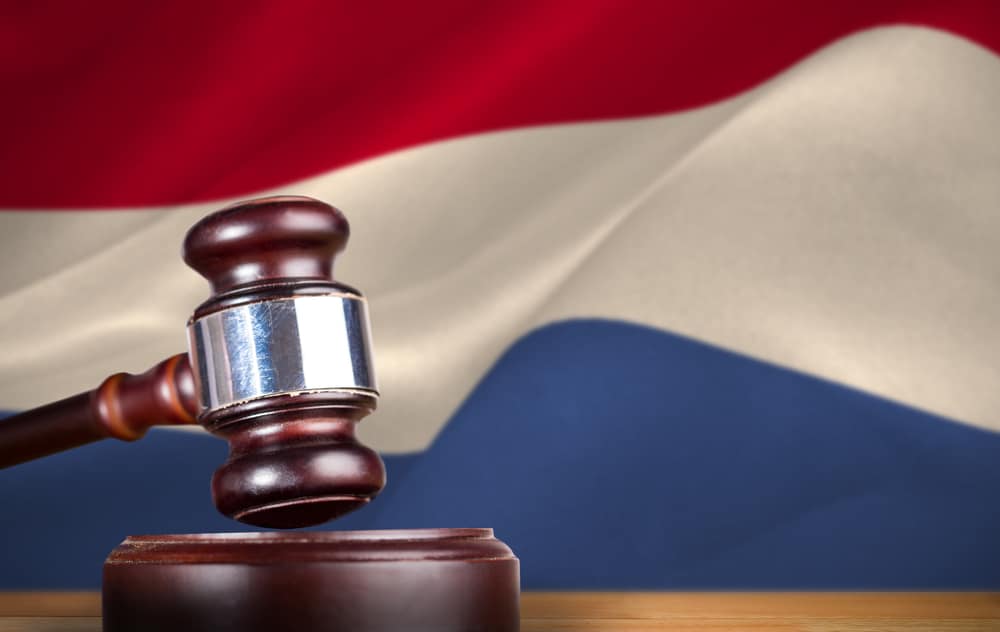
Esther Kiobel and three other widows of Nigerian activists executed by the Sani Abacha military junta in 1995 have secured an interim ruling in their favour at a District Court of The Hague, allowing the court to have jurisdiction with regard to Shell’s involvement in the alleged unlawful arrest, detention and execution of their husbands by the Nigerian military.
After exhausting legal possibilities in Nigeria, Esther Kiobel, Victoria Bera, Blessing Eawo and Charity Levula are suing Shell in a foreign court over what they say is its role in the execution following a brutal crackdown on Ogoni protests against Shell’s devastating pollution of the region.
Also, the widows’ legal team demands that Shell hands over internal documents which would provide key evidence of its complicity, an allegation which Shell has denied. Shell challenged the decision of the District Court of The Hague to hear the case, stating it lacked jurisdiction to hear the suit.
In a judgment delivered on Wednesday, a three-judge panel at the Hague District Court affirmed that the court had jurisdiction in hearing the suit, though they did not agree with assertions by the widows that Shell should have done more to prevent their husbands’ deaths.

“The court considers itself capable of hearing the case. This procedure will continue,” Larissa Alwin, presiding judge, said, reading the decision of the court.
According to Reuters, the court also ruled that Shell should hand over some confidential internal documents to the plaintiffs’ lawyers, and that they would have the opportunity to examine witnesses.
Dutch courts do not award large disciplinary damages claims. However, the case has the potential to humiliate Shell and provide a measure of comfort for the activists’ families if it finds the company bears responsibility in their deaths.
Shell representative Igo Weli said outside the court that Shell was not responsible for what happened.
“Shell actually made an appeal for clemency (in the Ogoni Nine case), but sadly this was not heard. We continue to deny all the allegations in the strongest possible terms,” Weli told Reuters.

Weli, who works for Shell’s Nigerian subsidiary, said the company would give the claimants access to internal documents as ordered.
Lead plaintiff Esther Kiobel, whose husband Barinem Kiobel was among those executed, said outside the courtroom that she was glad the court has found out it has jurisdiction over the matter.
“My husband was killed like a criminal. I want him to be exonerated,” Kiobel said after the court hearing.
Reacting to the court ruling on Wednesday, Amnesty International’s Head of Business and Human Rights Mark Dummett said the court decision marks a vital step towards justice for Esther and the other plaintiffs.
He added that it will also set an important precedent for other victims around the world who are seeking to hold powerful corporations to account, and who struggle to access justice.
“We salute Esther Kiobel, Victoria Bera, Blessing Eawo and Charity Levula. It’s only because of their courage and persistence that we’ve got this far,” Dummett said after the ruling.
Amnesty International said the women believe their husbands would still be alive today were it not for Shell’s relentless pursuit of profit, which encouraged the Nigerian government’s bloody crackdown on protesters even when it knew the deadly human cost.
Amnesty International acknowledged that Shell will now face questioning in a court of law about what it knew and how it contributed to this horrifying event in Nigerian history.
“Today’s ruling will have great significance for people everywhere who have been harmed by the greed and recklessness of global corporations,” Dummett said in a press release.
Amnesty International welcomed the court’s decision to order Shell to release some internal documents, but is disappointed that it did not order the release of all of those that Esther’s lawyers called for.
Recall that Barinem Kiobel, Baribor Bera, Nordu Eawo and Paul Levula were hanged in 1995 after a blatantly unfair trial. Their widows are now demanding compensation and a public apology from Shell for the role the company allegedly played in these events. Five other men, including protest leader and writer Ken Saro-Wiwa, were executed alongside them. They have become collectively known as the Ogoni Nine.
Esther Kiobel first filed a case against Shell in New York in 2002, but in 2013 the US Supreme Court ruled that the US did not have jurisdiction to hear the case – meaning the US courts never got to examine the substance of the allegations against Shell.
Amnesty International supported Esther Kiobel to bring the case to the Netherlands in 2017, and detailed Shell’s role in the arrests and executions in a briefing titled “In The Dock”.
No date has yet been set for a next hearing to submit additional evidence or a final decision.
DIPO OLADEHINDE