It is three days to the presidential ballot when Nigerians expect to elect a president who will run the affairs of Africa’s largest economy (by Gross Domestic Product) in the next four years. Their choice will be between two candidates being offered by the two dominant political parties in the country. Incumbent President Goodluck Jonathan is seeking re-election for a second term while his most formidable challenger, Gen. Muhammadu Buhari (rtd), former military head of state, is the flagbearer of Nigeria’s second dominant party.
Most of those clutching permanent voter cards (PVCs) issued by the Independent National Electoral Commission (INEC) are not sure what the big election issues are. Firms that have recently conducted opinion polls on the Saturday elections suggest that security of life and property, protection of the fundamental human rights of citizens and growing the economy are big issues in this election. Other pundits include implementation of the conclusions of the 2014 National Conference is another big election issue. Others point to the performance of the incumbent during his first tenure.
Public choice economists who model political behaviour have provided the world useful insights that can prepare us for what to expect on Saturday. First, the level of voter turnout we can expect.
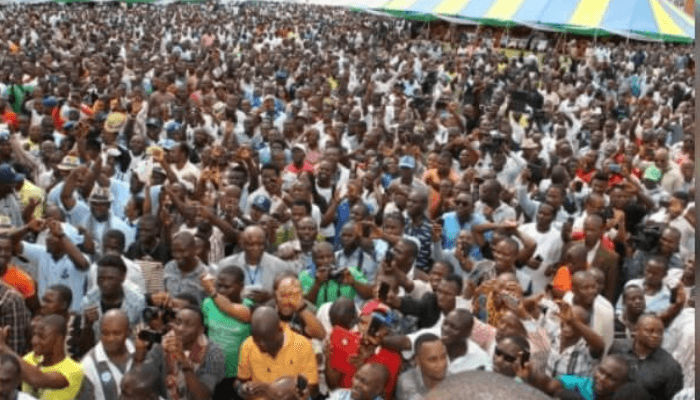
Participation in Nigeria’s previous four elections has been among the lowest in Africa, well below the African average of 64 percent, the lowest among world regions. The voter statistics indicate that voting age population (VAP) participation averaged 55 percent for all the elections conducted in the country since the return to civilian governance in 1999. VAP was highest at 65 percent in 2003 followed by 57 percent in 1999, 50 percent in 2007 and 49 percent in 2011.
Similarly, voter turnout averaged 58 percent for the four elections of 1999, 2003, 2007 and 2011. The highest voter turnout of 69 percent occurred in 2003 while the lowest was in 1999. The corresponding figures for 2007 and 2011 were 57 percent and 54 percent, respectively.
A feature of direct voting in elections is the inability of an individual voter to determine the outcome of the election. A voter wants his preferred candidate to coast home to victory, but his one vote cannot assure that outcome. Yet, the cost of casting a vote during the election on Saturday can be high. It would require several hours at the polling station. There will be out-of-pocket expenses. This is why economists wonder why so many people actually vote at elections.
The reasoning behind the economist’s viewpoint is simple and flows from how the disciples of Adam Smith, the father of the discipline, model human behaviour either in the private marketplace or the political marketplace. People will avoid any action if the costs are greater than the benefits. John C. Goodman, a public affairs analyst, explains it thus: “Here is how the simple calculus of voting works: Net Benefit of Voting = B x P – C, where B is the benefit, or the value the voter places on seeing the preferred candidate win rather than the opponent, C is the cost of voting (measured in terms of time and any out-of-pocket money costs) and P is the probability that the voter’s vote will determine the election outcome. If you know in advance that your vote won’t determine the outcome, then p = 0. That means there is no benefit from voting.
Economists call this the “paradox of voting”: no matter how much the average voter cares about who wins, the probability that his vote will be decisive is so small that there is almost no way the net benefit of voting can be positive.
Another insight that economics brings to an understanding of the voting behaviour is rational ignorance about big election issues. As Ilya Somin, professor of law at George Mason University, explains it, when your only incentive to acquire political knowledge is to make better voting decisions, remaining ignorant makes good sense. “No matter how well-informed you are, the probability that your vote will change the outcome of an election is tiny…Though few know the exact odds, people have an intuitive sense that there is little payoff to studying political issues.”
While finalizing this discourse, I drew the attention of a friend to detailed accounts of the stewardship of the incumbent president in several newspapers yesterday. I teased him to devour the information contained in the papers before casting his vote on Saturday. His response was quick. “Forget it. Why should I spend my money and time to study what the PDP claims to be the performance of its flagbearer? I know that no matter how informed my vote is on Saturday, the election outcome is beyond me to determine.”
My friend’s reaction to my invitation to read more about the performance of the incumbent president on the economy confirms what the public choice scholars have been saying: rational ignorance is not due to lack of information; it is due to the high cost of conducting the research knowing that a single vote does not count much.
Weneso Orogun