|
Getting your Trinity Audio player ready...
|
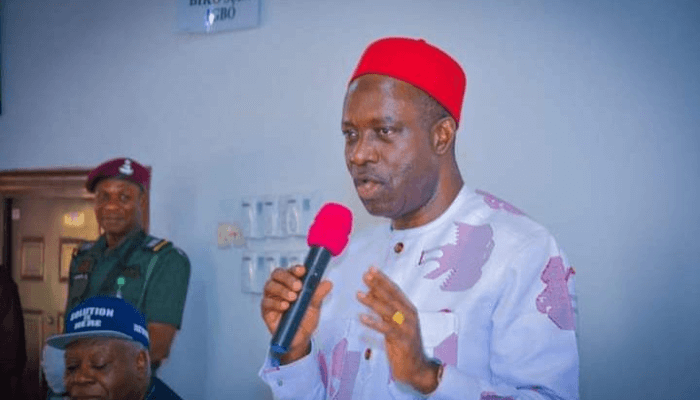
Chukwuma Soludo of the All Progressives Grand Alliance (APGA) recorded a decisive victory in the just concluded Anambra State governorship election, winning in all 21 local government areas.
He secured a total of 422,664 votes, defeating his closest rival, Nicholas Ukachukwu of the All Progressives Congress (APC), who polled 99,445 votes. Paul Chukwuma of the Young Progressives Party (YPP) came third with 37,753 votes.
Analysts point to several reasons behind Soludo’s landslide victory. First, Anambra has long been considered an APGA stronghold, with widespread grassroots support across the state’s three senatorial zones. No other party, including the Peoples Democratic Party (PDP), which had produced two governors between 1999 and 2006, enjoys the same level of traction.
Secondly, like his predecessor Peter Obi, Soludo prioritised rural development, earning the trust and confidence of the state’s rural communities. His campaign against notorious native doctors, who had converted local forests into centres of superstition, further strengthened his support.

“Most of those native doctors were turning rivers and ponds in the villages into objects of worship. Soludo came as a messiah by destroying what could have been a disaster for the people,” said Paul Onuha, an Amawbia-based community development expert.
“Soludo is also big on rural development. Like Ngige and Obi, he has been rehabilitating rural roads and providing security in places that were once war zones.”
The next factor that worked in Soludo’s favour, analysts say, is the rotational arrangement in the state. By tradition, Anambra rotates governorship position around three zones – North, South and Central.
While late Governor Chinweoke Mbadinuju was from Anambra South (Uli), Chris Ngige, his successor, emerged from Anambra Central (Alor). Peter Obi, on his part, emerged from Anambra Central (Agulu), with Willie Obiano coming from Anambra North (Aguleri).
Soludo is from Isuofia (Anambra South) and will likely hand over to someone from Anambra Central.

Hence, despite that there were several Anambra South candidates in the just concluded election, the three regions cannot afford to elect a fresh governor from Anambra South. This will disrupt the rotational arrangement in the state as the new governor would seek a second tenure, thereby disrupting the turn of another zone.
The incumbency factor also gave Soludo an advantage, allowing him to consolidate support through strategic engagements with key stakeholders.
“If I were from Anambra, for instance, I would support Soludo. After all, he can offer me the position of commissioner or something else, but what can other candidates offer? A bird in the hand is better than five in the bush,” said Tochukwu Arinze, an Enugu State-based political scientist.
Many analysts have dismissed rigging or violence as factors in the election, saying it was largely free and fair despite some skirmishes.
Expectations
Observers say citizens of Anambra now expect tangible results from Soludo’s administration, including new infrastructure projects, improvements to existing facilities, enhanced security, and a more business-friendly environment, particularly the reduction of multiple taxation.
Discouraging signals
The state registered 2.8 million voters but only 595,298 voted in the election, putting the voter turnout at 21.3 percent, though higher than 10.27 percent in 2021 and 20.1 percent in 2017.
Analysts attribute the low turnout to voter apathy, fuelled by years of perceived underperformance by state governments.
The Labour Party (LP), which generated significant excitement in the 2023 elections, could only secure slightly over 10,000 votes in the state where Peter Obi hails from.
Political watchers expect the new leadership at INEC to draw lessons from the Anambra election ahead of the 2027 general elections to strengthen electoral processes nationwide.