…Resource persons say too little, too late
…Massive corruption in project execution
The Niger Delta people are still angry with Nigeria, sources have confirmed in Port Harcourt, Uyo, Warri, and Yenagoa.
Many of the activists contacted said that what the nation was enjoying in the region was the peace of a graveyard. Young people, students, entrepreneurs, politicians, technocrats, and many others insisted that the people were unhappy despite the seemingly huge projects being executed in the nine states of the region over the years.

The Federal Government and other regions in Nigeria point to some intervention projects as evidence that the Niger Delta people should be happy. Many claim that the Nigerian government has allocated a significant amount of funds towards Niger Delta interventions, with specific details varying depending on the year and programme.
They said that in 2018, the budgetary allocation for the Niger Delta Amnesty Programme was N65 billion. They multiply this per year and hiss in conviction that Nigeria has done enough. More broadly, they claim, between 1999 and 2004, it’s estimated that public and private sectors invested about $48 billion in the Niger Delta region. The Niger Delta Development Commission (NDDC), a key agency for Niger Delta development, had a budget of N1.911 trillion in 2024, which was approved by the National Assembly. It was about N400bn per year before now, making about N10trn in 20 years.
Even those who show surprise that the people of the Niger Delta are complaining despite many intervention programmes forget that Nigerians are all complaining. Inflation does not spare the region, in fact, it is higher in the creeks where it costs three times to transport to the creeks.
Medical facilities and schools are empty in the creeks because those posted there visit like once a week, and lobby to be posted out. Trips to the schools and clinic in places such as Bille, Krakrama, Soku, Abalama, Belema, and Kula near the Atlantic show empty schools because teachers are not available. Often, communities levy themselves to hire some teachers to stand in. Classes are combined such as one junior class and one senior to keep the children busy.
In the end, the rich take their children to the cities to get some form of standard education while the poor stay there and face the situation. At last, such schools seem to produce cultists and militants to feed the growing army of political thugs and drugs foot soldiers in the region.

It is also clear that the agitation was resource control after the dreams of the Willinks Commission failed through OMPADEC and Niger Delta Basin Development Commission.
The Goodluck Jonathan presidency seemed to inflict more harm than good by diverting the dream from resource control to amenities and making of millionaires from the agitators. Everywhere seems to be filled with ex-commanders that are very rich whereas the new generation of militants are murmuring underground. Many see a timebomb.
Read also: Niger Delta stakeholders demand audit of host community funds under PIA
The ex-militants are either dead or very rich. Some are now monarch, living large. Others are contractors making big money. In all, they are to keep an eye on the boys to ensure there is peace to allow Nigeria suck oil legally or illegally.
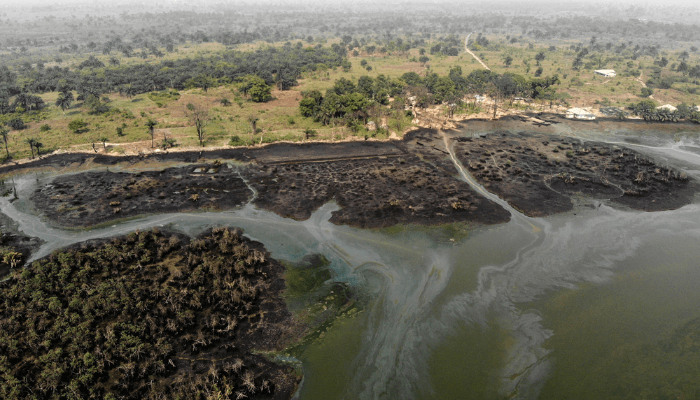
Ogoni is the epicentre of agitation which was later hijacked by Ijaw boys into the Kaima declaration that produced militants after ken Saro Wiwa and Ogoni activists died. Now, Ogoni has got a $1bn cleanup project but it seems to breed more acrimony than health because of what industry experts term ‘expectation mismatch’. Whereas Ogoni people expected cash compensation and wealth to all, what they see is actual clean up. They thus claim that nothing was being cleaned.
Also, the cleanup took years to begin after the UN Report. This, too, dampened the spirit of the people. The agitation has taken deep roots in Ogoni that consensus seems impossible to reach in any matter; from clean up to resumption of oil operations.
So, the Niger Delta, once-neglected oil-bearing area of Nigeria may seem to be having their best of time these days. There are actually voices saying that the area needed much more than it has got.
Some say a cursory look at government’s interventions show that the lots of the people of the area have continuously improved over the years. Apart from the direct benefits accruing to some of those who fought in the creeks years ago, the policies of successive administrations have greatly impacted the area.
They point to 13% derivative funds to the Niger Delta Development Commission (NDDC) to Presidential Amnesty Programme (PAP) to Ministry of Niger Delta, to South-South Development Commission, among some other interventionist agencies such as Niger Delta Basin Development Authority (NDBDA). To them, the Niger Delta is being well-taken care of. They just cannot understand why complaints persist.
Once in a while, a bright spot emerges to make the people think it may be good at last. That is why the new NDDC seems to make impact because it seems to steer away from the stinking methods of the past, yet some still kick.
What are the complaints:
Three resource persons in the region will help Nigerians understand what the issues are. Others will not want to be quoted.
Fyneface Dumnamene Fyneface, executive director of YEAC-Nigeria:
We give much but receive little:
YEAC means Youths and Environmental Advocacy Centre – Nigeria (YEAC-Nigeria). The groups have over one million volunteers across the Gulf of Guinea and they have a lot of facts and data.
Dumnamene said: “Many Nigerians may consider that many projects and programmes are going on in the Niger but people still complain. That may be because they consider them inadequate. If we must enumerate them, what are those things that have been done to the Niger Delta people!
One, 13% derivation to oil states, creation of Ministry of Niger Delta Affairs now Ministry of Regional Affairs, NDDC, Presidential Amnesty Programme, HYPREP on Ogoni Clean Up, East West Road.
If you mention Niger Delta, you are talking about the oil and gas hub of Nigeria which accounts for more than 90% of Nigeria’s oil/gas revenue. It is more than 80% of the nation’s GDP comes from the Niger Delta, and 95% of the national budget is derived from the resources of the Niger Delta (hydrocarbon industry).
Nigeria as a country has earned over $60trn since oil production started in 1958. The Niger Delta region contributes at least, 80% of the Gross Domestic Product (GDP) of the nation. Putting all of this together, you cannot equate what Nigeria has given back to the Niger Delta to what they have taken from the region.
If you look at the development executed in the Niger Delta, it does not go anywhere to what has been done to other places whereas the resources come from the Niger Delta. You will see the reason.
You cannot feel the presence of FG in most of the communities in the oil region. Pollution is everywhere, gas flaring is killing people, roads are not good, social amenities cannot be found, hospitals cannot be seen to the standard that you find in other parts of the country, unemployment is on the high scale, etc.
These are the things annoying the people, and when they look at the contributions from their region, they keep going angry. If you get to Abuja, you see it is being transformed every day, and every kobo being used is coming from the Niger Delta. This is why the people are complaining.
They are not seeing the impact of the golden egg they are laying. That accounts for the complaints still coming from the region.
What the people want is Resource Control. If that happens, you will find that the grievances will dry up. If you look at agric, there was a time it was the source of revenue and each region controlled theirs, but now that it is oil, they want the centre to control it. These are the reasons. Impact of pollution is in the oil region, not anywhere else. Complaints will continue till Resource Control is looked into.
Blessing Wikina: Public communications strategist
Too little, too late:
It’s tricky a question. The region was neglected far too long such that whatever you bring makes no sense compared to their anger. For instance, the East-West Road was here but they completed Lagos-Ibadan Road, completed Lagos Abuja highway to Kaduna to Kano. They completed the Kano to Maiduguri Road which President Muhammadu Buhari commissioned before leaving office. So, whatever excuse they give for East West Road is never seen as justifiable.
Every project they bring to the region suffers two things: poor funding, and lack of serious will to do it. For instance, my cousin was returning from Lagos and they had a smooth drive from Lagos to Benin. After that, they spent four hours from Benin to Warri, which was the time it would have taken them to get to Port Harcourt. Roads in the region are a concern and this sends signals of neglect.
Neglect of the Niger Delta is criminal and requires drastic measures. It requires four times the amount and efforts they presently put.
The terrain of the region requires serious efforts. It is not as if the projects should not please the people but the proportion. Nothing makes sense. See Port Harcourt to Onne, a mere 20km is taking years to do. We see what is happening in Abuja, the North and West, massive projects there.
Our people are not complaining but stating the obvious.
Chris Finebone; top strategist:
Corrupt people are preferred:
The reasons range from corruption to insincerity. Many of the citizens of the Niger Delta put in position to uplift the living standard of the people instead use the position to enrich themselves.
They further divert the resources of the region to play politics. On the other hand, those who appoint those sons and daughters of the region do so based on political preference and self- serving motive.
Better hands are overlooked while mediocre fellows are preferred and elevated. Often, the outcome is expectedly mediocre.
Conclusion:
Nigerians think they are doing enough for the Niger Delta, but the reasons above show that anger is seething beneath.