



|
Getting your Trinity Audio player ready...
|
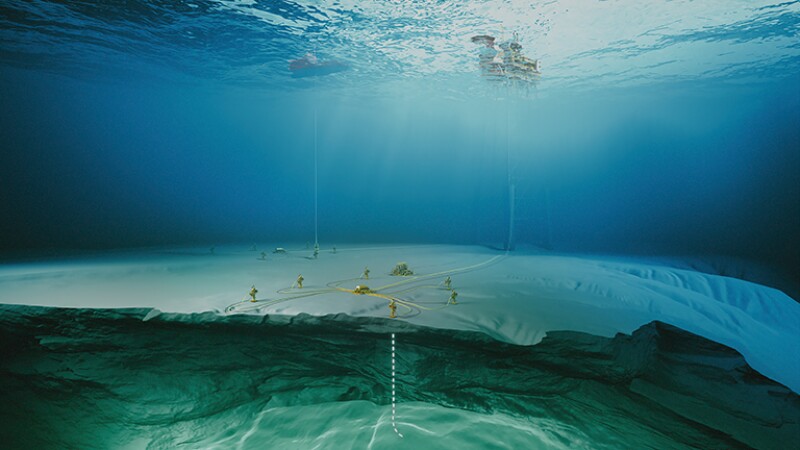
In today’s energy landscape, subsea operations have become a cornerstone of exploration and production. In my many years as a project installation engineer, I have witnessed successes and failures of subsea operations. Some costly errors that could have been avoided. As much as the industry celebrates advancements in subsea systems technologies, oil recovery, and innovative platform design, the truth remains that even the most sophisticated subsea equipment is worth nothing if it cannot be successfully installed in the seabed.
Subsea operations are one of the most complex engineering processes in the energy world. Yet, much of their success hinges on decisions made long before any equipment touches the seabed. The installation study, which is often behind the scenes of project planning, deserves a front-row seat in operational strategy. Studies have shown that the installation typically represents 20-40 percent of total seabed project costs, and these projects cost millions of dollars. Therefore, the importance of installation studies will only grow as we push the boundaries of what is technically and economically feasible in subsea development. To uphold safety, efficiency, and environmental responsibility in today’s energy sector, we must begin with better planning beneath the surface.
The cost of going in blind
As more oil and gas fields move further offshore into deeper waters, drilling and production technologies advance dramatically, and a robust study is required before carrying out any installation. This analysis does more than run through procedures; it puts every last variable under scrutiny, from ocean currents and wave heights to seabed conditions, geological stability, vessel capability, and equipment tolerances. It tests whether the chosen vessel can actually perform the lift safely, whether the subsea structure will remain stable during deployment, and whether there’s enough visibility and manoeuvrability for Remotely Operated Vehicles (ROVs) to intervene if needed. It assesses and determines the most efficient installation method, factoring in water depth and equipment size. It also tests for potential installation failures to develop mitigation strategies. Skipping or rushing through this process is not just risky; it is reckless and can lead to catastrophic outcomes.

Poor installation assessment could lead to misaligned installations, damaged equipment, cable snaps, or even aborted operations mid-deployment. Each of these carries steep financial and safety consequences. Beyond financial costs, there are greater environmental and human risks. Imagine a manifold or pipe section dropping; it would not only damage assets but endanger the operations crew and even threaten marine ecosystems. All of these could lead to reputational damage for the company. Operators today are expected to not just deliver energy but to do so responsibly. That responsibility begins with doing our homework.
Installation studies: A risk mitigation strategy, not a formality
At its core, an installation study is an engineered simulation and planning exercise, and it answers critical questions like: Can the equipment be lowered safely without excessive tilt or swing? Will the crane withstand dynamic loads? Can the subsea structure hold its integrity during touchdown? And crucially, what’s the plan if something goes wrong?
These studies unfold in phases that mirror the lifecycle of a subsea project. It begins with conceptual studies, where engineers assess the feasibility of different installation methods and provide early cost estimates to shape strategic decisions. As the project progresses, front-end engineering studies dig deeper into technical details, defining procedures, selecting appropriate equipment, and identifying key risks.
The most intricate planning occurs during the detailed installation study, where the exact sequence of operations is mapped out. It involves defining safe weather windows for the operation and establishing contingency plans. Finally, post-installation reviews compare actual outcomes to predictions, capturing lessons that refine future models and boost overall accuracy.

When done right, the benefits are clear. Installation time is reduced, safety margins are improved, and companies can avoid costly delays. For contractors and operators, this translates to a lower cost per barrel, more predictable project schedules, robust backup plans for potential failure scenarios, and improved relations with regulators and insurers. Perhaps more importantly, it strengthens a project’s social licence to operate by demonstrating a proactive approach to risk and environmental stewardship.
Conclusion
The subsea industry is at a pivotal point in its development. As we venture into deeper waters and more challenging environments, the complexity and cost of installations continue to escalate. What worked in shallow water developments won’t cut it when deploying equipment at 3,000-metre depths in harsh weather conditions. The projects succeeding in today’s market aren’t necessarily those with the most advanced technology; they’re the ones that understand installation challenges from day one and plan accordingly.
Installation studies have evolved from nice-to-have documentation into essential business tools that can make or break project economics. Companies that recognise this shift and invest properly in installation planning are positioned for success in an increasingly competitive market. Those who treat installation studies as an afterthought will deal with costly surprises that could have been avoided. In an industry where a single failure can eclipse the cost of prevention, the real question is, can you afford not to?
Call to action
If you are involved in subsea project development, now is the time to take a deeper look at how your organisation approaches installation studies. Are they truly prioritised, or are they squeezed into shrinking budgets and timelines? Talk to your installation engineers, review your recent operations, and ask yourself, are you planning to succeed or gamble with your margins?
The companies that will lead in the next decade of offshore development will be those that treat installation planning as a strategic advantage.
Jonathan Tijani is a Subsea Installation Engineer specialising in mooring systems, installation engineering, and barge/vessel hydrodynamics. He brings strong technical and analytical expertise, with hands-on experience across the renewable energy and subsea oil and gas industries.





