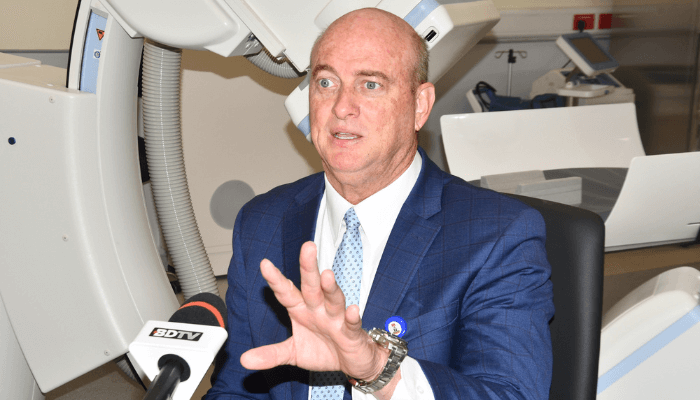
Brian Deaver, chief executive officer of Afreximbank-backed African Medical Centre of Excellence (AMCE), has said Nigeria and Africa at large will continue to struggle to deliver healthcare for citizens if health professionals remain unappreciated and burned-out.
Deaver said governments must begin to create systems that would enable health workers thrive, stressing that only a healthier population will fuel a healthier economy.
The CEO said this Thursday at the BusinessDay Health Conference in Abuja with the theme, “Bridging The Gap: Advancing Equitable and Affordable Access to Healthcare in Nigeria”.
“Burned-out staff struggle to deliver compassionate care. Unsupported team members will not innovate. Unappreciated professionals will not stay. If we want a system that heals, we must start by building environments where caregivers thrive. So when we redefine healthcare in Nigeria and West Africa, let us redefine leadership. Not just as strategy and funding, but as a commitment to investing in leadership”, he said.

Read also: Policy, data, welfare gaps stalling health sector reforms
“When my healthcare team members feel valued, recognised, developed and cared for, then I do not have to worry about patients being treated with dignity and respect”, he added.
Avcording to Deaver, the pursuit of redefining healthcare delivery could not be more timely, more urgent, noting that for too long, healthcare systems in Nigeria and Africa have largely operated in silos, many underfunded, fragmented and reactive.
Read also: Stakeholders decry costly healthcare services in Nigeria
The CEO expressed concerns that in too many facilities, patients are treated as cases to be managed, not human beings to be served, their dignity compromised, their voices are often silenced.

He said Nigeria and her counterparts must shift from what’s available to what’s possible, from good enough to excellence, from competition to collaboration, and from merely treating illness to creating health.
“Reengineering health care means centering the patient experience. It means reducing wait times. It means ensuring equal access so that women, the disabled, the elderly, those in rural communities receive the same quality of care as anyone else. A more resilient health system benefits every investor. But as we build systems, we must not forget the individual patient”, he said.
He further urged for collaboration rather than competition especially ammong private healthcare givers.
Read also: Nigeria’s healthcare is bleeding talent
“We arenot in the business of market share. We are in the business of saving lives. No single hospital, no matter how well funded or well equipped, can meet the needs of 200 million Nigerians, let alone 400 million West Africans. What we need is collaboration over competition”, he stressed.
“Imagine a regional referral network where private, public and mission-based hospitals share resources. Where radiology scans done in one facility are reviewed by specialists in another. Where lab results are digitally accessible wherever the patient goes. Where patients are referred, not lost. This is not science fiction. It’s a matter of will, it’s a matter of trust and leadership”, he said.
“We must deepen collaboration of federal, state and local governments for joint planning, shared infrastructure, public health data and capacity building. The role of government is indispensable in defining health priorities, establishing regulatory clarity and expanding access to care and funding of care”, he further said.