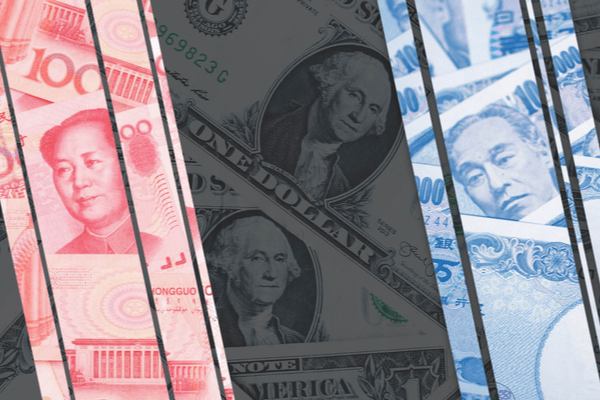
The US dollar has long towered over global markets and finance. But cracks are starting to appear in the edifice.
The greenback’s pre-eminent role in official funds and international trade is formidable and unlikely to fade quickly. But the latest data from the IMF on central banks’ reserves show a subtle shift away from the dollar that analysts say could signal a rethink on the political risk embedded into US assets.
“Central banks [are] chipping away at the dollar’s ‘exorbitant privilege’,” said Alan Ruskin, chief international strategist at Deutsche Bank in New York. “Politics are starting to infringe in ways that have the potential to challenge the dollar’s dominance.”
In last month’s quarterly report on central banks’ reserves, the IMF said that the share of the global total denominated in dollars was just short of 62 per cent in the second quarter of this year, down 0.76 percentage points from the same period a year earlier. Euro-denominated reserves account for 20 per cent.

While the dip is small, the apparent resilience is deceptive. As Mr Ruskin pointed out, the dollar was, during that quarter, the highest yielding currency in the developed world. In theory, that should have lured in investment at a faster pace than other currencies.
Instead, central bank reserve managers — a powerful force in global markets — accumulated 3.5 per cent more dollars over the year, far behind gains of 17 per cent for the renminbi and even 8 per cent for sterling, despite the pound’s Brexitrelated troubles.
The dollar’s falling share of reserves represents an “official sector vote against US ‘exceptionalism’”, said Mr Ruskin. In his view, the data should give pause to US policymakers contemplating laws to tax foreign purchases of US assets, further sanctions based on the international use of the dollar and plans to restrict access to US capital markets. All are actions that could weaken the dollar’s influence.
Mark Carney, governor of the Bank of England, warned policymakers in August that as well as being the dominant currency for invoicing and settling international trade, two-thirds of global securities issuance and official currency reserves are denominated in the dollar. This makes economic developments in the US the key driver for monetary policy elsewhere, particularly in emerging markets.
In the long run, central banks should move to a “multipolar” economic system, Mr Carney said, adding that “the renminbi has a long way to go before it is ready to assume the mantle [but] the initial building blocks are there”.

Goldman Sachs analysts said that dollar reserves slipped nearly four percentage points over 2017 and 2018. At the same time, reserve managers have continued to add to their renminbi and Japanese yen holdings, especially in countries that have had a fractious political relationship with the US.
“So far, these flows have been fairly concentrated. Russia accounted for about 70 per cent of new renminbi reserves in 2018, and Brazil and Chile account for about 40 per cent of renminbi reserve accumulation in 2019,” said Mike Cahill, an economist at Goldman Sachs in London.
The US has increasingly used the dollar’s dominance to further its foreign and trade policies. In response, ideas such as invoicing some of the world’s oil trade in the euro are getting more traction.