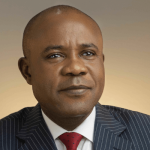
Yahaya Maikori is a seasoned Nigerian attorney and dealmaker with deep expertise in gaming, sports, tech, media, and e-Commerce across Africa. He is the founder and principal partner at Law Allianz, established in 2008, and a co-founder of the iconic record label Chocolate City. A graduate of Obafemi Awolowo University and the University of London, Yahaya was called to the Nigerian Bar in 1994 and has been a member of the Law Society of England and Wales since 2013. He began his legal career as an advisor to Aso Savings & Loans Plc and has since built a formidable track record in mergers and acquisitions, as well as debt and equity financing. In this interview with KENNETH ATHEKAME, he spoke about the Nigerian regulatory environment, risk and uncertainty in the Nigerian business environment. Excerpts:
Walk us through your entrepreneurial journey, highlighting key milestones, challenges, and lessons learned, specifically within the Nigerian context?
Well, as qualified solicitor I didn’t do much with my life for the first 10 years post-graduation, in any case, I studied law because of my father’s insistence on having me his first son also become one. I think at that time, I had grand ideas about becoming a successful contractor but I guess I didn’t have the requisite contacts or perhaps, the resilience but then again, at that time entrepreneurship was not a thing and I guess military rule also stifled economic growth and the opportunities that came with it. After the wilderness journey, I worked for a year at a bank and instantly knew that I wasn’t cut out for paid employment and resigned without a plan on what to do next.
You’ve worked across diverse sectors. What motivated you to explore gambling, tech, sports, entertainment, and e-commerce? How have these experiences intersected or influenced each other?

So, after avoiding legal practice for close to 10 years, I decided to return after all else had failed – it was my fallback (thanks to my father for his foresight). But because I had lost so much and I didn’t like litigation, I figured that I needed to be proactive by looking at emerging sectors of the law. That been said, focusing on those new sectors also opened the doors for entrepreneurship in various sectors for me – so, I approached every brief as an opportunity to learn more than what was required of my legal skills.
So, what is the connection? All these industries do not only overlap but there is an ongoing convergence via the agency of technology and broadband.
Which venture are you most proud of and why? What specific contributions did you make to its success?
All have been exciting for me- Chocolate City, The Global Gaming Company, etc, but honestly, I am most proud of my law firm – Law Allianz, it’s my 9 – 5 besides, it has opened the door to several other opportunities and we have played pioneering roles in sectors like gaming, technology and entertainment.
What are the unique opportunities and challenges within the Nigerian market for each of the sectors you’ve been involved in?

Nigeria is bedeviled with so many challenges like poor infrastructure, lack of credit and low purchasing power of its populace. In spite of that there are several opportunities for those who have an entrepreneurial spirit – we are about 200 million people with about 30million viable customers which have a life time value…that is sufficient numbers to build even a multi-national, especially when you consider that is still a larger market than most African countries.
Having said those, the opportunity is in introducing innovation, challenging traditional methods of conducting business in the various sectors of the Nigerian economy by invoking technology and watching the trends.
How has the regulatory environment impacted your ventures in these different sectors? What changes would you recommend to foster growth and innovation?
In gaming, the recent Supreme Court judgement have significantly shifted how business will be conducted from the 2-tier regulatory framework to an exclusively state regulated industry, the implications of that judgement are still unfolding, however, online gaming faces the danger of over regulation in the future as so many government agencies have supervisory roles over the industry. In sports, we think that government’s scrapping of the Ministry by replacing it with a National Sports commission is good omen. Under this government, the sports commission received its largest allocation ever with a focus on infrastructure. For there to be a significant shift in the economy the government needs to declare a state of emergency in sectors like the creative economy- funds and grants need to be accessible to budding entrepreneurs considering that it is the highest employer next only to agriculture. Finally, I think broadband access should be a critical government concern just like health, etc. Broadband access democratises commerce and knowledge to all and sundry.
How have you adapted your business models to the specific cultural and economic realities of Nigeria?
Most definitely, context and localisation are the most important variables to consider in setting up and running any business.
What role do you see entrepreneurship playing in the future of the Nigerian economy?
The Nigerian economy is substantially driven by enterprenuers. To survive in Nigeria, you need to have a knack for solving problems and in the absence of most basic infrastructure, our entrepreneurs have had to learn how to solve both their domestic and commercial challenges, as someone said ‘most Nigerians are government unto themselves’ since they are responsible for electricity, building boreholes and ensuring security. But without going into much data I believe that the Nigerian economy has survived the headwinds because of the briskness of millions of people trading in diverse areas informally.
How can the Nigerian government better support entrepreneurs and small businesses, particularly in the tech and digital space?
Well, from the policy statement we have seen the launch of the 3MTT as well as their wish to deploy digital hubs around the country – I think training, education and grants will definitely help the space .