In the last week, dark clouds hung over the country and indeed the Presidential Villa, following the senseless killings of over 40 persons in a community in Enugu State.
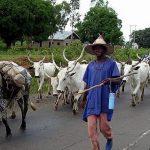
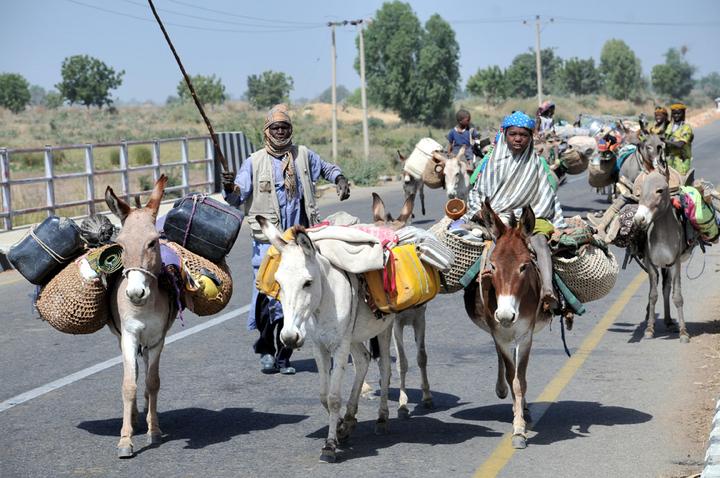
Scores were reportedly killed by herdsmen at Nimbo in Uzo-Uwani Local Government Area of Enugu State, last Monday. According to reports, the incident took place barely 24 hours after stories filtered out that no fewer than 500 heavily-armed Fulani herdsmen sneaked into the community preparing to launch an attack. About seven villages in Nimbo (Nimbo Ngwoko, Ugwuijoro, Ekwuru, Ebor, Enugu Nimbo, Umuome, and Ugwuachara) were among the areas attacked. Ten residential houses and a church, Christ Holy Church International, aka Odozi Obodo, were also said to have been burnt by the herdsmen just as vehicles and motorcycles were destroyed alongside domestic animals killed.
It was heart wrenching. Gruesome pictures of mutilated bodies were posted randomly on the internet.
It was too much of an added burden for Nigerians to bear. On one side, there was the issue of fuel scarcity that brought so much frustration upon Nigerians. There was also no electricity supply as generation dropped again significantly on account of vandalism, according to authorities. The budget crisis between President Muhammadu Buhari and the National Assembly was still on and now herdsmen were on the loose again.
Violence between herdsmen and communities is becoming more prevalent and spreading across the country. Recall the killings in Ibadan in the South-Western State of Oyo; Agatu, Benue State in the North-Central and now Enugu in the South-East part of the country.
It feels like nowhere is safe, fear and anxiety are commonly felt across the land, who knows, it could be the South-South or even the heart of the country, Abuja. It looks like the group is fast spreading its roots and may grow like a hydra metamorphosing into another sect like the Boko Haram.
Nigerians cannot afford another sect on their plate, seeing how long and hard it took the country to get to the point of curbing the Boko Haram.
And this is why the President and his team should not keep quiet or “work silently” (according to the minister of information, Lai Mohammed). Many, of course, share my opinion that it is a good strategy for government to stay quiet and says nothing, only to tell its citizens that silent work is going on while people are being killed by these senseless acts.
Well, was the information minister speaking the President’s mind or his? Or was he just reading body language as usual? This is not the time for taking a step back and observing or gauging the situation.
Nigerians need to know that they would not go to bed and wake up as pieces of themselves. Citizens need to know that there is still a government that cares about their lives before they too ‘silently’ start preparing to defend themselves (we cannot afford the proliferation of arms in Nigeria – nobody is sure that, that of the Niger Delta militants have been fully mopped up).
While this went on, our lawmakers were arguing about the nationality of the herdsmen. One argued that they were not Fulanis but had come from neighbouring countries to attack soft targets. Well, this again calls to question the safety of our borders. In the face of the Boko Haram crisis one would have expected that the borders would have been well tightened up, enough to spot even a tiny fly trying to come in.
While this new development is actually endangering a country being marketed to investors with all its economic and other security challenges, it is just time for the grazing issue to be settled once and for all.
Beef business is big business in Nigeria and even the world over. At least most (if not all) households eat beef.
I would think that it is possible for cattle rearers in different states or zones, possibly small clusters, to come together acquire portions of land that they can use as ranches rather than tramp from community to community.
Well, a little bit away from the herdsmen irritating killings and government’s silent workings, the state governors came begging Ask Rock again for a ‘soft landing’ on the repayment of their bailout loans from the Federal Government.
The governors have been meeting on the economic crisis rocking the country, well, mostly their inability to pay salaries of staff.
Specifically, they asked for the sharing of funds in the Excess Crude Account among the three tiers of government 18 months moratorium (more like deferral of deductions) for the repayment of loans, amongst other things.
Revenues shared monthly from Abuja to the states have grossly reduced as government incomes, particularly from oil continue on softer trend, but states, regrettably, still operate luxuriously, have bloated cabinets and living large.
The governors’ argument was that there’s no need for the states to save since they collect a meagre 26 percent of revenues available for sharing while the Federal Government smiled away with 52 percent.
If the sharing formula is reviewed, would it make things better? Would governors now be able to meet all their bloated needs? Will it make them slow towards internally generated revenues? Would they cut down on their bogus, luxurious lifestyles and would they finally be able to save for rainy days like these (when oil prices take a dance)?
But on a lighter side, something caught my attention at the commencement of the governors meeting with the President. After the traditional National Anthem, the President called on two governors to give the opening prayers.
As soon as he called the Governor of Sokoto State, to offer Muslim prayers, the governor immediately said “yes sir”, then he called the Enugu State governor to offer Christian prayers and he too answered “yes sir”, both in military style voices.
I just wondered if that was born out of genuine reverence or some form of an act. Whatever it is, there was a clear display of military styled reverence and a ‘no nonsense’ atmosphere. Body language sure works!
Elizabeth Archibong