When the Japanese government launched the Tokyo International Conference on African Development (TICAD) in 1993, the aim was straightforward: to create a forum where African leaders could sit at the same table with their development partners and discuss the continent’s future.
The timing was critical. The Cold War had just ended, and donor countries were losing interest in Africa. Aid fatigue was setting in, and many economies were struggling with debt and low growth. TICAD helped revive international attention, promoting the twin principles of African ownership — the idea that Africa should lead its own development path — and international partnership, where global partners support those efforts.
Read also: TICAD7: Buhari woos investors, lists power, railways, health, agriculture as priorities
Over the years, TICAD has grown into one of the world’s most important platforms for Africa’s development. It is held every three years, alternating between Japan and African host countries. Past conferences have influenced global policies: ideas from TICAD II helped shape the Global Fund to fight AIDS, Tuberculosis and Malaria, and the emphasis on African ownership fed into the New Partnership for Africa’s Development (NEPAD). Unlike many donor-led forums, TICAD has always highlighted Africa’s role in designing and driving solutions.

Nigeria steps in
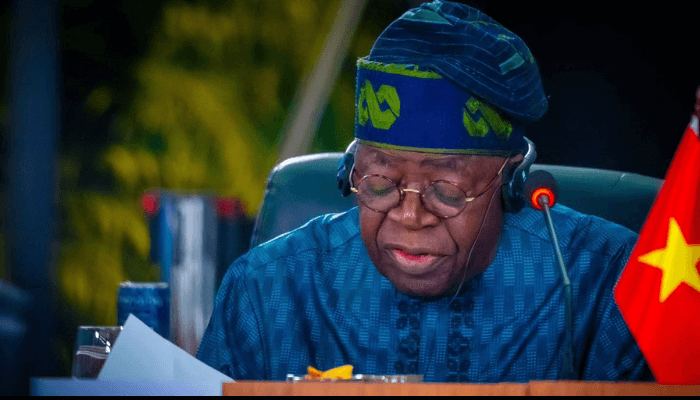
Despite its size and influence on the continent, Nigeria is only now formally participating in TICAD. President Bola Tinubu arrived in Tokyo this week to attend TICAD 9 in Yokohama, making it Nigeria’s debut appearance at the summit. For Africa’s fourth largest economy, this is more than a symbolic step.
Read also: Tinubu arrives Japan for TICAD9 meeting
Yusuf Tuggar Nigeria’s Foreign affairs minister explained that Nigeria intends to leverage TICAD to strengthen economic ties with Japan, expand trade beyond the current $1 billion level, and draw lessons from Japan’s own growth story.
“Nigeria is leveraging, first and foremost, on this ticket to strengthen its relationship with Japan and also with other African countries, so that it leads the way in providing that restructuring of the global financial architecture, so that the whole continent would benefit so that Africa would benefit.”
Read also: TICAD 7 Shows No Nation Wants To Do Business With Buhari- PDP

In the 1960s and 70s, Japan spread its industrial base across Asia through what economists call the “flying geese effect” — investing in neighbouring countries to boost regional prosperity. Nigeria hopes to replicate that model in Africa by building industries, creating jobs, and driving regional integration.
“So that Asian miracle is actually what Japan did, which is referred to as the flying geese effect, where you invest in other countries, you create that integration of economies, connectivity, and you benefit from it,” he said.
More than economics
Nigeria is also using TICAD as a diplomatic platform. With 17 African heads of state present, Nigeria plans to push its case for reforming the global financial system to allow fairer debt restructuring and sustainable growth. Nigeria is also lobbying for key international positions, including a non-permanent seat on the United Nations Security Council, and roles in the International Court of Justice and the International Maritime Organisation.
Read also:
“There’s the issue of the seat in the UN Security Council. So this is the right platform, particularly since as many as 17 heads of state are being expected, for Nigeria to lobby for that,” Tuggar said.
“There’s a seat in the International Court of Justice. There is the OPCW in the Netherlands, and there’s also the International Maritime Organization seat, a seat for a country, not an individual.
“And we need to be on the decision making tables of the world, which is why we need that position in the United Nations Security Council,” Tuggar added.
At the same time, Nigeria is presenting itself as a prime destination for Japanese investment in agriculture, manufacturing, and technology. Development agencies such as JICA and JETRO are expected to deepen cooperation in these areas, building on Nigeria’s ongoing economic reforms.
Why it matters
With its theme “Co-create Innovative Solutions with Africa,” TICAD 9 echoes Tinubu’s vision for Nigeria — regional integration, trade expansion and sustainable development. The focus on investment, innovation and stronger institutions underlines Africa’s shift from aid dependency to economic transformation.
For Nigeria, joining TICAD is not just about deals with Japan — it is a signal of intent to help shape Africa’s development agenda and claim a stronger voice on the global stage.