This question is coming directly from M.A Johnson in a column he wrote in BusinessDay Newspaper of February 9th. He asked this question in his article “What is the rule of engagement for our economy”?
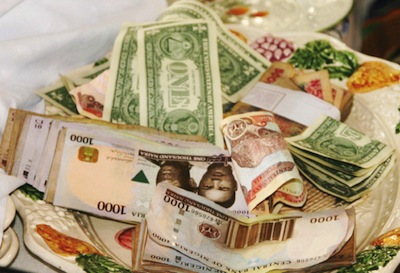
This question is even more relevant when we realised that governments at both federal and State levels are battling with budget deficits and yet are exchanging their share of the Dollars from the Federation Account at a discounted rate of N197 to the Dollar.
That means each state is leaving a 1/3 of their monthly allocation with the CBN. Why is no one asking the federal Government to pay States allocation at market rates? Who are we subsidizing?, and who made the choice of who to subsidize? Yet we turn around and say we are bailing States out of financial crisis. States should insist on being paid at market rates.
The excess cash they will get will go a long way in covering their budget deficits. I am surprised that even the loudest of the Governors are not saying anything or is it that they don’t know? We should stop deceiving ourselves that we don’t know the price of a dollar in our economy. It is over N340 today. No rational person will sell themselves shut if they have a choice. Not even the Governor of the Central Bank of Nigeria. If he had a hundred dollar bill to exchange today, he will do it at over N340 it sells today and not at 197, because he is a rational man.

We are the 26th biggest economy in the world and the largest economy in Africa. We should not have multiple rates for our currency. We are a market economy and we should let the market determine the price for our currency.
We have the opportunity to do it now. The CBN should get out of the business of selling dollars and focus its attention on price stability and controlling inflation, which are its core functions.
The problem of our foreign exchange situation is lack of sufficient supply. The CBN does not print dollars and the only commodity we sell to earn Foreign Exchange is Oil and is currently trading for a third of its old price, and we do not have the required foreign exchange reserves to hedge against the current situation.
The only way to increase supply is to let the market determine the appropriate price that will attract dollars to the market. That is basic economics of demand and supply. A high demand will move prices up and increase supply and ultimately will settle at a price where demand will meet supply.
Artificial pricing is a distortion that does not help the economy in any way. For instance, Foreign Direct Investment (FDI) was down in 2015 by 92% according to BusinessDay. The reason is not far-fetched; many potential investors are waiting on the sidelines to see what the proper pricing of the Naira will be.

Since the last Monetary Policy Committee (MPC) meeting, commentators have harped on the fact that the CBN and MPC did not make any major pronouncement on the Foreign Exchange situation which many expected was the major issue for that meeting.
I believe the CBN had already taken a position earlier in the month when it announced that the CBN will no longer fund the Bureau De Change (BDC) window, which was a follow up to its earlier announcement that the CBN will also no longer do its weekly Dollar auctions to Banks.
When you put all these decisions together, the message is clear; the CBN will no longer participate in the transactionary aspect of the Foreign Exchange market… This is as it should be.
In my opinion, all that is missing is for the CBN to communicate this clearly to the markets and remove all controls from trading of foreign exchange in the Country.
The Banks and BDCs will compete in market for Foreign Exchange deposits and price it to the extent its customers would be willing to pay for it.
When a free market exists for the Naira, the CBN will have the opportunity to build its reserves and not continue to waste it defending the Naira as we have done in the last 5 years, spending $110bn with no result. N140 (2009), N345 (2016) an amount we could have added to our Reserves.
We can use the extra Reserves to stimulate targeted industries that have the potentials to earn us even more Dollars, like the Refineries some private Companies are building, with a potential to shutout the huge foreign exchange commitments we now make for importing petrol. We have freed ourselves from cement importation, we can also do the same for imported petrol.
The CBN’s only role, going forward will be to occasionally intervene when it feels the rates are out of control.
This is what Central Banks the world over do. In some instances, it should collaborate with other Central Banks for coordinated intervention for effectiveness. When the CBN wants to intervene, it should first do an Open Market Operation to mop up Naira from the system and put up a large position of dollars in the market say $2bn and set a minimum price and quote size.
One or two such intervention will drive speculators out of the market as it will create losses for them, since the supply will be so large, there will be no Naira to absolve it and will automatically depress prices immediately and push it to a more stable equilibrium eventually. There is no need to officially announce a devaluation for the Naira, it has already happened.
Victor Ogiemwonyi
Ogiemwonyi is the CEO, Partnership Investment Company Plc, Lagos