|
Getting your Trinity Audio player ready...
|
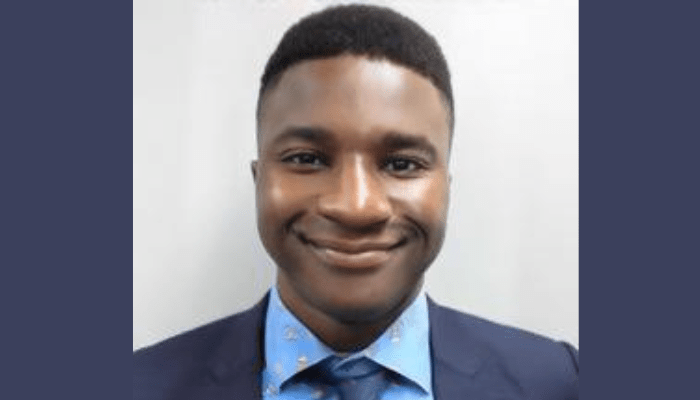
Mouloukou Sanoh is the Co-founder of Cassava Network, a Web3 platform focused on entertainment, gaming, and rewards for the African continent, in this interview with BusinessDay Frank Eleanya speaks on the opportunities of Web3 in Nigeria and Africa. He describes Web3 as the future of the continent and is being fully embraced by many people and businesses. He also discloses plans by Cassava to launch a music app that will make use of NFTs Excerpts:
What is Web3 and how do you relate it to everyday Nigerian business?
Web3 can be considered the third generation of the internet. We had the first version of the internet which was like the yellow pages – fundamental information. We had the world wide web where information was democratised. The third iteration is called Web3 and it includes digital assets, the metaverse, and NFTs. you can consider it as the evolution of the internet. Some have said that Web3 can include artificial intelligence. It includes everything that encompasses the revolutions and innovation of the current internet and its infrastructure.
What does it mean to a Nigerian business?

There are a number of ways that Web3 can help or can apply to Nigerian businesses. The first is digital assets: we know that the naira is notoriously devalued. I think in 2014 $1 was N185 now it has gone up to about N750. Anybody that is holding the naira against the US dollar is losing their money. Cryptocurrency can help this through the use of stablecoins. Given that there is a shortage of US dollars, companies can hedge themselves against inflation and devaluation by holding stablecoins. Secondly, sending money to Africa is very expensive and slow. For example, for my business account in Hong Kong, I am unable to send money to any Nigerian bank account because Nigeria is on the blacklist, the same as other African countries. The current financial system has not worked for Africa and this is where digital assets come into play.
I think the African continent has 370 million unbanked and underserved people but on the flip side, everybody has a phone and some have two smartphones. Mobile phone penetration is very high. If you have a phone that you can get a crypto wallet then you can start to send and receive digital currencies. So Nigerian and African businesses are able to reach those that were previously underserved by the current financial system and these businesses are able to send money abroad much quicker and faster through the use of digital assets.
If you consider NFTs. what they can do is they can help a business get closer to its consumers. The whole point of NFTs is exclusivity; it is to make your products and your customers feel like they really belong as part of the journey. An example, we are working with some of the biggest African concerts and we are helping them create a whole Web3 experience where they will be able to sell their tickets as NFTs. there will be three tiers; the silver tier which is the normal entry ticket, the gold tier which allows people to go backstage and get discounts at the bar for example and they can be in a private members group together with some of their favorite artists, the organisers of the concert and they get access to some merchandise and early songs, what this does is that it creates exclusivity and allows these businesses to reward and get closer to their biggest fans.
Web3 and metaverse are often used interchangeably. Are they the same?
The metaverse is part of Web3 Web3 is the new stream of innovation that is happening on the internet. It can include artificial intelligence, NFTs, digital assets, and machine learning. The metaverse is a digital world. If you have played any fantasy games. The RuneScape is like the metaverse. The metaverse can be defined as the digital version of the world that is underpinned by blockchain technology and in which digital assets and NFTs are used as a currency within that specific metaverse. There are a bunch of metaverses like the Decentraland which has its own metaverse sandbox, its own Ubuntu land. These are in different silos and digital worlds.

Given all that has happened to the crypto market in 2022 and the low confidence in investors, how do you convince a business to see Web3 beyond cryptocurrencies?
Web3 is not dependent on the cryptocurrency market. The Web3 world encompasses many different things, cryptocurrencies being a part of that. There are the NFTs, the metaverse, AI, etc. With regards to the price drop last year which was like a rout in the prices, you have to remember that all assets went down too. These include the Nasdaq, the S&P 500, the European stock market, etc. Last year was a down year overall for equities and crypto.
Why should a business consider Web3? Because Web3 is the future. This is especially the case in Africa; Nigeria, Kenya, and South Africa have the most ownership of digital assets per capita, and they rank higher than the US and a few other established markets. These African countries are often at the top of case studies on the digital asset adoption index. There are a few countries that are ranked the highest in terms of digital asset adoption and digital asset potential. From a business perspective, this tells us that Web3 has been fully embraced by the populace, and it is the future of the African continent.
For businesses to adopt Web3 they need to look at the consumers and the solutions. Cryptocurrencies might not be suitable for all types of businesses but NFTs and perhaps the metaverse may be suitable. For example, if you are an FX company you can adopt stablecoins to help you hedge against the FX risk. Also, if you are a real estate company, you can start tokenising real estate to attract people who have not been able to invest in the market. If you are a fashion company, NFTs may be the best way to reach your top customers. You might also consider releasing your own metaverse. It all depends on what the business needs. In all African context, Web3 is here to stay and have been fully embraced by the people.
Can you mention some of the used cases in Africa?
There are some companies that are doing something interesting. There is this company that allows you to buy cryptocurrency using your airtime. So even if you do not have a bank account you can still buy cryptocurrency. The service allows you to buy and sell crypto with airtime. Consumers can also get financial credits to shop on a Visa or Mastercard. At Cassava we are using Web3 to send or offer our users rewards. We have our own rewards where our users can earn tokens for their online activity. For example, we have a partnership with Boomplay which allows our users to earn rewards by listening to songs on the platform. We have other partnerships that enable users to earn rewards while playing games. We are also doing a lot of things in NFTs. For example, next month we are launching a music app and inviting some of the most famous South African and Nigerian artists. We will be recording an album with one of them and we will be selling that album as an NFT. with that NFT you will be able to exclusively listen to that album and you can use the NFT to get into events that we will be organising in Nigeria in the next few months.
Apart from the gaming industry what other sectors do you think Web3 will make a significant impact on?
Real estate. Through tokenisation they can provide liquidity to illiquid assets. A lot of people want to own real estate but they don’t have the means. What tokenisation does is allow people crowd-pool money, invest together and own the asset. There are a few interesting companies that are doing this such as Seso Global, RedSwan CRE which are already doing this in Lagos. They are tokenising a few landmarks such as in Brooklyn, Dallas, and all over the world.