|
Getting your Trinity Audio player ready...
|
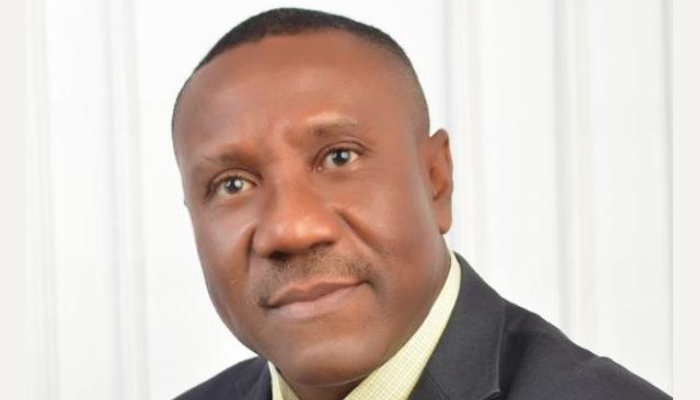
Dominic Ukpong, a medical doctor with many years experience both in the private and public health services, is the Akwa Ibom State commissioner for health. In this interview with ANIEFIOK UDONQUAK, he explains the frequent changes in the management of the multispecialty hospital and how the state government is positioning healthcare delivery in the state. Excerpts:
The multispecialty hospital has had to change its management several times since it was commissioned. How is the hospital being run now?
The history of the hospital is that the company that was running it before 2015 when we came could not run it well. And they left because we began to confront them with what they were supposed to do which they did not do and they could not cope. They were getting a lot of money from government on regular basis. The point is after we provided such a facility, why should we be giving you money? They could not handle it and they left. We then took it over and ran it for over a year. During that period, what we provided was what we called skeletal services, but we did some major things there. We utilised the services of someone in the Teaching Hospital. But we were screening various companies in order to choose one to run it in a better way. We screened about nine hospitals, coming from Dubai, United Kingdom, Turkey, United States of America, Canada, and Nigeria, all around. And out of these, we chose one which we believed would provide the kind of services that we want. That one was from Canada, headed by a Nigerian and it was a thing of pride that a Nigerian could have such a company. The basis for selection of that company was its capability to run that facility and finance. In other words, whosoever we chose will have enough finance to complete the project. We call it complete and operate agreement.
Why was the issue of financing necessary in the agreement?

The reason we had the issue of finance in operating area is because the hospital that we took over in 2015, commissioned by the previous government, was not complete. It was incomplete. In fact, less than one quarter of it was complete. What you see there is not a complete hospital. We have the first and the second floor in the main building done beautifully, and that is where you have the wards and out-patients, accident session. But the administrative block is the next block and there is nothing there. After the two levels, there is nothing in the third and the fourth floor, not completed, not plastered, and there are nothing like exit staircases. So essentially, the Specialist hospital was not completed. All the contractors that did the job were not paid and they abandoned the job. Some of them had done 80 percent and only received 50 percent of their money, so they did not continue. It seems the hospital has huge debts to settle?
When we came in, we inherited huge debt from these contractors. So, these contractors, seven in number, were owed billions of naira. Apart from that, there are liabilities. Services that were provided by the hospital by different contractors were not paid for, and that amounted to a huge amount of money. Equipment for the hospital was about N7.3 billion that was what was in the books that we saw. When we came in, they were owing about N4 billion. We have been paying in installment. The last time we paid was about N600million. And we were now left with about N1.3 billion to finish it. So, we have been paying, but when you look at what we have been talking about the hospital, the debt is huge. And the government has not got that money. So, government was looking for a company which has that funding and the capability to manage, run it and be able to recoup their money.
Was there any specific time the management could run the hospital to recoup its finances?
No, it was going to vary depending on the agreement, 10 years, 15 years. It is a not a hospital for only Akwa Ibom State but basically, Akwa Ibom would benefit more. It was supposed to draw patients from all over Africa because some of the equipment we have here is not available in Africa. Our CT scan is the best in the continent. One other hospital has just gotten similar thing about two months ago in Cairo. What we have is the latest in technology in the world. We have 640 slides. So, we have been paying this money and it is a lot. So, it is better for us to have an agreement with an organisation that can fund it, run it and recoup their money and at the same time provide training facility, exposure to people of this country.
Was the firm chosen able to manage the hospital during the period?

The company was not able to manage it. The main problem they had was not just the management but funding. They actually lied to us that they had the funds and as soon as they got the contract, they felt back on us to provide funding. We gave the hospital as collateral to use as their funding and they could not do that. After one year, they could not even manage their finances in the hospital and all that. They terminated their contract by 10th of July, and before I did that, I had to look for a Nigerian who could manage the hospital. Effectively. We will still look for a consortium in the future, but we know that the hospital is an excellent hand. We brought Professor Emmanuel Ekanem, a pediatrician, who revamped the Teaching Hospital, Uyo, when it had collapsed. He brought it back to life. He was able to organise discipline in that hospital and within a space of time, the hospital came alive before other CMDs took over from him. He was at the University of Calabar, I had to approach him, and he accepted to come and run the hospital. The place has come to life and we are happy with his work.
What about the staff welfare because at a point, they were complaining of lack of payment?
There is no problem about the staff welfare of Professor Ekanem. There is a difference between the staff of the other company that left and that of Professor Ekanem. We did not employ them. They were the staff of that company and they should have even sued them because they made money. Government does not owe anybody there. The present management is paying the salary of the staff they have taken.
Was the problem bigger than the state government?
It was not bigger than the state government but management. Don’t forget that this state was getting between 48 and 55 billion every month and this present government is getting between 8 and 12 billion. It was great vision if well managed, not only would it help the state but the country, and at the same time, it could yield revenue to the state and also prevent this flight, medical tourism, where you go and spend eight million abroad whereas we can take four million from you here and you save four. And even the four million you pay here might still be beneficial to the state in terms of taxes. So, it is the management.
How do you tackle the issue of staffing, because most doctors do not want to go to the rural areas?
The doctor should resign. When you take up appointment, the document you sign is that you can be taken anywhere. Nobody comes to government and decides where to stay. There is no such employment. Even in the corporate bodies, they tell you that they can transfer you to anywhere and ask you to sign. So, all the doctors here in the state have signed the document that they can be posted to anywhere. And Akwa Ibom State is one of the finest states in terms of location. There is no place in the state that you cannot reach within an hour. So, you can live in Uyo and work in any of the outskirts. Every doctor is paid a call duty allowance. So, you have no excuse. Even if you are living in Uyo and you are on call, so stay there and cover it. Any doctor that is not in his place of posting does not deserve to be there. I do not know what they mean by rural area. The problem with them is that some of them have their private clinics. And therefore, because of working in those private clinics they are late for work. You cannot see them in the hospitals. We are dealing with that. We have actually identified a number of them and we are going through SSMC. Senior Staff Management Committee is investigating them and they are being punished; at least, four of them.
How many doctors have you employed in recent times?
The healthcare is not just about structures. The governor has done well in that regard. That was the first stage. The second stage is going to do with the staff, accommodation of all those hospitals. And there is the third stage because we are going to increase the schools of nursing and places to train house officers. We met a very poor ratio of patient, nurse of patient, doctor ratio. It is very, very poor. They could not cope. Sometimes, you have one person taking care of the whole ward. They started it and he has done well. We employed the first set when we came here last year, about 25. This year, we took the first 25 approval; then we also had 25 consultants. These are consultants, who have retired but are effectively utilised to train some young doctors. You do not let them go. We also got approval for another 25.
About two weeks ago, the governor gave approval for the employment of 150 medical doctors, different from these ones. They are interviewing them. Then we have 250 nurses. Some nurses were recruited last year. We are also thinking about getting approval for community health workers, extension workers, laboratory workers, pharmacists. We are doing them in stages.
The issue of HIV pandemic seems to have put the state on edge. What is the position right now?
The position is that the state is doing well and that the news that you heard was a total misrepresentation of our state. We came in here when the HIV prevalence rate was 10.8 percent. Today, we are 5.5 percent prevalence. That is a success. That is a great performance anywhere in the world. But that is not what people are reporting or telling people in the world. Akwa Ibom State has done well, from 10.8 to 5.5. What is being given out even though is true is the stigmatisation of the state. You sing the news that we are number one in the country. That is stigmatisation. No, that is not what the news is. The news is, what have you done when we were 10.8 and for us to be able to reduce to 5.5 under four years? We have done well. What has led to the reduction is the effort of Udom Emmanuel. When we came in, it was 10.8 and the governor said, I cannot accept this for my state. And he said he wanted it to be recounted because it is possible that it could less than that. And we have been doing a lot of work. In 2016, he insisted on that and we were just one year in office. And in 2017, we started what we called Akwa Ibom State Indicator Impact Survey. So, I insisted that we should do the scientific survey, so that we know the true value for our state and they did and they used 12,000 households in the state. That is the normal samples. When we did those samples, the number came to 4.8 percent from 10.8. The way it was conducted, we put our eyes, so that they do not tell lies against us, because this thing could turn political. We put our eyes and followed up, and we were part of the survey. They would come back after going to several houses and stayed in a meeting with us and showed the results they have gotten for that day till about 8, 9pm every day for several weeks.
When they finished, we got the result of 4.8 percent. And we tell them to announce it. They were reluctant. It was not very funny. And we asked them why don’t you want to announce what you have found and they said they are verifying and we allowed them. They were verifying till November and they announced it when they were convinced. When they were convinced the figure was taken to WHO, CDC to different organisations and they looked at it critically and they felt it was the best survey conducted on HIV. So, they decided the government should do the same for the whole federation. They used our standard. When those people came, they were not using 12,000 households, they used 6, 000 households. The wider the samples, the better the results, so our own was still better than the one the nation did which they called National Indicator. So, when they did, they got 5.5percent, and what we did was 4.8. In science, it is the same because you use 4.1 to 6. 7, what we called confidence figure. So, whatever falls there is about the same. Ours was 4.8 and theirs 5.5 and we are not arguing about that. So, they went on air to announce that Akwa Ibom State is number one. Is that what the announcement should be? The announcement should be that the state has improved tremendously and should be commended.
Could you say that there was element of politics in the way it was announced?
There could be, in the way it was announced. I have talked to them in Abuja and they have apologised to us. But, the truth is we have this 5.5 and we want it to reduce. We have the longest coastline, 125 kilometers.
Apart from the efforts of the state government, which other agency is helping the state in this regard?
There are very many agencies. Essentially, there are different organisations and we call them partners that are helping us. For nine years, they have been bringing money to help us and they have spent 31 million dollars. Don’t forget we have only been here four years. They have done some jobs. And now they are working with us we have been able to monitor the money is properly spent. And they are doing the work. There is no how Governor Udom is interested in health and would not spend money. It goes without saying that a lot of money has been spent.