|
Getting your Trinity Audio player ready...
|
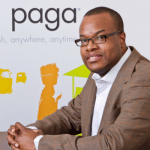
Bola Onadele. Koko, Managing Director/ CEO, FMDQ Securities Exchange Plc does not think that any other African country should have financial market better than the Nigerian market.
As a result, he said “We have to position the Nigerian capital market to be number one in terms of governance, in terms of standards and in terms of transparency and we have to work on the liquidity as much as we can.”
Koko disclosed this at a recent media parley to announce an approval of the Securities and Exchange Commission (SEC) to transition FMDQ to a full-fledged ‘securities ex
change’.

FMDQ recently secured necessary approvals for a name change to ‘FMDQ Securities Exchange Plc, thereby aligning its name to its upgraded status in the capital market.
Also in June 2019, the Securities and Exchange Commission (SEC) registered its wholly owned central securities depository subsidiary – FMDQ Depository Limited – positioned to provide collateral caching, custodian and settlement services.
According to the 2018 data by African Alliance, the Nigeria Stock Exchange (NSE) had a dollarised return of-20.6 percent which lagged the bourses of South Africa (25.5percent), Uganda (-17.2percent), Tanzania (-15.4percent), Egypt (-14.2percent), and Kenya (-13.5percent).
“The total non-government bond in Nigeria is not up to N1 trillion. In most countries, the percentage of debt to GDP is three digits, whereas in Nigeria it stands at a single digit, so we have not done enough penetration and leveraging on the potential of the Nigerian economy,” Koko said.
“There is no point reinventing the will, the sort of market that we see, is one where there is collaboration between the Nigeria stock exchange and FMDQ,” Koko explained adding that “once a stock broker has a licence from the NSE, such a person will be able to trade on the FMDQ platform; we don’t need to complicate things for the operators.”

He also mentioned that stakeholders not just the Nigerian investors deserve a clearing house that will match any international standards, “so that is the sort of market we are going to work on in the next 5-15 years.”
“So there is still a lot of work to do on that debt-capital market size, but we cannot grow that debt-capital market if we do not privatise, if we don’t drive infrastructure for private capital perspective, if we do not change the commanding height we are used to in Nigeria,” Koko recommended.