|
Getting your Trinity Audio player ready...
|
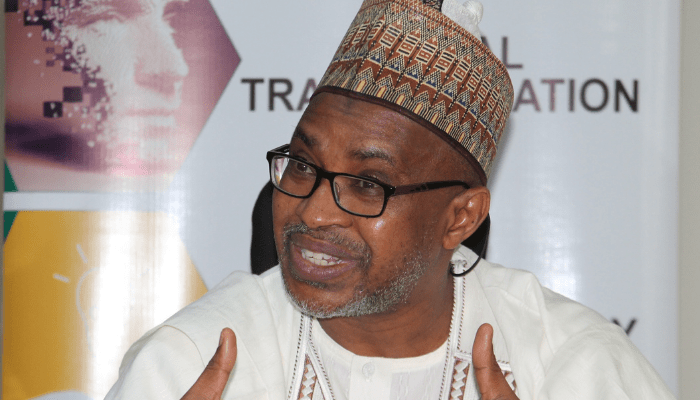
In an effort to enable ICT inclusion alongside its mandate of addressing the connectivity, transversal and other technology imperatives for ministries, departments and agencies (MDAs) of the Federal Government of Nigeria, MOHAMMED ABUBAKAR, managing director, Galaxy Backbone Limited has expressed willingness to synergize with the private sector to help provide digital services to Nigerians and Africa. He shared these insights in an exclusive interview with BASHIR IBRAHIM HASSAN, GM, Northern Operations, BusinessDay.
How did you fare last year, in terms of operations and achievements recorded?
This question is really broad because our achievements in 2020 were quite enormous. First, I need to reiterate what the mandate of the organization is. Galaxy Backbone Limited was established in 2006 to operate as an IP based network organization for the government that would be able to provide connectivity to agencies of government, as well as also provide for the transversal applications for the agencies. Fundamentally, when we say transversal applications, we mean those applications that can be utilized by two or more agencies. IPPIS, for example, is one of them; because all the MDAs use this particular application.
The second mandate of Galaxy Blackbone is to see that the data of the government is well protected. Data is now the crude oil with huge potential to yield money. In fact, government activities are only carried out based on information and data availability.

The third mandate of Galaxy Backbone is to provide what we call a shared services platform to reduce or cut costs. This was because the government realized that MDAs were operating their own ICT platforms, thereby compounding the problem of maintenance, building the infrastructure, and other costs. Lots of money was being spent. But with the utilization of the infrastructure of Galaxy Backbone, costs of maintenance have been drastically reduced.
Data protection is key and knowing that the data of all MDAs are meant to be in your custody, how do you ensure the safety of these data, considering that you employ the services of other companies to help you provide your services?
About 60 percent of the funds we have is actually channelled towards the protection of the government’s data. We ensure that all the infrastructure and facilities in place are provided with the security that is required to provide protection. This is the reason why government insists that all MDAs work with Galaxy Backbone. The international organizations and private companies only have interest to make money but in Galaxy, though we want to make revenue for the government, fundamentally, our social responsibility is to ensure that the government is protected. All our infrastructures are well protected to ensure security of data.
In providing security, we ensure data hosted with us is protected using different applications and on different levels.
Talking about some of our achievement in 2020, recall during the #EndSARS protest, the ICT space was equally attacked. There was a nasty kind of group called Anonymous who sought to access and control the data of the MDA’s but, unfortunately for them, we ensured the needed protection was provided despite all they did.

Read also: EndSARS panel submits report in Akwa Ibom
Any other achievements apart from protection of government data?
Another thing was the issue of federal executive council (FEC) meetings. We ensured that meeting went – and still go – on, and we have dedicated staff whose duty is to make sure protection is given to the meeting. We have about 40 staff who are sent to different ministries and their ministers to ensure challenges are tackled from their own ends during the virtual meetings. We had the maiden edition of the virtual federal executive council meeting in the month of May 2020. During the Covid-19 pandemic, the president instructed some parts of the country be locked down. Some states like Lagos, Ogun and Abuja were on lockdown but the government’s work had to continue.
At the last week of March, it became obvious that the FEC meeting couldn’t hold physically due to the Covid-19 pandemic. The Minister of communication & Digital Economy, Dr Isa Ali Ibrahim Pantami gave me a call telling me the need for us to rise to the situation. ICT became the available option. He gave me an executive order to ensure the FEC meeting resumes virtually. So, we provided the platform and activated some of the materials here and we had the maiden edition and today we have had several FEC meetings using our platform.
We also did lots of restructuring of the organization. We came up with new departments just to key into the national digital and economy policy index of 2020 to 2030. We introduced a couple of departments and reorganised the rest. For example, we introduced the research, digital innovation and skills department, the solution, design and supply chain (like procurement) departments. We also came up with regional office departments. We had just one revenue-generating outfit, which is the business department, but now we have two departments and one unit that are focused on revenue generation. In addition, regional offices bring revenues to the organization.
What have you achieved this year?
Just last month we launched what is called Storm in Enugu, which is meant to look into the provision of ICT services to the MDAs and small businesses within the South East and South South region of the country. This service, which leverages our National fibre roll out is being delivered in collaboration with our partners; Interra Networks.
We are consciously moving to work with the sector. This is because we are positioned to become the leading enabler for digital inclusion in Nigeria. In extending our hands to the private sector, we are assuring them that we are not competitors with them, but we are trying to provide the enabling environment for them to thrive and for us to deliver on the broadband penetration plan for the country.
What would you say are the benefits of private sector participation?
It’s a win-win situation. We have enormous infrastructure that can offer storage, co-location, backbone infrastructure passing through about 13 states of the federation in the South West, South South and then North Central. All these infrastructures are available; so the private sector does not need to invest in this. Just see how you can use it to provide services to your customers. These will save your costs and reduce your expenditures. On the other side, we also have some percentages of the revenue generated. We have reached out to such organizations as MainOne, Datasixth, Interra, Cisco, and Top Tech. All want to key into our scheme.
What’s your target and how big do you envision this PPP?
We are open! Our major target is to see broadband penetration everywhere in Nigeria; so if you have a value proposition that would make that possible latching on the Infrastructure we have, we will take it. The private sector should look at the provision on ground and see how they can fit in. Then, we can have a discussion.
Where do you see this organization in the next 10 years considering the kind of structure you are putting in place?
Our target is to ensure we don’t just provide digital services to only Nigeria but the whole of West Africa and then Africa. Nigeria is the biggest economy and largest population and the whole of Africa looks up to Nigeria. We want to provide digital services beyond Nigeria. Part of our plan for 2021 is to come up with a business model for the Galaxy Backbone for the next five years. This model has about six pillars.
One of it is the government policies. I have talked about how we tried to key into the government policy so that we can implement and have the maximum benefits out from it and translate it into better living for Nigerians. The second one is the cyber security. The third one is financial sustainability; we want this organization to be self-sufficient, to achieve operational excellence — we want to ensure that our services are very efficient and are improved upon. We have to improve capacity and capability, capacity in terms of infrastructure and improved capability, which is the human resources to enable effective service delivery.
In terms of improved capacity, the government has approved the second phase of the NICTIB II (National ICT Infrastructure Backbone) project. This second phase will cover the remaining part of the country. A brand-new data centre is going to be built in Kano to serve as a fall back facility to the data centre we have here. The project has started already, and will, hopefully, be completed by the first quarter of 2022. In terms of improvement in capability, you can have a chat with the staff of galaxy, they can speak for themselves.
What are the major challenges the organization faces?
We see challenges as opportunities because our focus is on our targets. We don’t see obstacles as challenges.
We are supposed to provide to the MDAs and they are supposed to look at us as partners that can help them achieve their mandates. We are not trying to stop anything, but to enable them do their work but apparently there are few of these MDAs who think galaxy backbone is trying to stop them.
Generally, what is the level of cooperation from the MDAs?
It is fair, but we need a lot of advocacy. We are gradually seen as enablers and partners in progress.
Q: Our major target is to see broadband penetration everywhere in Nigeria; so if you have a value proposition that would make that possible latching on the Infrastructure we have, we will take it