US markets were on course for the worst December since the 1930s amid a widespread sell-off of stocks across Europe and Asia, as investors nervously waited for a threatened federal government shutdown later on Friday.
Most European exchanges were lower on Friday morning after sharp losses across Asia overnight. The European Stoxx 600 was down 0.2 per cent in afternoon trading, enough to leave it on course for its worst year since 2008.
The S&P 500 is also set for its biggest quarterly fall since the financial crisis, with premarket trading suggesting that US markets will extend losses from Thursday after president Donald Trump warned that he would veto a bill to fund the US government unless it included money for a Mexico border wall.
Shutdown fears have added to broader investor concerns over global economic growth since the Federal Reserve raised interest rates on Wednesday. The US central bank cut its US growth and inflation forecasts for 2019, sparking worries that the end of the era of cheap money was coming at a time when the US and China were preparing for a damaging trade war.

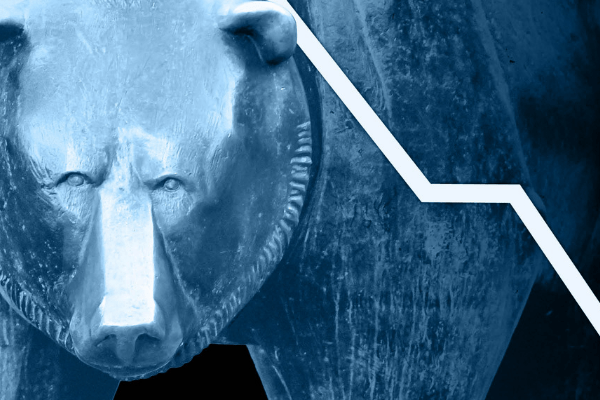
The S&P 500 is down 10.6 per cent so far this month, its largest December drop since 1931 at the depths of the Great Depression. The benchmark’s 7.8 per cent drop so far in 2018 is its biggest since 2008. According to futures trade, buyers were not expected to return on Friday, when the index was expected to fall 0.4 per cent.
The Vix, colloquially referred to as Wall Street’s “fear gauge”, jumped to 30.3, its highest reading since the stock market sell-off of late January and early February. The index pulled back slightly to sit at 28.1 in late Thursday trade, well above the long-run average in the high teens.
Derek Halpenny, European head of global markets research at MUFG, said that the slide in stocks was “sure to stoke the ire of the Fed’s most vocal critic, Donald Trump”.
He added: “He has laid unprecedented, and unpresidential, blame on the Fed and [its] chairman Jay Powell in particular for recently tightening rates too much . . . current market conditions raises the question of whether a ‘Powell put’ exists and if so at what level.”
Oil eased some of the losses from Thursday, when prices slid just over 4 per cent.

A closely watched indicator of a potential economic slowdown, the difference between yields on two and 10-year Treasuries was around its lowest level since 2007 at just 12 basis points. An inverted yield curve — where short-dated Treasury yields rise above longer-dated ones — has preceded every US recession since the second world war.
There were sharper losses in Asia. Tokyo’s Topix fell almost 2 per cent. The FTSE All-World index was down over 8 per cent for December, taking its decline for 2018 to almost 13 per cent.
“With economic growth, global politics, and central bank stimulus all at turning points, volatility has increased,” said Mark Haefele, chief investment officer at UBS Global Wealth Management.
“Investors should expect more of the same in 2019, as markets begin to try and anticipate an end to the cycle.”