|
Getting your Trinity Audio player ready...
|
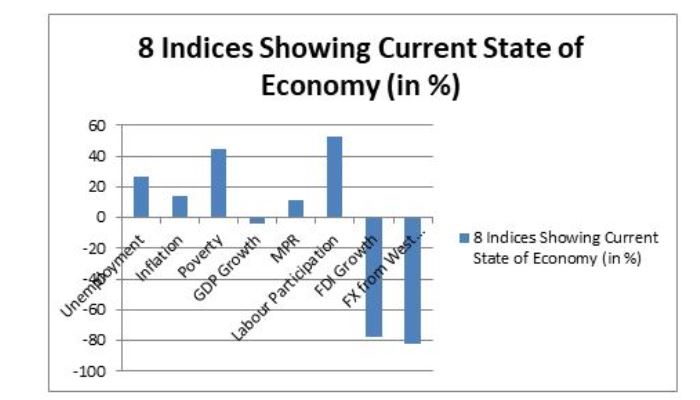
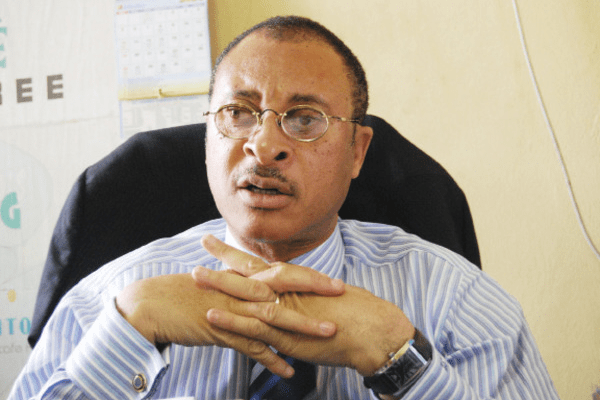
Convener of Centre for Value and Leadership (CVL), Pat Utomi, has pointed to the challenge of savings and diversification as major antecedent of the economic recession in Nigeria that has put the country and its people on reverse gear.
Utomi, who was keynote speaker at a breakfast session on ‘Economic and Real Estate Outlook 2017’ organised by Fine and Country West Africa International, also identified confidence challenge, lack of clarity of direction in the key actors in government and uncertainty in the political economy as other factors that brought the economy to its present sorry state.
Pre-2015, Nigeria was a country that was producing over 2 million barrels of oil a day and selling same for well above $100 per barrel at the international oil market, but not a dime of this windfall was saved or used to diversify the economic and revenue base of the country.
The economy was/is dependent on oil revenue, which is why the country has been brought down to its knees with the crash of oil price and, according to Utomi, “Nigeria will continue to be in trouble for as long as it depends on oil windfall.”
“In the minds of policy makers, Nigeria should still be waiting for better oil price which is very dangerous for the economy,” he said, noting that in the last two years, there has been no major policy decision by the government on what to do with the economy in terms diversification.
He dismissed 2016 as a year of foolishness, which, he said, has an elapsing time, emphasizing that “with the dawn of 2017, that foolishness has run its course.”
Udo Okonjo, Fine and Country’s CEO/vice chair, agreed, stressing that 2017 is a year to ‘wise-up’ especially by real estate investors and leaders so that they could pluck the low hanging fruits in the economy even as recession persists.
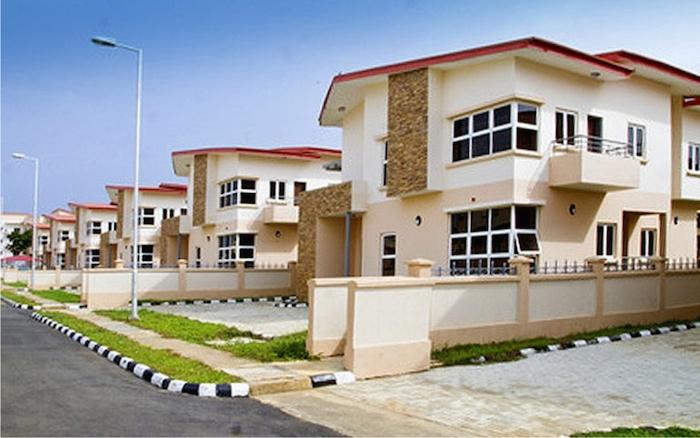
“There are still opportunities in the economy despite the recession, Okonjo noted, but quickly pointed out that the empty houses in Ikoyi which are misinterpreted as reflections of the state economy are actually empty because the developers were not building to meet real demand.
Ikoyi and other high-end real estate markets in the country including Asokoro and Garki in Abuja, Ikoyi, Victoria Island and Lekki in Lagos are heavily laden with empty mansions. Okonjo explained that those who invested in those ‘monuments’ were developing for a tiny fraction of the population who really did not need homes because they already had one.
This recession period, she advised, should be time for Nigeria to build for the real market, pointing out that the real opportunity, today, is in the middle class market, which is quite huge with real demand.
Though there is also opportunity in the Diaspora market, which is growing fast because of the stronger currency advantage they have, there is confidence challenge arising from the country’s weak institutions.
Millennial Housing is an emerging real estate market in which opportunity is growing fast and Okonjo explained that people are, increasingly, opting for smaller housing units. “A lot of people are now downsizing their accommodation; they want what they value and can easily manage and pay for”, she added.