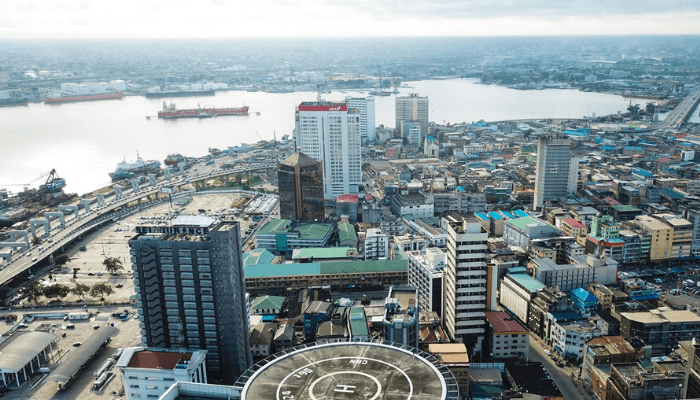
Nearly two-thirds of global growth came from emerging markets over the past 15 years; by 2022, emerging economies will deliver two-thirds of global gross domestic product. Last year, six of the world’s 10 fastest growing economies were in Africa.
Whatever the appeal of the US market, it is a competitive necessity that US companies and investors continue to expand and seize opportunities in fast-growing markets such as those in Asia and Africa.
Last October, the Trump administration dramatically increased the capacity of the Overseas Private Investment Corporation to support private-sector-led development and US firm success. The bipartisan Build Act supersized OPIC by creating the new US International Development Finance Corporation with a $60bn budget and equity investing power. The DFC will soon become operational and begin looking for additional investment opportunities abroad.
Yet, the success of this new era in US international development finance in emerging markets will not be determined outside the US, but within it. While, by mandate, the DFC must operate internationally, it must also embrace a domestic imperative to actively mobilise institutional capital and better support US investors who venture into new markets. This will require the DFC to address key data, network, visibility and structural gaps that have historically handicapped US investment in the emerging world.

To effectively assess and manage risk, US firms and funds are heavily data dependent. Accurately assessing consumer demand in African markets, for example, is no easy feat in countries without reliable census data or national identity programmes.
While there are innovative companies such as Fraym and Asoko working to address the data gap, US government agencies and multilateral institutions have data assets that could be packaged and pushed out to prospective investors through a central portal.
The Millennium Challenge Corporation, for example, collects valuable market data during the economic constraints assessment phase of compact development. This could be added to the country and trade data housed in the Commerce Department, project assessments in the US Trade and Development Agency, and market reports in USAID and the World Bank.
The DFC could partner with USAID to create an office of project promotion that would facilitate the collection and synthesis of data from an investor perspective on projects in sectors of US competitive advantage. The data could be accessed via a portal by state offices of international trade, business associations and investors, and used as part of DFC roadshows to major US cities.
In addition to data, US investors often lack the trusted relationships and networks needed for business success in emerging markets. Emerging market investors ranked under-developed fund networks as the second most likely factor that would deter them from investing in a given region.

The MiDA initiative organised by the National Association of Securities Professionals and supported by USAID is a great model that the DFC could build on and replicate in other regions to address this network gap. MiDA coordinates visits to African markets and connects US institutional investors, such as New York Common Fund and Chicago Teachers’ Pension Fund, to African infrastructure project developers and potential African institutional co-investors. The DFC could work with USAID to deepen the network-building value of MiDA and tie it into future business and investment forums such as the US-Africa Business Summit and the African Growth and Opportunity Act Forum.
Annual high-level forums also help to address the visibility gap between US investors and investment opportunities by creating a platform for sharing investment case studies. The natural tendency of investors is to invest in what they know best, which is often what is in their backyard. But in today’s interconnected market, distance is no longer an excuse for ignorance.
EY recently reported that US businesses and investors made more foreign direct investments in African markets in 2017 than any other country — including China. But there remains a widespread perception that US companies are not active and are disadvantaged in African markets. The DFC could help to dispel this misperception by commissioning a series of in-depth case studies of both successes and failures in emerging markets.
Finally, there are significant structural gaps that have long prevented US capital from entering frontier markets, but DFC’s new power to seed middle-market funds (directly or through funds of funds) that are more right-sized to current investment opportunities could begin to close these gaps.
The largest US investment firms like KKR and Blackstone, for example, have a poor performance record when it comes to investing in African markets, due to their pursuit of very large deals, inflated returns expectations and linear growth assumptions. In 2017, 80 per cent of private equity investment deals closed in emerging markets were for $100m or more, with 56 per cent of investments being for over $300m. That year, less than 5 per cent of investments made were for $10m or less. Smaller, more local funds will help to expand the companies ripe for Carlyle and KKR investment in the future.
Pervasive data, network, visibility and structural gaps have slowed the natural movement of capital from the US to emerging markets. With a strong domestic mobilisation effort, the DFC could tap into pools of US institutional capital to encourage mutually-beneficial, high-impact investments for decades to come.