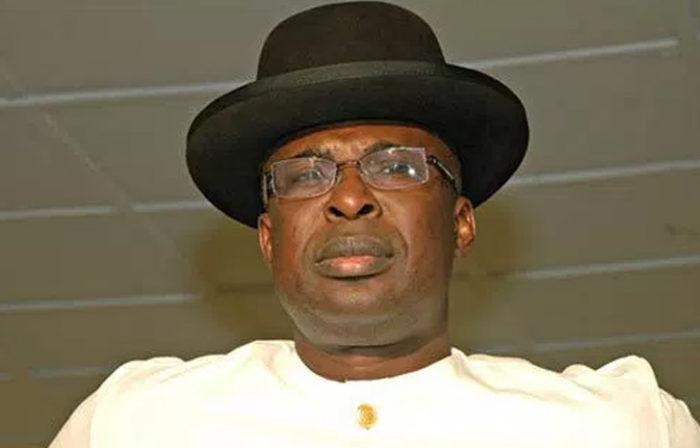
The Minister of State for Petroleum Resources, Timipre Sylva, has said the Federal Government will replicate the investment model in banking and aviation sectors in Nigeria’s midstream and downstream sector.
Sylva said this in a statement published on Thursday on the ministry’s Instargram page.
“We need to free up that investment space so that what happened in the banking sector, the aviation sector and other sectors can happen in the midstream and downstream oil sector,” he said in the statement titled ‘Deregulation: The facts and the reasons behind the policy’.
Sylva also said the government never promised to keep the pump price of Premium Motor Spirit, or petrol, permanently low.
He said the government had concluded that it could no longer bear the burden of petrol subsidy.
“After a thorough examination of the economics of subsidising PMS for domestic consumption, the Federal Government concluded that it was unrealistic to continue with the burden of subsidising PMS to the tune of trillions of naira every year, more so when this subsidy was benefiting in large part the rich, rather than the poor and ordinary Nigerians,” Sylva said.
He said deregulation means that the government would no longer continue to be the main supplier of petroleum products but would encourage the private sector to take over the role of supplying the products.
“This means also that market forces will henceforth determine the prices at the pump. In line with global best practices, the government will continue to play its traditional role of regulation to ensure that this strategic commodity is not priced arbitrarily by private sector suppliers,” the minister said.
He said one of the reasons the country had been unable to attract the level of investments desired into the refining sector had been the burden of fuel subsidy.
The minister likened the regulatory function to the role played by the Central Bank of Nigeria in the banking sector, “ensuring that commercial banks do not charge arbitrary interest rates.”