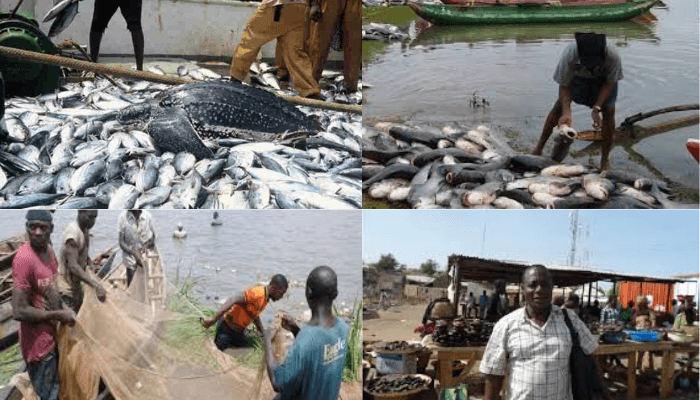
…Fishermen, sellers, others rake in millions of naira through fishing activities
Rivers form a vital section of the economic backbone of the entities in which they flow. They are some of the most-essential arteries through which innumerable economic benefits flow. They also treasure unquantifiable wealth for the sustenance of the entities.
Rivers also play a crucial role in agricultural production, serving as a reliable water source for irrigation. This supports crop cultivation and livestock sustenance.
A typical example is River Wulum located in Yola south, Kabawa, Namtari District, of Adamawa State.

River Wulum has an exciting history of existence since as far back as 200 years ago, when it was covered by hard grasses and inhabited by wild animals. The river and its surroundings used to be locations where hunters carried out their successful hunting expeditions.
River Wulum has, however, been more famous for its high fishing promise, contributing substantially to the prosperous economy of not only the surrounding communities but the entire present-day Adamawa State.
The fishing value chain created by River Wulum has always spectacularly provided employment opportunities, generated income, and contributed to food security.
Fishing activities began in River Wulum 30 years ago after the grasses were cleared by the neighbouring communities to prepare it as a veritable means of livelihood.
In an attempt to give it more meaning and historical and cultural significance, the fishing activities in River Wulum is extensively organised as a yearly week-long ceremony, attracting fishermen and merchants from, Kano, Gombe, Taraba, Sokoto states and even Cameroon, to transact various businesses along the fishing value chain.

In an interview with BusinessDay, Abdullahi Bagobari, the Sarkin Ruwa, who was represented by his secretary, George Sams, disclosed that the river has fed thousands of youths and their families within and outside the state.
He noted that at the official opening of the river more than 2000 thousand youths registered and launched their nets and boats into the river.
He said that with a token of N1,500, a person is allowed to go in and catch as many fish as one can without interference of any sort from the officials.
“On the first day we officially opened this place, fish worth hundreds of millions of naira were caught here and sold out,” he said, adding, “This place has given about 4000 youths a life of their own, instead of roaming aimlessly, constituting nuisance to the society.”
George revealed that revenue was being generated through various unions such as the fisher men, fish sellers and others, saying, however, that it is difficult to come up with a specific figure as revenue generated.
While commenting on the challenges encountered in the course of fishing, he stated that usually at the opening of the fishing activities in the river, hoodlums invade the place with all sorts of weapons to carry out criminal activities.
“We have to employ the services of the security agencies to be able to maintain order and safety of both officials, buyers and fisher men,” he said.
“Another big challenge we encounter here is ready market; you discover that there’s no money, sometimes we have to give it out on credit for days, which is not healthy for any type of business,” George lamented.
While appreciating the state government for prompt response to their cry each time they are faced with threats from the hoodlums, he urged the government for continued support.
Some of the fishermen who spoke were Danmama from Kebbi State and Obadiah.
In their separate interviews, they said fishing was their profession right from their childhood, when they started moving from one place to another in search of rivers offering lucrative fishing opportunities.
“We don’t know any business aside from fishing and selling of fish, it’s a business that we use to maintain our families, support other family members,” they said.
The duo spoke on how they thrive in the business, disclosing that for any community they go fishing, they construct personal boats, saying that most of these boats have capacity for 40 basins of fish per trip, from which they would realise about N600,000.
Also Speaking, Maman Rahila, a fish seller, said that she had been into the business before she got married.
“Now, my children, grandchildren and I are all into this business. It has become a generational business for me from first generation to third generation.”
Stressing that she has no regrets for venturing into the fish business, Maman Rahila who spoke with so much joy, said through the business, she was able to build her house and also built another which she gave out for rent.