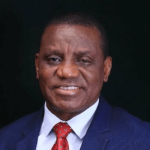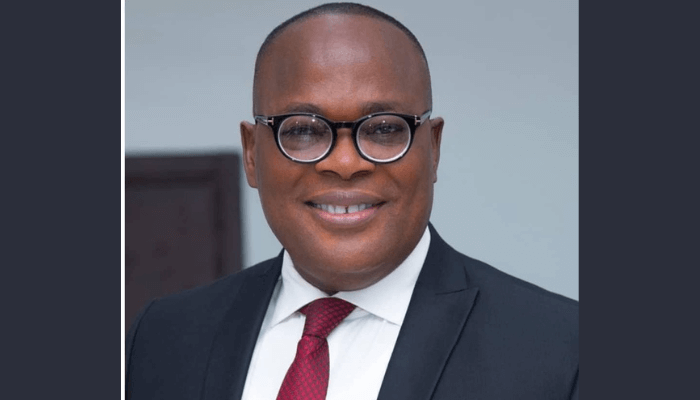
In the life of every great institution, there are defining moments when the trajectory of its historical arc bends toward renewal or decline. For the University of Nigeria, Nsukka (UNN), such a moment has arrived. On Monday, 11 August 2025, Prof Simon Ortuanya assumes office as the 16th Vice Chancellor, taking over from the Acting Vice Chancellor, Prof Oguejiofor Ujam. His appointment is more than a change of guard; it represents a long-awaited passage from a period of drift into a season pregnant with high expectations and heart-warming promise of restoration. Like a ship that has weathered turbulent waters, the nearly 65-year-old institution stands at the threshold of recalibrating its course toward academic excellence, administrative integrity, and renewed global prestige.
It is a time-tested capsule of wisdom that before we can move forward in any meaningful way, we must confront the obstacles that have hemmed us in. In the life of a university, especially a storied one like the University of Nigeria, Nsukka (UNN), there are times when the obstacles are not just financial deficits or infrastructural decay, but an accumulated erosion of morale, purpose, and institutional pride. When that happens, a leader’s task is not simply to manage, but to reawaken the collective spirit of the community, to restore not only the bricks and mortar but the belief that the institution can once again live up to its founding ideals. The appointment of Professor Simon Ortuanya as the 16th Vice Chancellor of UNN comes at such a moment. It is not merely a change of guard; it is an opportunity for passage, from a season where the Lion’s Den too often felt like a poultry yard, to one where the roar of intellectual pride and global competitiveness can be heard again.
Let’s begin with the long wait and leadership gaps that have tended to define the historical trajectory of the ‘only University of Nigeria’. The protracted, almost elusive process of appointing a substantive Vice Chancellor began in earnest in the first quarter of 2024, after the elapse of the five-year tenure of Professor Charles Arizechukwu Igwe in June that year. What followed was not the smooth transition one might expect of an institution approaching its 65th year as Nigeria’s first indigenous university. Instead, the process became a drawn-out affair, producing not one, not two, but three successive Acting Vice Chancellors in barely over a year.
These acting appointments, however well-intentioned, were symptoms, not causes, of the university’s deeper challenges. The real ailments had been festering for decades – chronic underfunding, politicisation of key appointments, infrastructural neglect, and a creeping disconnection from the founding vision of Dr Nnamdi Azikiwe’s University of Nigeria, conceived in the wake of independence to stand shoulder-to-shoulder with the world’s great centres of learning. Acting Vice Chancellors can hold the fort, but they cannot, by design, commit the university to bold long-term decisions. The result, over the past several years, has been an accumulation of deferred maintenance, delayed reforms, and, most damaging of all, a slow bleed of confidence among staff, students, alumni, and the wider community.

Separate from this drawn-out saga was the six-day rigorous process of selecting the substantive 16th Vice Chancellor. This began on 28 July 2025 and concluded on 3 August 2025, when the Governing Council of the University, under intense public and internal scrutiny, pruned a pool of applicants to a shortlist of eminently qualified contenders. Through a process marked by competitive presentations, interviews, and background vetting, Professor Simon Ortuanya emerged as the Council’s choice – a scholar, administrator, and public servant with a track record of reform-minded leadership in both academia and government. His appointment was greeted with a wave of expectation, not because he is seen as a miracle worker, but because the community recognises the urgent need for a Vice Chancellor who can unify the house, restore morale, and mobilise resources for an ambitious revival.
Therefore, for an institution whose symbol is the Lion, there have been moments when the den has looked more like a derelict poultry, caged in by low morale, bureaucratic inertia, and missed opportunities. Prof Ortuanya’s arrival is, therefore, not just about filling an office; it is about hammering out a leadership template that would kick-start and sustain the transition from ‘poultry to pride’ – the symbolic reclaiming of the Lion’s Den. Interestingly, the resume of the man at the helm is as impressive as it is relevant. As a professor of law, Ortuanya brings a combination of legal acumen, dense administrative experience, and a clear understanding of the Nigerian university system. His tenure as Secretary to the Enugu State Government (SSG) and pioneer Director-General of Southeast Governors’ Forum blends seamlessly to give him exposure to the complexities of public administration, negotiation, and policy implementation, skills that will serve him well in the politically charged, resource-constrained environment of a federal university. Moreover, he is not a stranger to the value of institutional branding. He understands that the global reputation of a university is built not only on academic output but also on the perception of stability, integrity, and vision at the leadership level.
Against this backdrop, the University of Nigeria arrives at a threshold when it becomes pertinent to address the transition from the ‘lion’s den to ‘abandoned poultry’ metaphor aptly captured by the Pro-Chancellor and Chairman of the Governing Council, Engr. Kayode Olubunmi Ojo, and explore the extent to which UNN can transit from poultry to pride and the symbolism of the lion’s den. Symbols matter in academia. UNN’s emblem – the proud lion – was not chosen by accident. It is a declaration of courage, excellence, and leadership. Yet, over the years, there has been an uncomfortable dissonance between that image and the lived reality on the ground. Too often, the Lion’s Den has felt like a poultry yard: docile, defensive, and diminished in stature. While successive administrations have made efforts to address these issues, the problems have often outpaced the solutions. This means that Prof Ortuanya inherits both the burden of history and the expectation of transformation.
He is stepping into an institution where the aspirations of students, the frustrations of staff, the pride of alumni, and the demands of government converge. In such a space, the Vice Chancellor’s role is as much about building consensus as it is about implementing reforms. To reclaim the Den is not simply to renovate buildings or expand academic programmes; it is to rekindle the spirit of innovation, intellectual risk-taking, and moral courage that once made UNN the envy of the continent. It is to reinvent, reimagine, and reassert the university’s role not merely as a degree-issuing factory but as a crucible for national transformation. Professor Ortuanya’s challenge will be to show courage, charisma, grit and gravitas in leading that passage, that is, to converting docility into dynamism, hesitation into boldness, and insularity into a confident global presence.
Surely, the 16th Vice Chancellor’s challenge impels one to advert our minds to the weight of history and the burden of high expectations. UNN is approaching its 65th anniversary. For any institution, such a milestone invites reflection. Have we lived up to the dreams of our founders? Are we producing the calibre of graduates who can lead Nigeria and Africa into a new era? Are we cultivating a culture of excellence, integrity, and service? In truth, the answers to these questions have become increasingly uncomfortable. The university has produced giants in politics, science, economy, humanities, and business; yet, it has also struggled to sustain a coherent vision in the face of shifting national policies, unstable funding, and internal fractures. The cumulative effect has been a drift (enabled by centrifugal forces) from the centre of gravity that once defined UNN. Now, the burden of expectation rests heavily on Professor Ortuanya’s shoulders. He inherits a university that is at once proud of its heritage and painfully aware of its recent stumbles and faltering steps.

Nonetheless, a number of urgent frontiers for renewal stand out. If UNN is to pass from poultry to pride in real terms, these frontiers require priority attention during Professor Ortuanya’s tenure – restoration of morale and trust, infrastructure and learning environment, research and global competitiveness, digital transformation, town-gown synergy, reinforcing financial sustainability, and reconnecting with the motto. Leadership is not only about policy; it is about confidence. Staff must believe their contributions are valued. Students must believe their degrees will carry weight. Alumni must believe their alma mater is worth their investment. This calls for transparent communication, fair decision-making, and visible respect for merit over any other negative indices of unethical leadership
From lecture halls with broken seats to laboratories without essential equipment, the state of physical facilities directly affects learning quality. This is not merely a budgeting challenge; it is a test of the Vice Chancellor’s ability to mobilise government, private sector, and donor funding in innovative ways. UNN is reasonably expected to re-enter the global conversation by supporting cutting-edge research, interdisciplinary collaborations, and strategic international partnerships. This includes not just funding research, but creating an enabling environment where scholars can thrive without bureaucratic suffocation.
The post-COVID world has no patience for institutions that treat digital tools as optional. E-learning, digital archives, online student services, and data-driven administration must become standard. This is as much a cultural shift as a technological one. UNN’s location in Nsukka is both a strength and a challenge. Strength, because it anchors the university in a vibrant cultural and agricultural setting. Challenge, because town-gown tensions can easily sour into mutual distrust. Deliberate engagement with host communities in ways that create shared prosperity will be essential. Relying solely on government subventions is a recipe for stagnation. Creative revenue generation through endowments, alumni engagement, and research commercialisation must be pursued with vigour. To restore the Dignity of Man is more than a slogan. It must shape policy, inform decision-making, and inspire all members of the university community.
This presupposes a call to pride. No Vice Chancellor, however visionary, can reclaim the Lion’s Den alone. Indeed, no Vice Chancellor, however talented, can single-handedly transform a university of UNN’s size and complexity. The task ahead will require an alliance of all stakeholders. This is the moment for staff and students, co-contestants in the just-concluded VC race, alumni, and host communities to set aside personal grievances and rally around the new administration. Unity does not mean the absence of dissent; on the contrary, robust debate in a university is essential. But it does mean subordinating narrow interests to the broader mission of institutional renewal.
Staff, both teaching and non-teaching, must rally behind the leadership in a spirit of constructive partnership, resisting the temptation to undermine from within. Students must channel their youthful energy into academic and social contributions that enhance the university’s reputation, not tarnish it. Co-contestants for the Vice Chancellorship must now close ranks, recognising that their talents and visions can still find expression in collaboration. Alumni must step forward not just with nostalgic words, but with tangible support – financial, professional, and reputational. Host communities must embrace the university not merely as a neighbour, but as a shared inheritance, and protect it from the encroachments of parochial interest. Government and industry partners must see UNN not as a beneficiary of charity, but as a strategic partner in national development.
Fortunately, Prof Simon Ortuanya, the 16th Vice Chancellor of UNN, is a Super Lion. The symbolism of the Lion runs deep in UNN’s identity. The Lion is not merely a mascot; it is an emblem of courage, leadership, and dignity. In recent years, the Lion’s roar has sometimes been muted by internal wrangling and systemic issues. But there is no reason why it cannot be heard again – loud, clear, and resonant beyond Nigeria’s borders. The “poultry” in this metaphor underscores the culture of emotional disconnect, complacency, and little-minded ambitions that occasionally creeps into institutions when they lose sight of their founding vision. Moving from poultry to pride is about reclaiming the Lion’s Den by rekindling the courage to lead, the drive to innovate, and the discipline to sustain excellence.
And now, the arc bends in the direction of the historic date – Monday, 11 August 2025, which marks the handover and commencement of the great journey ahead. On this day, Acting Vice Chancellor Professor Oguejiofor Ujam hands over the reins of leadership to Professor Ortuanya. It is a ceremonial moment, yes, but also a symbolic one – the formal passage from a period of certain uncertainties to one of renewed direction. Ceremonies, however, are only beginnings. The real measure of success will be seen in the months and years ahead in how quickly morale can be restored, in how effectively resources can be mobilised, in whether the name University of Nigeria can once again inspire immediate respect in lecture halls and boardrooms from Nsukka to global academic capitals.
There is no gainsaying the fact the stakes could not be higher. In the Igbo moral universe, a leader is judged not by the titles they bear but by the fields they leave more fertile than they found them. For UNN, the field is vast, the soil rich, but the weeds many. Professor Ortuanya will need to cultivate with both firmness and vision, resisting the easy lure of short-term optics for the harder, more enduring work of institutional transformation. The Lion’s Den awaits its roar. The passage from poultry to pride will demand every ounce of positive energy, wisdom, and integrity the new Vice Chancellor can summon and indeed, every act of solidarity the UNN community can offer.
The next five years will test both the leadership of Prof Ortuanya and the collective resolve of the University of Nigeria community. They will determine whether this moment becomes a true turning point or just another missed opportunity. But there is reason for optimism. The appointment process, though delayed, has produced a leader with the credentials and vision to steer UNN toward renewal. The challenges are formidable, but so too is the potential for transformation. As Prof Ortuanya takes up the mantle, the charge to the UNN family is clear. Support him when he is right; challenge him when he is wrong, and work with him always to ensure that the Lion’s Den remains a place of pride, not poultry.
The University of Nigeria is more than its buildings, its budget, or its bureaucracy. It is a living community of minds and hearts committed to the pursuit of knowledge and the restoration of human dignity. That mission and the Lion’s roar must never be allowed to fade. As the sun rises on 11 August 2025, may it mark not only a change of leadership, but the dawn of a renewed era for the ‘only University of Nigeria’, an era in which the Lion’s Den once again lives up to its name and its roar is heard across the academic world.
.Agbedo, Professor of Linguistics, University of Nigeria, is a Fellow of the Netherlands Institute of Advanced Studies, and Public Affairs Analyst_