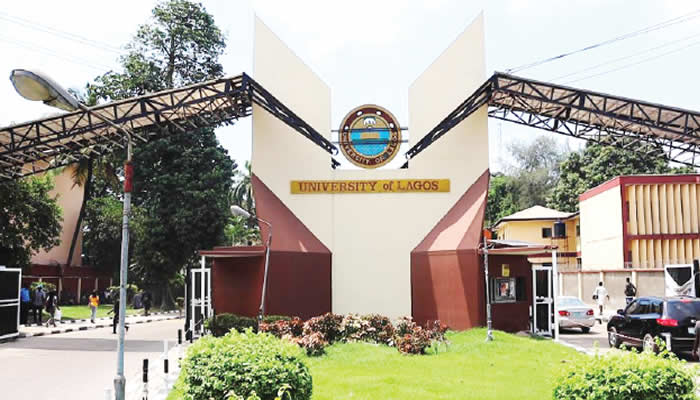
Determined to contribute its quota in bridging manpower development gap in the nation’s maritime industry, the Institute of Maritime Studies (IMS) of the University of Lagos (UniLag), said that it has concluded plans to acquire a multi-million dollar oceangoing vessel for the sea time training of cadets, who graduate from the Institute.
Speaking in Lagos on Tuesday at the 10th edition of the Nigerian International Maritime Ports and Terminals (NIMPORT) conference themed, ‘Improving Connectivity, Enhancing Trade’, Olusoji Ilori, board chairman, IMS of Unilag said that the school currently has an ‘already written invoice’ for the ship but yet to get sponsors to fund the acquisition.
According to him, the major challenge facing the Institute of Maritime Studies (IMS), which was setup by the Nigerian Maritime Administration and Safety Agency (NIMASA) in six different Universities in Nigeria including Unilag, was lack of training vessel for cadets to undergo the mandatory sea time training, a requirement for obtaining the international Certificate of Competency (CoC).
Ilori, who disclosed that the current management of NIMASA has pulled out its funding support for the Institute, said that the school has approached agencies like NIMASA and the Nigerian Ports Authority (NPA) for support, to acquire the needed vessel, without concrete result.
“The University of Lagos has also approached lending institutions, which offered to give credit facility to the school but on an outrageous interest rate of 26-28 percent. “We do not have the capacity to fund such credit facility because the school is a non-profit making venture,” Ilori told BusinessDay on the sideline of NIMPORT conference.
During his presentation, the varsity don pointed to the fact that foreigners especially Philippines and Indians have taken over the seafaring jobs, which Nigerians were entitled to as provided in the Cabotage Act. He blamed the development on lack of adequate manpower to man Nigerian owned vessels.
“We rely so much on foreigner experts, who earn dollars and repatriate them back to their home countries because we are not developing our maritime schools and institutions,” he decried.
He however, called on the Federal Government to financially empower established maritime schools like IMS in Unilag to enable them build qualified manpower and create employment for Nigerians.
Fortune Idu, chairman of NIMPORT, pointed to the need to improve cargo flow and connectivity between the ports and the manufacturing city centers, which will help to fast track speedy delivering of cargo to importer’s warehouse and reduce the cost of goods.
He said that 45 percent of production cost in Africa can be attributed to transportation while 50 percent of produce or transit cargo is lost due to poor logistics connectivity.
AMAKA ANAGOR-EWUZIE