|
Getting your Trinity Audio player ready...
|
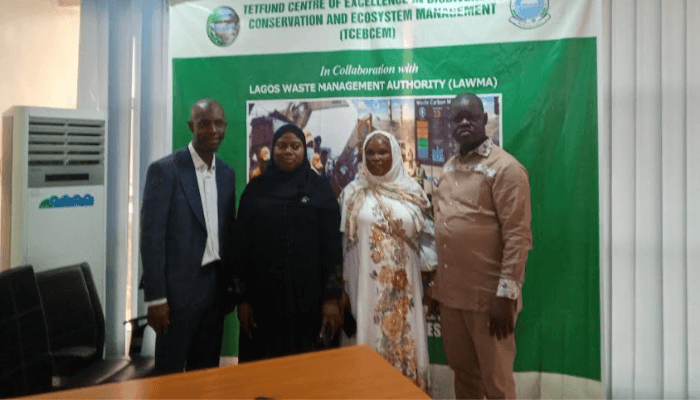
The TETFund Centre for Biodiversity Conservation and Ecosystem Management (TCEBCEM) of the University of Lagos (UNILAG) has partnered with the Lagos Waste Management Authority (LAWMA) to train dumpsite workers and enhance environmental sustainability and inclusive education.
Adelopo AbdulGaniyu, the course lead for TCEBCEM-UNILAG, told the trainees on Monday, August 4, that the five-day course aims to bridge critical knowledge gaps among waste handlers, empowering them with essential skills and awareness to improve waste management practices across the state.
“This is part of TCEBCEM-UNILAG’s gown initiative to bridge the gap in the knowledge space of the dump site workers. It is to enhance their capacity on carbon understanding, on digital understanding and their safety in the waste management system.
“It is a follow-up work on the AFRETEC research on landfill digitalisation. These are going to be the citizenship scientists that will be taking data for the AI computerisation on some of the digital waste in the landfill,” he said.

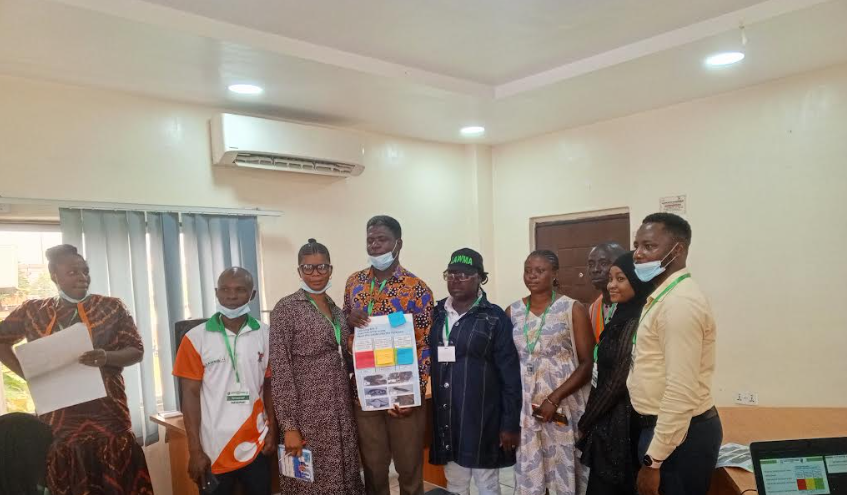
Adelopo emphasised that the training, among other things, would give the trainees knowledge in terms of how healthy some of the waste they manage is. Besides, he said it will equip the waste managers with a financial understanding of the economic viability when it comes to carbon management of waste management, which is now the engine globally.
“The training is in facets, the first facet is for those who are working on the landfill or who act in the valuation of waste collection for LAWMA. After the training, they will take the knowledge to their respective area, and that would impact those managing the landfill, increasing their ability to sort their waste, recycle well and also position them as knowledgeable in what they are doing.
“They will have certificates that can allow them to take trade tests. That is meant to change the narrative about waste workers, who are considered not to have any form of grading.
“With this empowerment, there will be no discrimination of waste workers based on being illiterate, without digital skills, waste management workers would be thrown out of work shortly,” he said.

He further explained that module one will focus on waste property and passenger safety, while the second one will be on waste degradation, and the third will be on digital tools and utility, among others.
Adelopo reiterated that the training is essential for waste workers because in the waste industry, there is a fast transition into digital and AI tools; for Nigeria to get to that level, everybody must be carried along.
According to him, the prerequisites for trainees to get the certificates include participation and attendance, which is 20 marks, and a practical demonstration, 25 marks. characterisation, 20 marks, individual data collection assignments, 15 marks, and the assessment, 20 marks.
Abimbola Ajayi, assistant director in charge of waste management research, statistics, and policy development at LAWMA, described the five-day training event as an eye-opener for all the staff, especially the county officers, operations, health and safety workers, among others, which will help them to upskill.
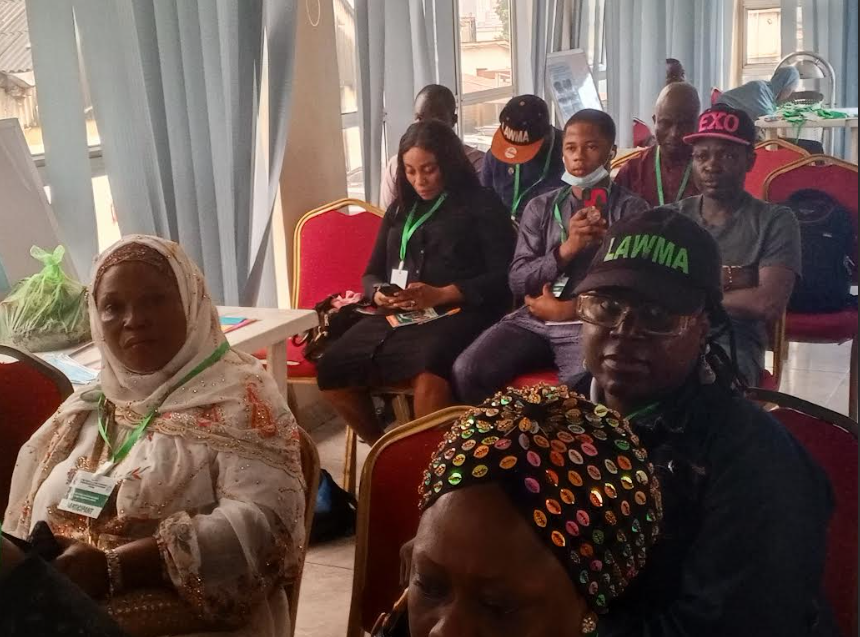
“This programme is a new level for you to know more. The organiser has promised that at the end of the programme, successful participants will be issued certificates, which might be a plus for you to increase your capacity in terms of authority in the field,” he said.
He applauded Muyiwa Gbadegesin, the managing director of LAWMA, for investing in the programme and many other laudable initiatives with TCEBCEM-UNILAG to upskill the staff.
Bukola Adebayo, a staff member of the health and safety department of LAWMA, said the programme has broadened her knowledge about the groups of waste, and not just talking about organic waste.
“I am made to understand that apart from knowing the group of waste, there are classifications of waste.
“It has helped me to be able to identify the grouping of different types of waste according to where they belong; and of course, the programme would also help me to be able to educate our personnel who are in the field concerning waste sorting,” she said.
Not less than 50 trainees from LAWMA were registered to participate in the training and would later train other staff and workers at their various locations, after the five-day workshop.